Posts Tagged ‘village’

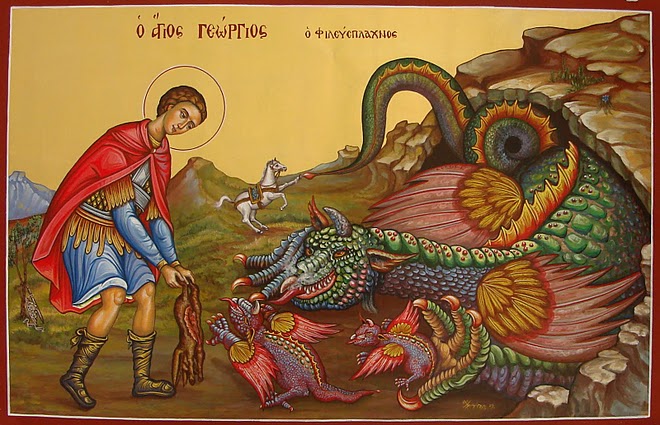
Why saint George is depicted on icons killing a Dragon (an ancient story of saint George killing the last dragon) – A Collection of 7 icons of Saint Martyr George

Friday, July 6th, 2012

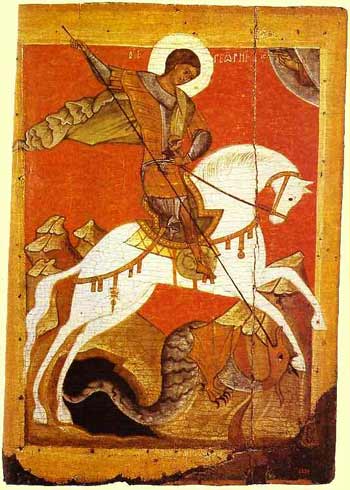
Saint George is one of the most venerated Orthodox Christian saints in the Eastern Orthodox Church. My interest in saint George is cause of the reason, I myself bear the name Georgi (the Bulgarian equivalent of George). Saint George is mostly venerated in the Slavonic Christian-dome.In almost all Church icons depicting st. George in Orthodox and Roman Catholic christiandome saint George is piercing killing a dragon.
One of the reasons, st. George is depicted piercing the dragon is a reference of st. George victory over satan, through his martyrdom.

The Beast (Dragon) on the iconi is a straight reference to the Holy Bible; Chapter Revelation also known under the name Apocalypse.

In revelation, we read humanity and our saviour Jesus Christ will finally once and for all will kill the "ancient beast" = (satan)

In same logic, as Saint Martyr George has been victorious over Satan by his unshakable confession of faith in Jesus Christ in early 5th century A.D. , we believe in the Orthodox Church he is given the crown of (eternal) life as a prize for bearing un-human tortures in the name of the of Christ.
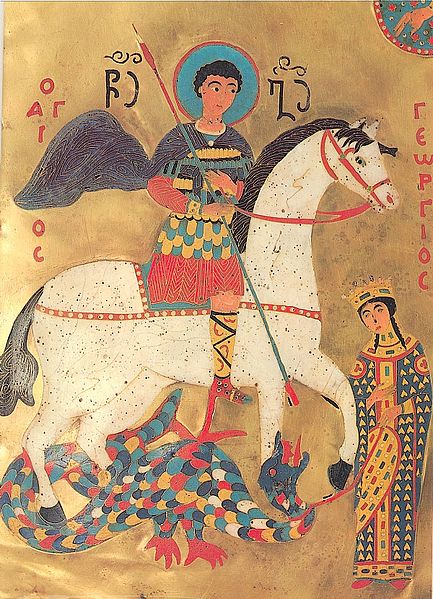
To illustrate visually the victory of saint George over Satan through his immesurable faith confession with which he become, there is a an early tradition in iconography in the Church to depict st. George killing a dragon.

The other reason why saint George is depicted to kill a Dragon is due to a Lebanon / Palestinian ancient story saying; There was a huge Dragon living somewhere in nowdays Lebanon / Palestinian lands.
The beast created a huge havoc killing many people and systematically torturing people in the area.

As the Eastern Orthodox Christian tradition continues …. the Dragon is said to have inhabited one of the caves near some village.
Interesting, the story tells these very same dragon was the last Dragon crawling the earth before the final disappearance of dragons.

Many brave local people tried to kill the beast but many died as the beast was unbeatable.
Being unable to beat-up the dragon with a physical (human) force the local population turnted to God for help – saying continously prayers to Saint George to help them defeat their dragon mischief.

Soon after, Saint George appeared on a white horse and pierced the "old dragon / snake". The dragon liberation miracle is said to be evidenced by local people and according to Orthodox monk books is one of the many great miracles occuring in past times.
The report of the miracle has quickly spread around all Lebanon / Palestinian lands and soon, being confirmed as real spread along all Russia as well as the rest of the Slavonic and Orthodox Christian world (Bulgaria, Serbia), Greece, Egypt (Alexandria) etc..
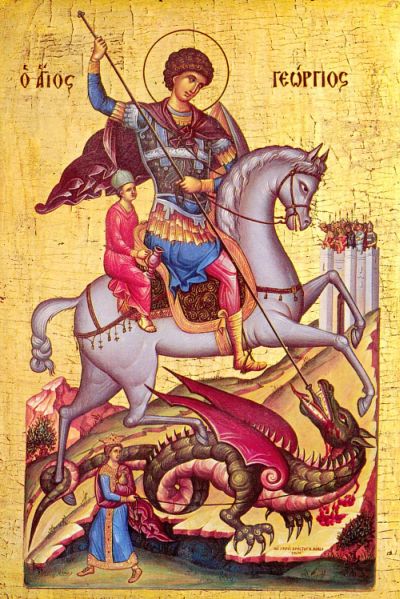
To illustrate saint George's appearance miracle, monastic iconographers started depicting saint George as we see him until this very day – Riding a horse and slaughtering a monstrous beast.

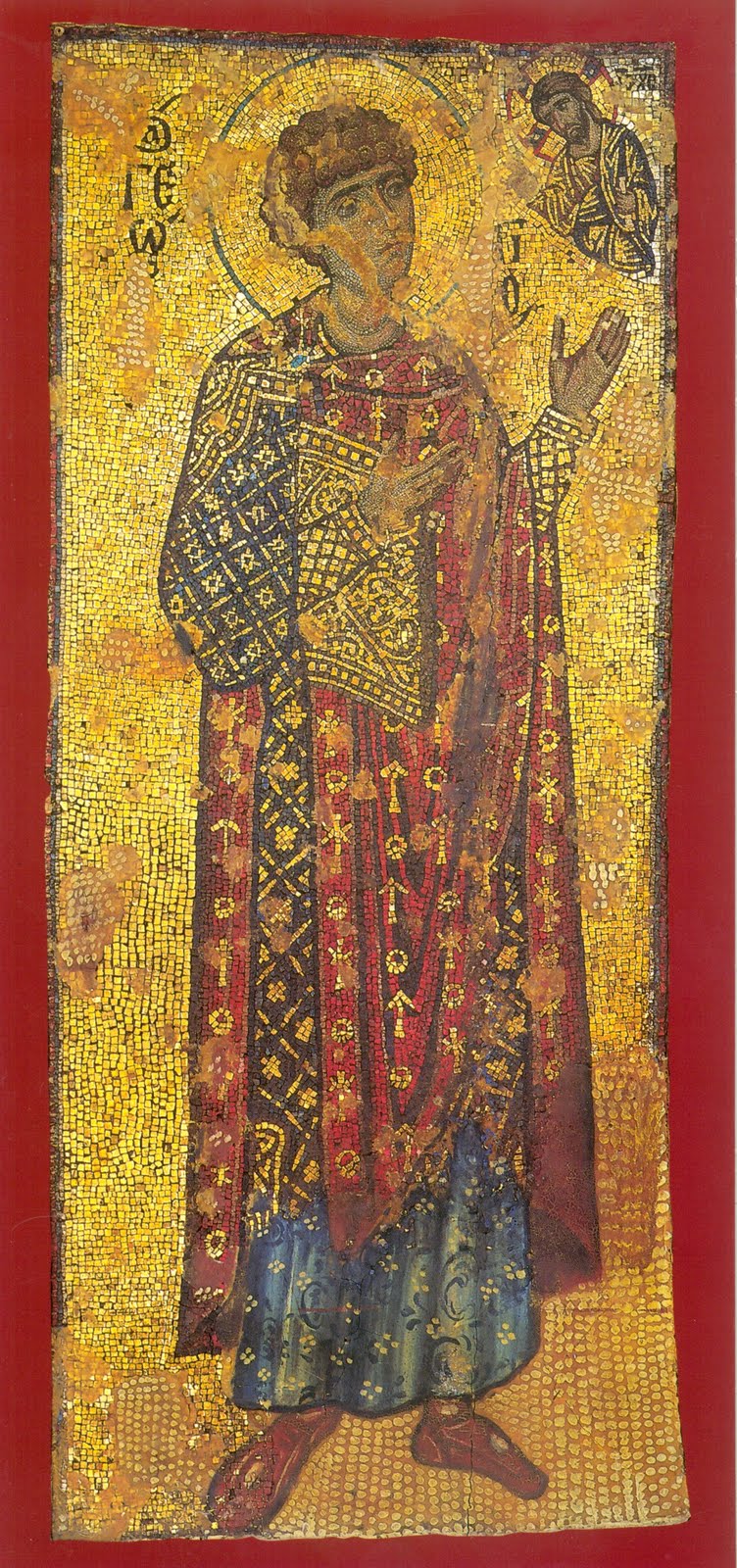
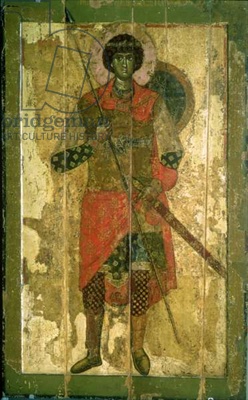
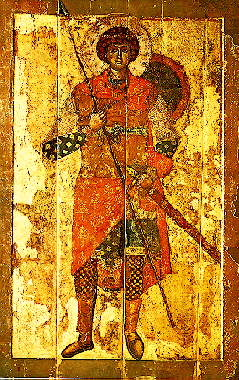
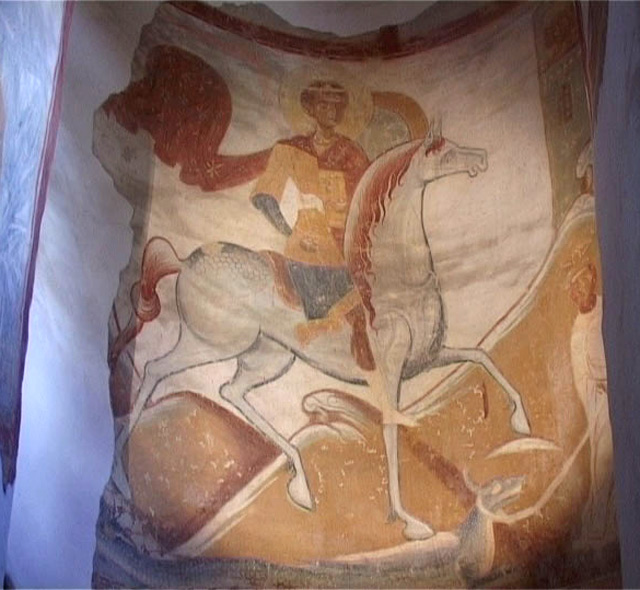
Below are seven 12-th century early icons of saint Saint Great-Martyr George killing the dragon;;
I've collected the icons from various website online. Hope this collection will be blessing for all Christ brother and sisters and generally anyone reading this post:

12-th century mosaic icon of st. George the Great Martyr Xenophontos Monastery

12-th century mosaic icon of st. George the Great Martyr Xenophontos Monastery

Orthodox Christian icon saint George dated to 1130 - 1150 A.D.

Orthodox Christian icon saint George dated to 1130 – 1150 A.D.

Saint Georgius the Dragon Slayer icon XII century orth icon

Saint Georgius the Dragon Slayer icon XII century orth icon

St. George Enamel icon Georgia 12th century

St. George Enamel icon Georgia 12th century

saint George Christian icon Yuriev Monastery Novgorod 12th century

saint George Christian icon Yuriev Monastery Novgorod 12th century

st. George Staraya Ladoga Orthodox Christian icon

st. George Staraya Ladoga Orthodox Christian icon

sv. Georgius 12th century Aios

sv. Georgius 12th century Aios

Nowdays saint George Holy Relics particles are kept for veneration in many Orthodox Christian countries monasteries. Here in Bulgaria saint George Holy Relics are kept in a Monastery nearby the seacoast in Pomorie. Any Christian visiting Bulgaria have the opportunity to venerate the Holy in (Pomorie's Monastery – St. Great Martyr Georgi.
 

Share this on

How a monastery celebrates a brotherhood monk name day – the feast of (Saint Sergii from Radonezh) in Bulgarian Orthodox Church

Thursday, July 5th, 2012

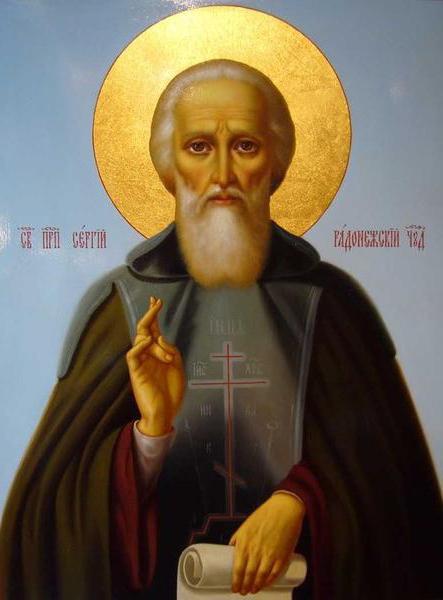
Saint Sergii of Radonezh Orthodox icon

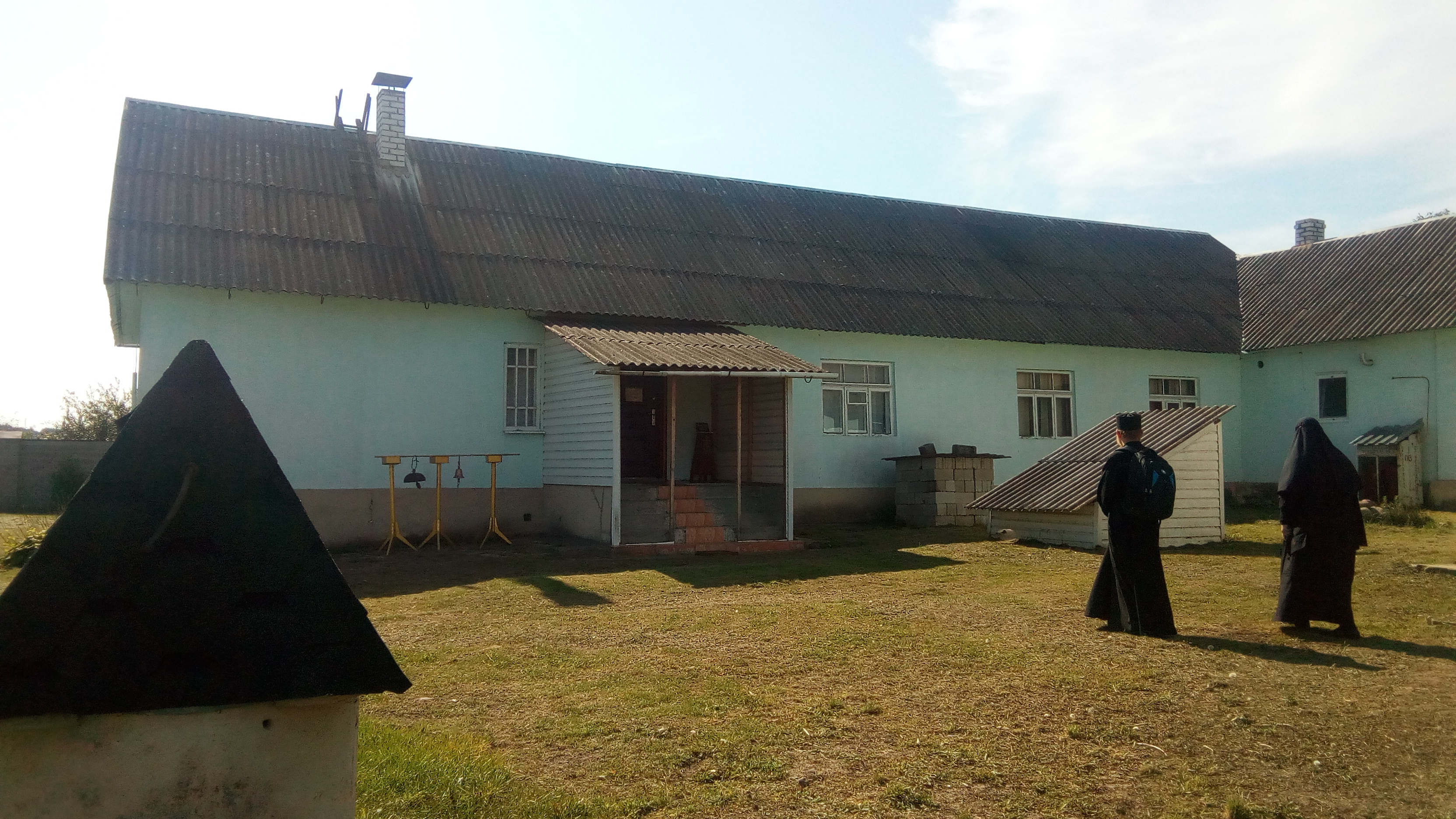
Now it is my 4th day being in Pomorie Monastery with Kimba. The monastic life is not so boring as I thought back in the days :)
Yesterday I was drived to the Kamenar pub, by one of the workers here in the monastery (with the monastic car an old Ford);
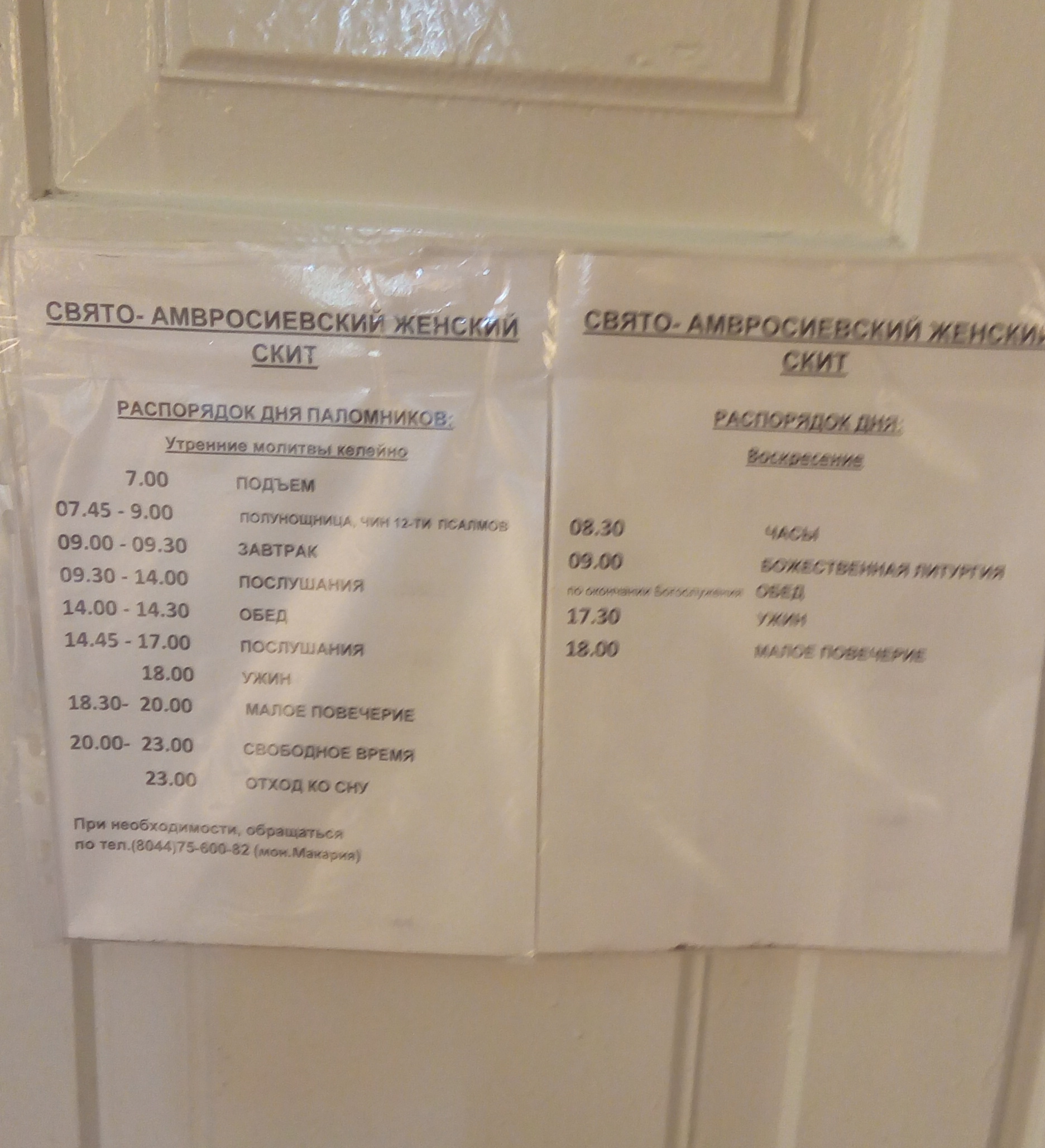
We went to the restaurant in Kamenar village with the blessing of the abbot has blessed that we go and enjoy ourselves for few hours there with a group of tourists staying for (1 or 2) weeks in the monastery.

The pub was quite a news for me as it was a nice looking place with a lounge and swimming pool, this seemed quite unusual for especially since it was located in a village with 200 or 300 hundred of people living :)
The village pub had even a billiard table, the coin price there was on the shocking 25 stotinki (0.13) euro cents! :)
In the pub came an orthodox priest dressed like a casual person and started singing some traditional old Bulgarian songs (typical for singing in the different regions in BG). The guy was really talented and his memory seem to be very strong, since he was able to sing by heart about 10 songs in a row !

Besides that the priest voice was very beautiful. When I later had a talk with the guy it appeared, he learned professional singing before he became an Orthodox priest some years ago.
What really shocked me when the priest started singing in Italian Luciano Pavaroti, he sang it so well so you can hardly find out if it is not really the real authentic Luciano voice :)

This priest and the overall people in the pub had a great fun, as the place and people in were quite spirited; Actually I felt in a while like being in Emil Kosturica's movie :) :) :)

Being over with yesterday I will say few words on my monastic experience today ….
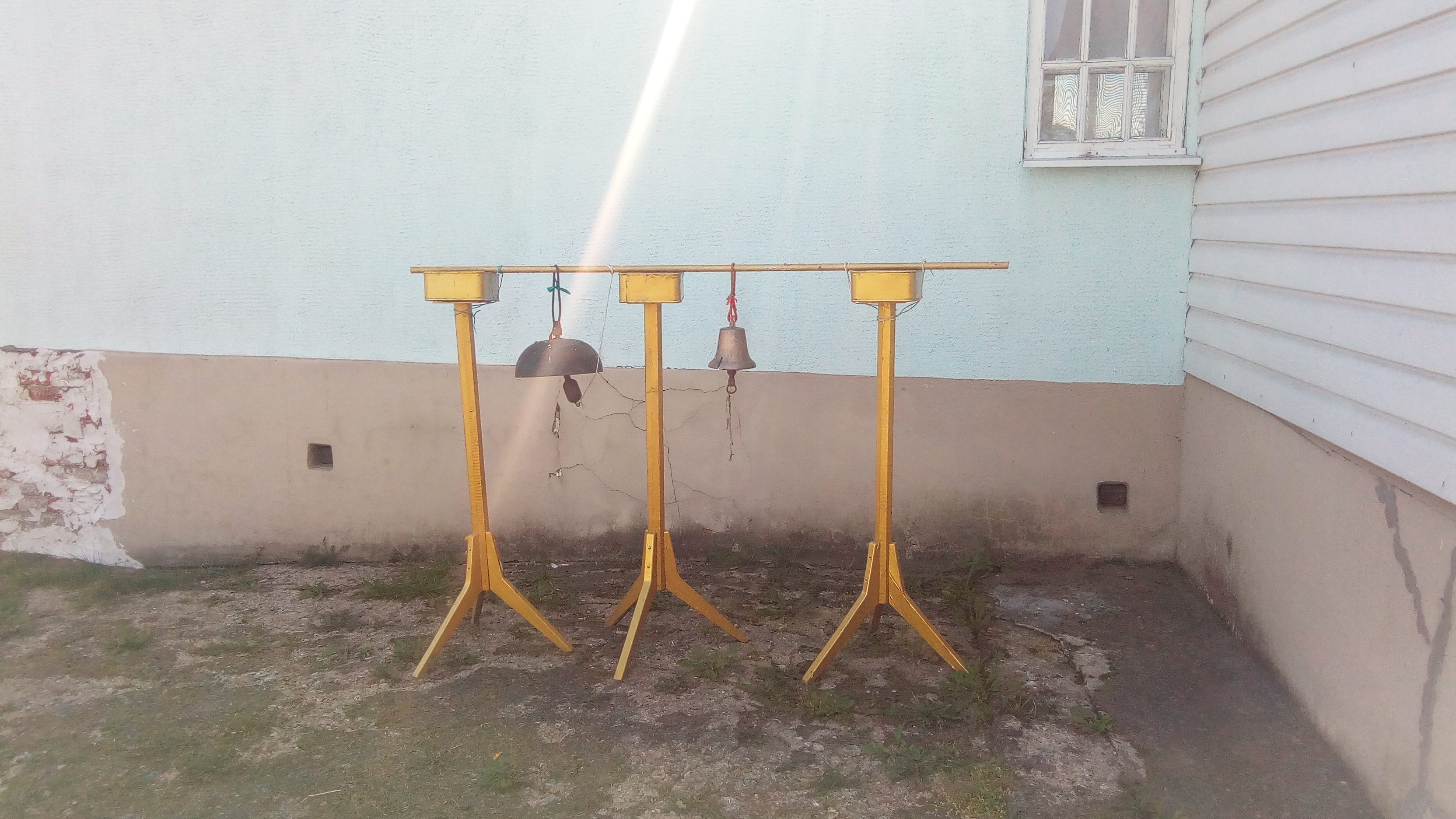
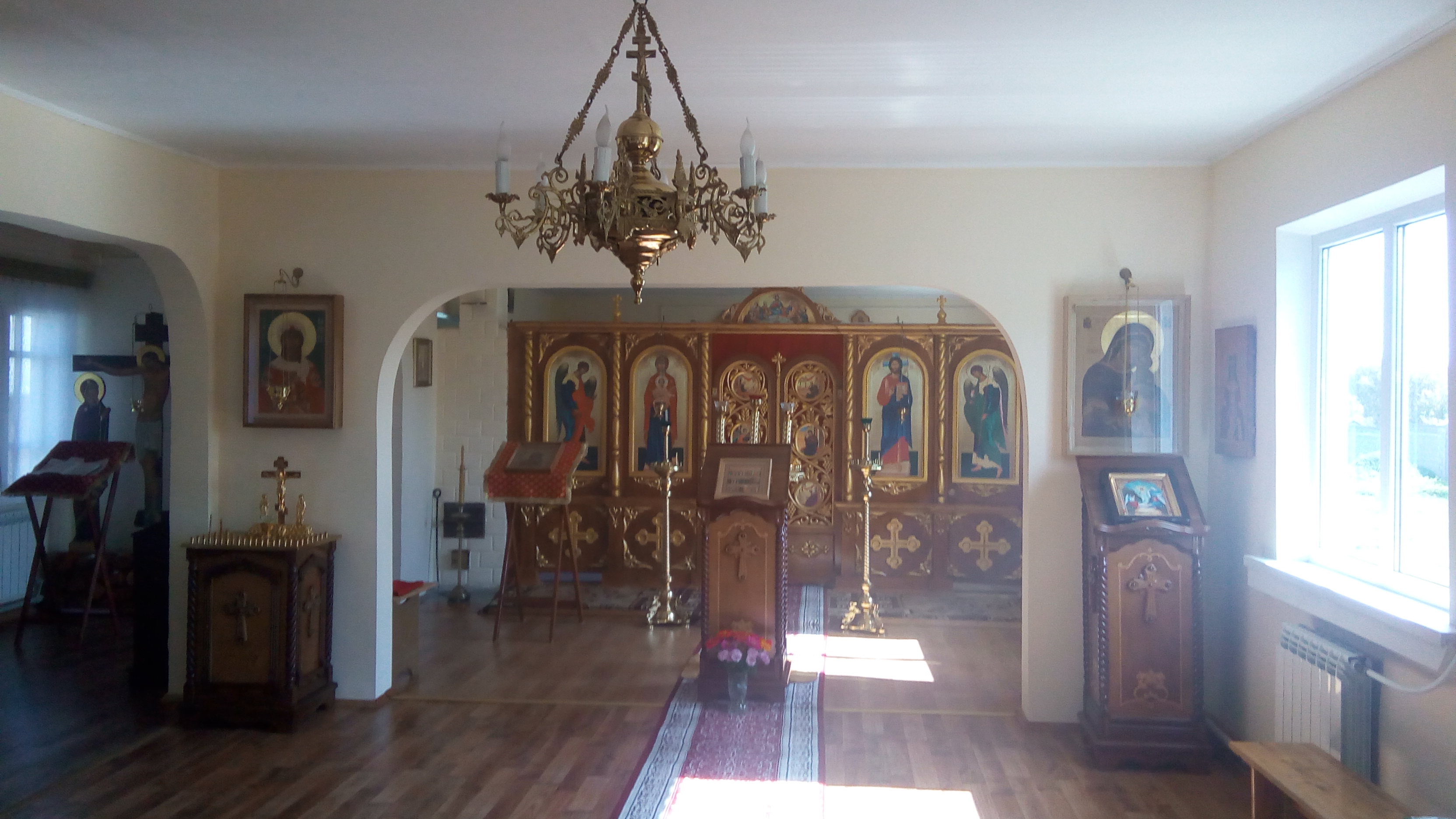
The Church bell rang early in the morning to summit the monks for the early morning prayer followed by a Holy Liturgy served. The Holy Liturgy today served was a co-memoration of the feast of Saint Sergii of Radonezh.

Cause it is weekly day here there were not too many people in the monastic Church. The monastery monks were there,few other people and some Russian pilgrim woman. By the way I'm more and more being convinced that many of the Russian people are very pious oriented and have strong faith in God than us bulgarians. Sadly it appears (from my observations so far) Russians generally are richer in faith.
It is sad that Russian Orthodox Christianity is stronger than ours in Bulgarian, especially when we take the fact historically Russians have received the Orthodox Chrisitian faith and language from us Bulgarians …

One of the key figure (brothers) monks Father Sergii is having a name day here, so due to that and because it is not a fasting day today (Thursday), the traditional monastic dinner was bigger and more rich than usual. Some youghurt mixed with cucumbers (Tarator) as we call it in Bulgaria was served with a little salad a few pieces of Banica and even little meat balls (for people eating meat).
The Abbot of the monastery was not served meat as I heard from the cook lady he is completely abstaying from meat since about 10 years already; some of the monk brother didn't eat meat as well.
The dinner started about 12:20 in the usual dinner room. For another day the food in the monastery was tasting super-delicious.
It is rather interesting that the food here is more delicious than the food we usually eat at home; Probably the food is so delicious because large portion of the food on the table is monastic-grown and besides that a food blessing prayer is said everytime before eat time. Earlier times I've heard many others who visited and eat food in monasteries that the monastic food is tastier and more delicious than we ordinary people have on our tables, however I was sceptical until I experienced it myself, these days.
Cause the food is so tasteful, I consume here usually twice more food than I usually eat at home :)

I recommend anyone who didn't eat a meal in a monastery (yet) to try this at least once in a lifetime ;;;

Share this on

My First hitch-hiking experience – travel notes on a hitch hiker trip from Dobrich to Pomorie Monastery

Monday, July 2nd, 2012

My first hitch hiking experience travel notes of a hitch hiker Dobrich Varna Pomorie Monastery

I've been 28 years old and for good or bad never travelled hitch hiking. Today however with a friend of mine Kimba thx God I lived to experience what it is like to stay on the road "begging" people to take you on their way to somewhere.

I always wanted to hitch-hike as a youngster but my restrictive controlling parents was too vigilant not to let me have my personal freedom and try hitch hiking. Now as I've grown "old" I have the freedom to do it and I'm glad I could. For sure it is better to do something you always wanted later than never :)

We took the "STOP" from a place few meters away from the "scratching sign" indicating the end of Dobrich city area – located about 4 / 5 km from Dobrich center. To come to the well known hitch-hiker's place (which my friend Kimba) knew pretty well since he travelled probably more than 20 times hitch-hiking.

To reach the hitch-hiker place we walked about 1 hour which in the early morning (07:50 to 09:00) came to be quite refreshing.
About 09:00 we started doing the well know hitch hiker gesture to beg traveller to take us :)

It felt quite unconfortable and a bit like begging to be on the road waiting for somebody to pick you up on the other hand it felt very challenging as it seemed to be a good "exercice" to raise up self-confidence. We were lucky and we didn't met any drivers to mock us with gestures or car beep. Besides that we only had to wait less than 20 minutes (probably 18 mins) until a car stop and ask her for our direction.
The driver seemed had to travel close to Aksakovo (a small village like town 1 km far from beginning of Varna and just few km away from the city center).

He pick us up and as we go he happened to be a familiar person which I've seen many times in the (International College Albena) where I previously studied.
The guy happened to be a merried for the librarian of the college. We had a nice chat in his car about Bulgaria before in communism and now and who is doing what (which I guess is quite normal) for hitch-hikers. As he drived a very funny scene appeared as we saw a donkey leading a cart full of wood running on the road. Now you might wonder what would be funny of a rural donkey with a cart full of wood, well the cart didn't have any person leading it. It seemed the donkey run away scared by a truck or a noise so the person leading the cart either fall somewhere on the road or the donkey had untight itself and took the direction to its home place :)

… Our hitch-hiking plan was to travel from Dobrich to Varna (if possible or the closest village or suburb), then we aimed to take a bus from Varna or somewhere nearby to the city center and from the city center to Travel to the so called (Asparuh's bridge / (Asparuhovia Most) – which is a common hitch-hike waiting and pick-up destination).

As we were left in Aksakovo by the driver, we were lucky to have a close bus stop near us. We went to the bus stop and we only had to wait about 8 minutes until the next bus driving to Varna city center arrived. We pick up a bus number 207 and travelled 'safely' to the city center (on the price of 1 lv per ticket). So our overall travelling for both of us instead of 10 lv (5 lv per person bus tick) costed only 2 lv :) Along with the low price for travelling the hitch-hiking was also very healthy as we had a long walk to the place to depart from and after that had a small walk to pick up the bus to Varna. We made a mistake to not go out of the 207 bus near Varna city center Cathedral but two stops earlier, so we also had a small 15 minutes walking to the Cathedral. As we were not sure which bus we need to take to go to Asparuhov's bridge, we asked few people on the city center. We were told we need to pick bus number 2 or 17 (IIRC).

Eventually as we're waiting near the bus station where the bus-es leading to Asparuhovo stopped, we came to meet a taxi driver driving people to Asparuhovo on the price of a bus ticket (1 lv). In 5 minutes time, again obviously by God's might intervention the driver was able to collect 2 more people so he offered that we all immediately travel. The taxi-st left us on a place a bit after Asparuhovo's bridge which was the common place for hitch-hikers. We had to climb a little hill like place and walk a bit on the highway on (the car damage and wreck area). Very near us was a police car waiting to catch violators of speed limits. I didn't know about this very moment that Hitch-Hiking in Bulgaria is considered illegal!, happily I found this sad fact not by the police man but from Kliment (Kimba). The policeman did not stop us as we found a way to walk through a place which is bit far from them. Kimba choose a place and we started doing the hitch-hiker "PLEASE STOP AND TAKE US" gesture once again (actually the as Kimba was a professional in hitch-hiking he was mostly doing the hitch-hike sign.

There we had to wait about 40 minutes or so until, a good man with a small bus carrying some paper palettes stop and took us.
Thanks God he had to travel to Jambol to deliver the palettes so his travel route passed by near Bourgas (and respectively Pomorie). We had a an intimaditing chat with the person by which I found out he seem to be having many money issues and a lot of debts (just like many of the people in BG nowdays). Unfortunately he shared that just like a lot of us the common people in Bulgaria he is underpaid and often even though he works extra in Saturdays and Sundays it is almost impossible for him to pay his rent, food and family expenss …..

As the conversation progressed, he asked us where are we going if we're going to find a work and I told him we're going to be guests and pilgrims to Pomorie Monastery and in the mean time help the monks if there is work to be done….

It was a pleasure for me to meet such an honest bulgarian middle aged man, which also was good enough to pick us up. The time passed quite quickly as we shared some of common living joys and griefs. The bus quickly approached pomorie so we left us and we split. As I was thankful to the guy and felt pity for his bad life misfortunes and I wished in my mind that God bless, help him and return him for the good deed he done to pick us up.

We were now only 2 km from Pomorie entrance so to the monastery we had to walk only about 4 or 5 more kilometers. On the gas (oil) station, where we were left a fun story happaned as the computers counting the gasoline stopped working. People who filled the car tanks with Gasoline had to wait until someone comes and fixes the computer, neither nobody can purchase anything from the station (a snacks, a coffee, even a bottle of water) was impossible to buy. We stayed on this little station (Petrol) located just 2 km from Pomorie for 20 or 25 minutes and in this time this people who couldn't pay for the gasoline had to just hang up there loosing their time waiting for someone to fix the BUGGED PC ,,,

This scene has once again confirmed my theory that computerization is not always necessery a good think and the over-computerization of everything as the trend is nowdays could create a lot of time lags in many places and often create a great havoc if systems somehow reject working as planned ….

Anyways to be sure which way to walk to Pomorie Monastery we had to consult few local people. Nicely the road leading to Pomoriiski Manastir was easy we just had to walk straight and then turn right. Actually the monastery bell tower is visible on the way so it is not likely that anyone walking straight will not notice the tower which is taller than other one or two stage housed highed buildings.

We came to the monastery and by Gods grace as we asked previously the abbot for a blessing to come to the monastery, they were expecting us.
Immediately one of the persons serving in the monastery gave us a room. I asked for the abbot and we found him in his Abbot place and gave us a blessing. That's the over of my first and hopefully not last great hitch-hiking adventere. The moral from my trip is:
 

To sum it up, if you never tried stopping on a highway give it a try! :)

  • hitch-hiking is a great must experience in a life-time thing;
  • Obviously we were lucky and it is always a great think to travel with an Abbot blessing
  • Hitch-hiking in Bulgaria is illegal, so there is thrill in doing it :)
  • hitch-hiking could be a very healthy initiative
  • Hitch-hiking is a great raise up and experience new random people self-confidence exercise :)

Share this on

Trip to Romania ( TTR ) – Few of my impressions from Ro-Mania :)

Thursday, June 21st, 2012

I just came home from a short 4 days trip to Romania. I'm truly impressed by the beauty, the people goodness and their piety.

Over the last few years, I've visited Romania numerous times, most of the times I just crossed by car while traveling to Holland. My impressions the previous years were quite good already but I didn't have the opportunity until now to see how the country looks "from within" – I mean how the life flows there etc.

I've heard quite a lot of BAD thinks about corruption (from european parliament critics in new) and gipsy like people and plenty of bad stuff over the years.
This is all lies, the country people are not corrupt, they're just smart and find plenty of ways to earn money. For instance while I was traveling there were Romanians people selling raspberries brought by the nearby woods, the raspberry selling is not entering the treasury of the country and this is considered by the European Union corruption and a crime :)
Well talking about police, they're a bit corrupt and stopping you for no reason sometimes to ask if you can give them some coffee or cigarettes but i wouldn't put this police act as corruption it is rather an act the patrol police do in order to find some extra cash near the low sallaries received for serving in police :)

Well anyways my trip to Romania here are few of my travel notes. The whole travel Route was Bulgaria – Romania, the aim of my travel can be classified as business trip, since I was travelling with a relative's husband who was their to transfer some physical goods (a kind of logistics). The wohle trip started from my hometown Dobrich; we went through Silistra and Ruse and then the so famous Danube bridge. The roads in Bulgaria are not perfect and some regions were full of road holes, but this is normal since we have a harsh winter here and now a road recovery works are in progress on the roads. Crossing the Danube bridge, there is a custom police and they charge something like 23 BGN (Bulgarian levs) for crossing it. Then there is a border police check which as most people who travelled by bus or car over borders (out of Schengen) knows pretty well. You have to hand in your ID and it is checked by a policeman and if you're not in the list of WANTED CRIMINALS :) they let you go. Some 500 meters or a 1 kilometer after that is the Romanian border police which (since not part of Schengen yet checks your traveller ID again).

In Romania we travelled through Gurgevo which is one of the closest cities to Danube river bridgeroad and one of nearest romanian cities to Bulgaria.
Our first destination was a place in Romania called Targo Mures, to go their our route passed through the side road of Bucuresht – Bururesti as Domneles (misters) calls it.

As I'm trying to live an Orthodox Christian life the most striking think from the moment we entered Romania to the one we went off it was the number of Churches, Crucifix and religious references one can see by just crossing the country roads.
Many villages in Romania had 2 or 3 Churches a small chapels a Cross on the road sidewalks etc. Even many Romanian houses almost everywhere had a Christian Cross on top of the house or on the house door. Putting a Christian cross on top of your home is something I myself has thought of and wondered why Christians did not put here in Bulgaria and other Christian countries seeing this being a reality in RO-MANIA :) was unexpected.

Other from my impression is that Romanian people work hard and a lot of them live in the village, owning a small land to grow vegetables and animals (sheeps and cows) mostly. While driving we saw on many places shepherds with large herds of sheeps, people mowing and generally many people who seemed to be working hard to grow their own food. This really made sense since here in Bulgaria grievously animals are rarely grown by country people and most people are living in cities (our rural population is very small).
Growing myself vegetables and having sheeps and living a village life is one of my dreams so seeing so many people growing big portion (if not all of their food on their own) especially in this crazy super-market times is really something that gives me hope, we're not completely doomed yet.

Biggest part of Romania is Orthodox Christian, while the deep central part and the western part is Roman Catholic. Nomatter the differences between the two the people in both parts seemed to live in piece. The western part was visibly more developed than the eastern.
In my observations the western part of Romania is highly influenced by Hungarian culture and architecture, while a lot of Hungarians live their today. We went through Sigishuara which seemed to be mostly Roman Catholic though I saw some Orthodox Church too on the city center. Sigishuara is amazingly beautiful. The people we met all throughout the trip was extremely friendly and always wanted to help and threated us like true Christians, something one can rarely see happening nowdays …

Most of Romania we travelled is mountain covered and the air was extremely clean, so when you're even breathing you feel very different and alive if compared to whether in my hometown.
Brasov is one of the big cities in Romania but its construction is not too much concentrated, the city is quite scattered consisting of neap houses up to few stages per hight. Generally in Romania I haven't seen too high buildings almost anywhere, in Bucurest there are some but still they're not so tall as the blocks in Bulgaria or some other ex-communist countries.

Something interesting about Brasov is that near it is Transilvania and a castle in a small village (or town) called Bran, the castle is dating back from the 12 century and is told to be the original castle where Count Dracula lived. Perhaps the region is filled with Vampire stories but unfortunately my knowledge in Romanesco was so poor so I couldn't get into contact to locals to ask for that (neither I had the time to).

Bran Count Dracula Castle

Bran castle was restored a couple of times and has been a host for the royal family of Romania (many Romanian kings, princesses) through the middle ages in Communistic time it was abandoned and just recently it was turned to a cultural museum (probably part of UNESCO).

The castle is located on a high rock and near it is a beatiful garden and an old times mention. In the castle there are plenty of objects left and traditional princess dresses, pictures, a cinema room, an ancient torture room and plenty of other medievel furniture.
The price was normal 25 LEU (the romanian currency), this equals to something like 6,5 EURO.

On the road, while travelling in Romania on many places you see the signs reading <b> DRUM BUN</b>: which in English means <b>"Have you a good trip"</b>.
During our way back from Bran we travelled through another mountain region – Sinaia.
The prices of food in the super-markets in Romania are quite almost same like in Bulgaria and if compared to western europe many products can be considered even cheap. The quality of food I found to be quite satisfying. A lot of people in Romania are still selling home made yellow cheese and natural grown products in villages as well as I've seen plenty of this street old fashioned tradesman which I like so much on the streets. The country roads especially the central ones and highways were quite good too. Well there is a lot to be said but unfortunately I don't have the time to prolonge this post anymore. In the mountain areas there were some sinaguture for monasteries according to what I've heard from some priests here in Bulgaria in Romania currently they have 7000 Orthodox Christian MONKS! ! ! The number is amazing high just for a comparison in Bulgaria as of time of writting we have not more than 300 monks.

Our trip thanksfully was safe and every romanian we met or ask anything was more than welcome to us and tried his best to help us. Finally it was time and we hit the road back to Bulgaria through Danube riverbridge – the bridge road is a bit better than before some holes are filled in but still there are plenty of holes.
We had to pass through the Romanian Customs and pay a fee for passing by and later were checked by Bulgarian border police – thanksfully with no problems. We had to deliver some cargo to Karnobat in Bulgaria so we passed by there and then through Burgas headed back through Stara Planina (Old Mountain) which is amazingly beautiful mountain and is a must visit place for any keen on mountain tourism.

Thanks God I came back home alive and well and here I am writting this post. To sum it up if I have to grade America and being asked if it is worthy as a tourist destination I would say not only worthy but it is a real pearl you must see!
 

Share this on

The Living of Saint Peter and Saint Fevronia – a fascinating Russian cartoon retelling the saints story

Monday, March 26th, 2012

Saint Peter and Fevronia Orthodox Christian saints protector of happy family, love and blessed marriage

The anime Living Story of Saint Peter and Saint Fevronia is a modern story remake of an ancient Church living of two bright Russian saints.
The official movie genre is orthodox christian kids animation movie.
The 14 minutes cartoon re-tolds the living story of St. Peter and st, Fevronia in a playful and entertaining way like for kids or youngsters.
Nomatter the movie primary target audience is children, the cartoon is great to see for adults people as well :) .
The movie genre is orthodox christian kids animation movie.
The plot is based on a true (historic record) story of two saints venerated each year across Orthodox Churches around the world.

The original story I watched was a Bulgarian translation from Russian. But since I found it to be so valuable, I look for a translated video and got one in youtube.Take 14 minutes break and watch it, I'm sure you will like it so much, that probably give it a second time glimpse alone or with your wife, children or girlfriend.

Unfortunately, the english title is mis-translated as it says "Tale" and not "Story" and there is difference in meaning between this two words.
It is not tale as tale is made up story and this is not a made story but a story based on the two saints who lived in the end of 12 and beginning of the thirteen century.
Here is in short the real Church living:
The two saints were living in Murom Russia. Peter was prince and Fevronia a poor maid a daughter of a beekeeper who made his family living by collecting wild honey in the forest.

Prince Peter was striken by a severe sickness and in a vision it was revealed to him, that the only one that can cure him is Fevronia (a village maid living in the village of Laskovo Russia. The prince went to her and since he saw she is a pious, good and wisdom rich maid promised her, if she manage to heal him to take her as a bride to his place.
By her warm prayers to God and herbs, Fevronia succeeded in healing the prince sickness. Being fully restored st.Peter changed his mind and wanted to break his promise to marry her, cause the young made not part of the aristocratic Russian society. He didn't yet reached his home and the sickness, came back. This time with a deep repentance, he came back to Fevronia and she cured him again. Then the prince merried her and made her a princess of Murom
 

St. Peter and Fevronia Orthodox Church saints protector of marriage

However there love in Christ had to went through high temptations. Once the couple married, the prince proud boyars requested the prince to leave his new bride, as they didn't wanted to accept a simple girl as Fevronia will be governing them. Being in uneasy situation prince Peter prefered to leave his governing power and castle but to stay with his life. Together by boat by the near river Oka they left the kingdom. Soon after Gods wrath came Murom because of people's rebellion and the people requested the chased prince family to be restored to power.
Pushed by the peasents, the boyars bringed back the couple to power. The two saints governed their kingdom with great wisdom, love and mercy to the people.

In their old age the decided to become monks in separate monasteries. St. Peter received his new monk name David and princess Fevronia took the nun name Evphrosia (Evfrosia). Even living a sepate monk / nun life the couple continued having a deep love to each other and asked God to take them from this earthly life on the same date. God answered their prayer granting them to depart this earth on the same day in the same hour!
Like in life even in death people tried to separate them.
Fevronia was put in a coffin in the nun monastery, where Peter was prepared for a monk funeral in the man monastery and they put them in separate graves.
In the morning the graves were empty and their bodies were found buried together in one grave. People realized it is Gods will they are buried together and left them buried together. Today the incorruptable bodies of the two saints can be seen and venerated in Holy Trinity's nun monastery in the town of Murom Russia. St. Peter and St. Fevronia are considered patron of the Christian marriage, couple's love and family happiness.
It is common that many young people are, asking for the two saints prayer intercession in front of God for getting a good spouse in life and good marriage.

Also the two saints are oftenly asked for prayer for improving a marriege bindings.
The two saints feast day is like the Orthodox Antipode of the Roman Catholic feast of couples in love – St. Valentine.

As you see, St. Peter and St. Fevronia living is full of wisdom and true spirituality, and there is plenty we the modern disbelieving people can learn from it.
Let God by the two saints holy prayers have mercy on us.

Share this on

The Edukators 2004 – Die fetten Jahre sind vorbei (The Fat Year are Over) movie short review

Monday, February 6th, 2012

The Edukators movie cover

I'm in Sofia for a couple of days being a guest to a friend (thx Nomen), after my stay for a week in Bodesće (a little village nearby Bled located in Slovenia).
Yesterday on my way to sleep I wanted to see a movie and asked Nomen to recommend me a movie. His recommendation was a German-Australian movie from 2004 called The Edukators The Fat years are Over. I had absolutely no idea what it will be like so I didn't expected much but it seems the movie plot took my attention.

The movie plot revolves around 3 avarage German persons who live in Berlin. The three youngsters has just passed the 20s, Peter and Daniel (two close friends who hold some serious anti-capitalist views and does organize house break-ups without stealing.) Peter and Daniel's rich villas break-ups aim is idealistic, they don't steal but just change the order of furniture and leave messages to make rich people aware that money doesn't make them invincible…
Jule a girlfriend of Peter, becomes friend with Daniel and they fall in love, while Peter is away for a vacation. During Peters sojourn abroad Daniel tells Jule the secret (Peter and Daniel) are the Edukators whose break-ins has just recently become known via the local Berlin newspapers.
The Edukators group leave messages to every of the "victim" homes saying – "die fetten Jahre sind vorbei" – "The fat years are over", a sentence well known from the Holy Bible's story of Joseph in Egypt.

Jule works as a waitress in a luxurious restaurant but her payment is only good to cover her very basic needs as well as pay her debt (as she is already indebted as many youngsters in Germany).

Jule is more indebted compared to many of the young germans, since by accident she hit a rich businessman's car which costs 100 000 eur. Since more than a year she is working for paying the monthly bills to cover richman's car and she succeeded to pay only €55000 …

The Jule's "injustice" is just a part of the many injustices that are in society, but as the youngsters hold anarchistic and anti democratic views, this whole Mercedes crash accelerates as Jule and Daniel break up in the Luxurious Villa of the rich man whose car Jule is still paying.
The Edukators die fetten jahre sind vorbei movie cover

Just like the other break ups Jule and Daniel change completely the order of the furniture and leave the threatening message die fetten Jahre sind vorbei , this time however they do even more as they decide to drop the sofa in the pool. These time Daniel and Jule's planning is more like an venture than just a well planned Edukators break-in. Suddenly the watchdogs in the yard start barking and the two youngesters has to move quickly to prevent being taken by the police patrol.
On the next day Peter is back from his vacation and Jule realizes her mobile phone is missing (probably fallen in the pool or somewhere in the richman's mansion)… On the next night Jule and Daniel, enter the house again in hope to find and cover-up the tracks they left last night and hopefully find, Jule's missing mobile.
They don't know however the richman would arrive his villa to stay for the night. As he enter his house, the businessman encounters Jule and immediately recognizes her.
Daniel being in the other floor comes down and hits the richman from behind and he enters unconscioness. As the two are panicked they call Peter and tell him about "the villa accident". Daniel arrives immediately and the three "revolutionaries" decide to take the wealthy man who as a hostage bringing him in Jule's uncle mountain hut.
The 3 anti-current system democrats and the representative of the wealthy class has to spend few weeks together in a small house each one exposing his stand point and philosophy. Little by little the 4 people become friends and a dramma between Daniel and Peter emerges as Jule is now in love with Daniel and Peter finds out …
Hardenberg (the 3 youngesters hostage) happens to be an ex-leader of a Socialist German Student Union some 35 years go … and tells a story how he and his union members hostiged a VIP german person in their youth days and how funny is that he is in the same situation like the person they hostiged so long time ago…
The movie is interesting as it really shows the sad reality and the falling democratic system which we have established and follow. It exposes the injustice of the system but it doesn't really offer a solution to the society and economic problems and injustices.

Share this on

Exaltation of the Holy Cross day in the Bulgarian Orthodox Church / Veneration of the Holy cross church feast

Wednesday, September 14th, 2011

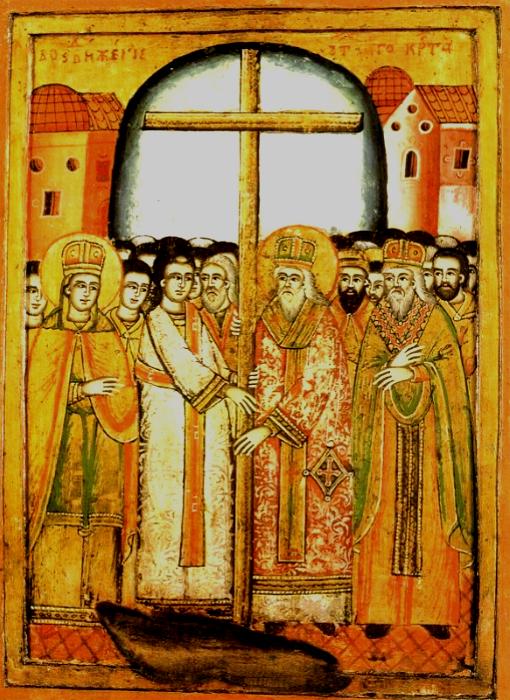
Exaltation of the Holy Christ Cross icon, day in the Bulgarian Orthodox ChurchThe Universal Exaltation of the precious and life-giving Cross XVII century – icon from village of Belovo Trqvna region
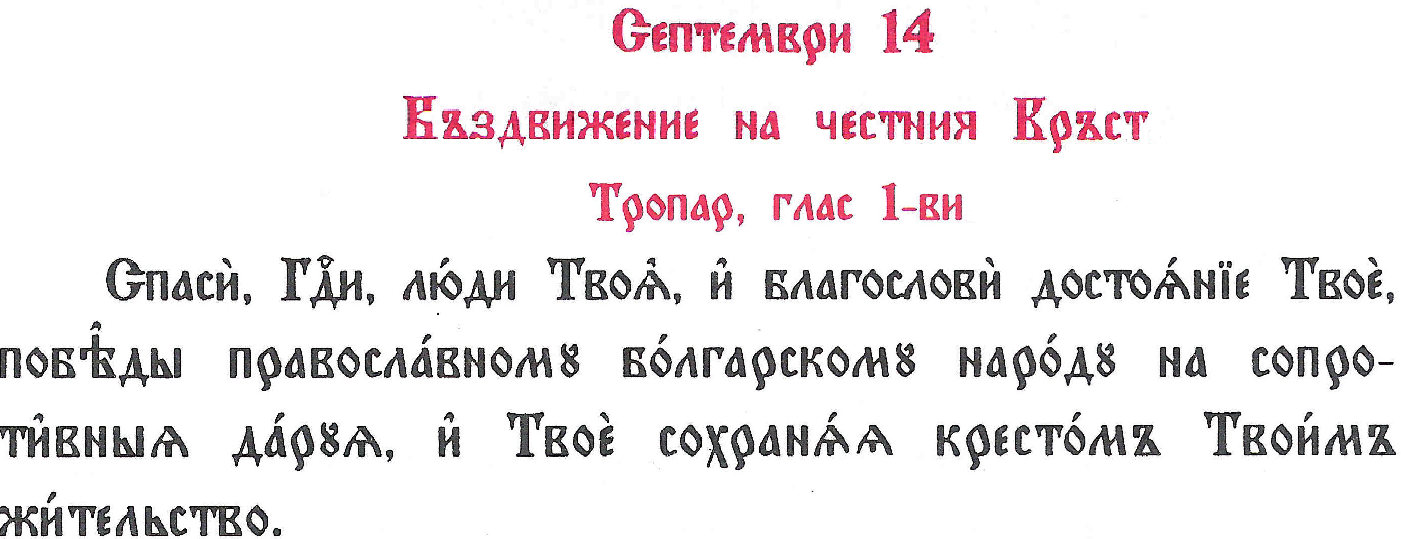
he Universal Exaltation of the Precious and Life-Giving Cross (Elevation of the Cross)’s day is feted on 14th of September each year in accordance to the new calendar order, according to old church calendar, the Church celebrated it on 27th of September.

The day is marked by a strong fasting, for short we refer in Bulgarian to this big Church feast as (The day of the Cross / Krystov den).
The Holy Orthodox Christian Church does worship the cross 4 times a year on:

  • Third Sunday after the start of the Great Lent
  • Holy Friday (Good Friday)
  • 1st of August
  • and

  • 14th of September – The Exaltation of the Holy life giving Cross

On this day, we the orthodox christians go to the Church and admirationally bow and kiss the Holy Cross on which our Saviour Jesus Christ suffered for our salvation.Through his cross suffering our Lord has granted to all of us the Christians an unbeatable “weapon” against evil and sin.
Through cross Christ has been victorious over sin and death.

According to old Church tradition, on the day Christian people were asking for the priest to go to their homes and do vodosvet (sprinkle their houses with a blessed holy water).Vodosvet is one of the Orthodox Church mystics, there is a specific prayers begging God for forgiveness of sins, asking for good health and blessing. The prayers are being red over a vessel containing clean water. Finally he blesses the vessel with Water with the life Giving cross 3 times (as a symbol of the Holy Trinity). Then the priest uses a the cross and a tiny piece of twig to sprinkle all the people and objects in the house.

On the holy exaltation of the holy cross feast we also celebrate also the following 3 events:

1. The miraculous appearance of the Holy Cross to emper st. Constantine
2. The finding in Jerusalem of the Holy life-giving cross in Golgotha
3. The return of the Life-giving cross from persian captivity
On 14th of September, according to Church tradition saint John of John Chrysostom has give away his spirit and joined the assembly of saints of God, however because of the Exaltation great significance, the church holy fathers decided that this is celebrated on 13th of September.

The Antiphon for the Exaltation of the Cross feast is singed and translated from Slavonic its meaning goes like this:

Troparion voice 1

Save Oh Lord, your people and bless possession, grant us oh Lord a victory over our enemies and save your inheritance with your Cross

Troparion voice 2

You've been lifted willingly on the cross, grant you mercies to your inheritance oh Christ our Lord,
stregthen the spirits of the pious king and to your people,
grant us victory against our enemies,
Surround us with peace and with peace give us unbeatable victory

In the Glorification part of the Holy Liturgy feast service its singed:

We magnify you, oh Christ life giver,
and your Holy cross, because you have saved us from the enemy.

What does the Church tradition says about the finding of the holy cross of Christs sufferings?

After the Church crucifixion of Christ, according to the tradition of that times, the weapon for punishment from this kinds – the cross tree was buried in the ground on the same place, where the punishment was executed.
Following the tradition on Gologthas where Christ was crucified was buried the cross used for crucifixion.
In later times, emperor Adrian in his attempt to destroy christianity and the place of pilgrimage of Golgotha has issued an order to built a pagan shrine on the same place.
Later under the reign of Emperor st. Constantine the cross appeared in the sky in a miraculous way and again under his reign the Golgotha place which means literally translated( the place of the Skulls) was discovered.
Let witht he Holy miracle making power of our Saviour’s cross by the prayers of all the Saints and our Theotokos (Holy Virgin Merry) God grant to all of us christians victory of our enemies! Amen

Share this on

The Ascension of our Lord Jesus Christ feast in Bulgarian Orthodox Church

Friday, June 3rd, 2011

Ascension of Christ Orthodox Icon, Voznesenie Hristovo ikona, Vyznesenie Hristovo icona

On 2 of June this year 2011, our Bulgarian Orthodox Church has marked one more bright feast (one of the 12 chief (God’s) feasts).

The Spiritual Joy is great as our Saviour has Ascended to Heaven 40 days after his Glorious Resurrection in front of the amazed desciples, and crowd of people who were with them.

An Angel has also told the people testifing our Lord’s ascension that the Second Coming of our saviour will take place in the same manner as his Ascension.

Here is some passages from the Gospel of Luke 24:50-53

50 Then he led them out as far as Bethany, and lifting up his hands he blessed them.
51 hile he blessed them, he parted from them and was carried up into heaven.
52 And they worshiped him and returned to Jerusalem with great joy,
53 and were continually in the temple blessing God.

It’s a tradition in some Orthodox Churches that the Paschal Greeting (Christ is Risen / Hristos Voskrese / Hristos Anesti etc.) is substituted with the greeting:
Christ has ascended by the person greeting, while the respondant confirms answering with Truly he has ascended

This Ascension greeting is not that deeply routed among Christians as the Pashcal greeting, though it’s very truthful and beautiful, to use it instead of the standard daily Hi greeting ;)

The whole following week after Ascension’s feast has been arranged by the Church to be a feast week commemorating our Lord Christ’s glorious Ascension (in his glorified body) to Heaven and sit in the right hand of God.

There is a local village hear in Bulgaria near a village called Spasovo – Saviour’s which has a Church called The Ascension of Christ

In this small village there is a spring which does start flowing only on the date of the Ascension (celebrated on a different date every single year)!!!
That’s amazing God miracle given to strengthen our faith as a confirmation that the Ascension of God’s Son and our saviour Christ is a real event that happened!

There is a false belief seriously accepted in many non-devoted Orthodox Christians who does not know well the Orthodox Christian faith, that on the date of The Ascension the so called Spasov Den (in Bulgarian) – Day of the Saviour , the dead who are in heaven and hell are allowed to get out of Heaven or Hell (for a temporary break) and be a bit closer to the living.
Many people who believe this insanity instead of visiting a Church and being joyful for the Ascension of Our saviour do go to the city graves and spends few hours, crying or remembering the dead …
This kind of believe is firmly non-orthodox and is taken from ancient paganism beliefs.

With all this said I find it important to say few words on why the Lord Jesus Christ has ascended?

The answer to this question gives Christ himself, as he says in the Gospel of John – Chapter 16

7 Nevertheless I tell you the truth;
It is expedient for you that I go away:
for if I go not away, the Comforter will not come unto you;
but if I depart, I will send him unto you.

Here is a part of the Troparion for Ascension that is being sing in the Church:

When You fulfilled the dispensation for our sake,
and united earth to heaven:
You have Ascended in Glory, oh Christ our God
not being parted from those who love You,
but remaining with them and crying:
I am with you, and no one will be against you!

Christ has Ascended to all Orthodox Christians!

Share this on

Palm Sunday day feast in Bulgareevo (Bylgareevo) – A Pilgrimage Journey to venerate a particle of the life giving cross

Sunday, April 17th, 2011

palm sunday cvetnica orthodox icon

I’m just coming back from the Bulgareevo (a small village cituated nearby Kavarna).
Bylgareevo is a middle size bulgarian village situated near the sea and is not famous with anything significant.
The village has two Orthodox Church temples and a serving Priest (an Archimandrite, father Metodii).
Father Metodii is one of this priests that is a person to remember as he is a truly devoted to Christ monk. Since about two years of time he has reconstructed his local village house and the yard nearby the house into something which hopefully in the short future will become a fully monk inhabited spiritual fortress (A Monastery).
Father Metodii lives and believes part of his service to God constitutes in rising this small monastery and gathering together Bulgarian believers in order to further rise up the Bulgarian faith in Christ and to become a center for spiritual pilgrimage.

The monastery already has a monastery bell, a monks cells and the small chapel (parakles/paraklis) prepared to be as a place for monks pilgrimage.

Father Metodii’s efforts to make the monastery an attractive place for future candidate novice Monks and Monks are truly genuine!
All he has done by so far is a good example for all us the Christians to follow. Most of the expenses related to the Monastery building are being paid by the Father himself as he has donated all his possession to the Church.
As part of this efforts to rise up the place as a place for spiritual pilgrimage by God grace Bylgareevo’s monastery has been granted the honour to contain a particle of the Holy Live giving Cross Tree on which our Lord Jesus Christ has been crucified.. By God’s mercy the Patriarch of Jerusalem and the local national museum has donated two particles of the Holy Cross on which our Lord Jesus Christ was Crucified and suffered for our sins.

Now the holy crucifixion cross remains particles are being kept in the Monastery’s small chapel for pilgrimage. Thus the opportunity for a pilgrimage journey to Bylgareevo on this day of great spiritual joy Palm Sunday was a huge blessing for me and the few more brothers and sisters with whom we traveled to Bulgareevo
Below I present you with a picture on which you can see Father Metodii (Methodius) holding in hands the small particle of the Crist’s Crucifixion cross tree (embedded in the center of the wood cross on the picture).Father Methodius holding a cross containing a particle of the cross on which the Lord Jesus's Christ was crucified

The name of the village Bulgareevo is also really interesting as it’s a direct direvative from the word Bylgariq (which translates as Bulgaria).
Along with the two particles of the Holy life giving Cross where the saviour Jesus Christ was crucified, father Metodii has collected some great saint relics, just to name a few of the relics which are in the newly built monastery in Bulgareevo; holy relics of saint Panteleimon, holy Relics of Saint John of Rila etc.

Now going back to Palm Sunday‘s feast essense, Palm Sunday is among the 12 Church feasts in the Orthodox Churches, we use to call (The Lord’s feasts [Gospodski Praznici]), and thus is one of the 12 feasts which are most spiritually richful for Bulgaria as an Orthodox Nation and for all other national Orthodox Churches around the world.

Palm Sunday is always celebrated on the Last Sunday before the beginning of “the passionate week”, the week in which we who believe in Christ’s name remember the great trials and suffering our Lord and Saviour Jesus Christ has carried for the salvation of all Christians.

Palm Sunday is the feast in which we as we read in the Gospel readings in the Church, commemorate Christ’s entrance in Jerusalem on a small donkey.
Here is a small chunk of the Gospel reading for the day:

They took palm branches and went out to meet him, shouting, "Hosanna!" "Blessed is he who comes in the name of the Lord!" "Blessed is the King of Israel!"

In this scripture text as we read above the people were glorifying God and Christ as the son of the God in accordance to the Old testament scriptures in which it was prophecised that the Saviour of Mankind (The Messiah) would walk in through the entrance doors of Jerusalem riding a donkey.
People who were present observing the Lord’s entrance were witnessing the fulfilment of the old testament psalms prophecies by glorifying the Lord.

This were the same people which just a week later were screaming “crucify” him …

On Palm Sunday it is a Church tradition in the Bulgarian Orthodox Church that willow branches are being blessed by the priest and then distributed among layman as a blessing and a remembrance of the Palms which were layed upon the Lord’s entrance in Jerusalem.

Later on we took the willow branches in our homes and place it in our home icon-stands (the place with the icons we use for a prayer to God).

The use of willow branches in our Church has been established through the years as a Palm Trees substitute as the Palm tree does not grow in the Bulgarian lands

In Bulgaria Palm Sunday is known as Tsvetnitsa. People with flower-related names, (for example Tzviatko, Margarita, Lilia, Violeta, Yavor, Zdravko, Zjumbjul, Nevena, Temenuzhka, etc.) has a name day on that date.
It’s a pity that many bulgarian people who are baptized in our Bulgarian Orthodox Church, fails to understand the symbolic meaning of the willow branches and doesn’t really understand the essence of the Church feast but just go to Church to light up a candle “to have a good fortune and health”., usually mostly missing the spiritual importance for us the Christians of this feast.. but I hope things would get better with time and more Bulgarians who lost their roots during communism will come back to their ancient faith the Orthodoxy.

I recommend to all Orthodox Christian believers from Bulgaria, Romania and Russia who has the oportunity to visit Bulgaria as a tourist destination or on any other occasion to visit Bylgareevo and do a pilgrimage journey to Bylgareevo newly constructed monastery containing the holy relicts.

You will receive the great spiritual blessing of venerating the particle of the cross on which our Lord Jesus Christ’s most holy body was hanging on!
The cross on which the redemption of mankind was achieved by God’s son 2010 years ago!
The cross on which we have received a forgiveness of our sins!
I thank the Lord for having this good blessed day and I pray that we all who believe in his name come to the understanding to know his as he knows us!

Share this on

The Resurrection of Lazarus feast in the Bulgarian Orthodox Church (The day of Lazarus / Lazarus Saturday)

Saturday, April 16th, 2011

The Resurrection of Lazarus Orthodox Icon Sinai

It's one day before the the great feast of Palm Sunday . On this day in the Bulgarian Orthodox Church we do have a reading of the glorious miracle with the raising (resurrecting) of Lazarus, that our Lord and Saviour Jesus Christ did in front of many Jewish people.

In the gospel readings, we hear that the Lord has went nearby the place where Lazarus has been buried.
The Jewish tradition of this time is that their dead be buried in a small cave, while the body is being wrapped up in a specific white clothe matter. This kind of burial ceremony is directly related to most of the ancient Jewish beliefs about the resurrection of the death which will take place.

In that time, Lazarus has been dead (or in grave) for already 4 days, even in the Gospel, we read that the rottening body has started to decay and hence the rotting flesh to smell badlhy …

The gospel also taught us, Lazarus has been a friend of our Lord Jesus Chirst, and Christ himself loved him. Very interesting fact concerning Lazarus earthly life is also that he has been a brother of the sisters Mary and Martha.
Mary is actually the same Mary which we read about in the Gospel of Luke, the same mary which bows and cries in front of Jesus's feets, repenting and begging the saviour for a forgiveness of her sins.

Even though our Lord has been sent a word 4 days before he came, whether the overall journey to the place where Lazarus was at that point was only 2 days. The Lord has come on the 4th day to Bethany (a village near Jerusalem)

When the Lord came in Bethany he found that Lazarus is dead and has been in the tomb for 4 days. On his arrival he met Martha and Mary in turn.
Marta was loudly crying regretting that Christ haven't arrived earlier otherwise he would have healed from the sickness and he would not die..

The Lord replied to Marta's lamention with his majestic words: "I am the Resurrection and the Life. He who believes in Me shall live, even if he dies. And everyone who lives and believes in Me shall never die".
As the gospel reading continues, we're told that Christ has been sorrowful in himself and the Lord Jesus further said the famous phrase: "Jesus wept!
In the presence of a crowd of mourners (obviously many people has loved Lazarus), the Lord did his glorious miracle of Lazarus Resurrection.

After on the heavy stone which was sealing the cave with Lazarus dead body was moved away by the order of the Lord.
The Lord entered in the cave prayed and said to Lazarus: "Lazarus come forth!"
Hearing the order of the son of God and our saviour Lazarus has risen up with the funeral clothes still wrapping his body. Jesus instructed some people from the crowd to remove the grave-cloths from Lazarus and let him walk.
As many people in the grave has saw the indescribable miracle the people witnessing the miracle "believed in him".

The meaning of the Lord's "Come forth!" is crucial, as with the the glorious miracle of Lazarus Raising the Lord has shown his authority over death and live.
Even the death was submissive to the Lord's order! Even the death couldn't go against his mighty word and silently obeys!

This story was given by our God the Holy Trinity to clearly show us that he is the one in charge over death and over life on earth and hence he is the one in charge of every human being still breathing on this earth.
On the other hand the raising of Lazarus was done to show to us who still doubt in our hearts and minds and disbelief about the promised Resurrection of the Death in the glorious day of the Lord.

Our Lord has even wept, clearly showing to us that he is not indifferent to our suffering, but on the contrary is suffering with our pain himself.

After Christ's Crucifixion, death, Resurrection and Ascension, Lazarus has become a vigilant Christ disciple. He has further compelled to seek refuge away from Jerusalem to avoid the anger of high priests and the pharisees, who wanted to kill him.
Lazarus has leaved Judea to seek refuge in another country. He found his refuge in Kittium (today called Larnaca) and situated in Cyprus.
According to Orthodox Church tradtion Lazarus has been ordained to become the first Church bishop of Kitium.

Little is known about Lazarus after Our Lord's Resurrection and Ascension except that during his thirty year he never smiled or joked except for one occasion. One day, he saw someone stealing a clay pot and he laughed saying, "the clay steals the clay".

Another famous tradition connected to Lazarus is the discovery of Mount Athos in 52AD.
Lazarus was very close to the Virgin Mary and he was very grieved that he could not return to Jerusalem to visit her (he was still in fear of the Jews).
The Theotokos learned of his sorrow and sent him a letter to comfort him.
She asked that he might send a ship to her that she might visit him in Cyprus.
With great joy, Lazarus sent a ship to the Holy Lands to bring the Virgin Mary and John, the beloved disciple to Cyprus for a visit.
On their journey, a great storm blew them off course and carried them to the shores of Ephesus and then the ship to the shores of Athos, Greece.
Unaware that divine providence had brought her to this area, the Virgin Mary completely taken by the beauty of the area, prayed to her son that this could be her garden devoted to prayer to "fight the good fight of faith".
Having converted, blessed and established a new christian community from the local idolaters they set sail for Cyprus and met with Lazarus.
The day of Lazarus as we call it in Bulgaria is one of the great Christian feasts in our Orthodox Church, even though it's not among the 12 greatest Christian feasts it's one of the major feats throughout the Church year.
The first tomb of Lazarus in Bethany remains as a site for pilgrims to this very day. The second tomb, on the island of Cyprus, was found in Kittium sometime in A.D. 890, with his relics inside and bearing the inscription "Lazarus, the Friend of Christ."
The commemoration of the day the Lord Jesus has risen Lazarus from the death is one of the few feasts during the great Lent which are considered days of spiritual joy in the Bulgarian Orthodox Church and all other national Orthodox Churches around the world.
The feast is also known under the name Lazarus Saturday is always commemorated in Orthodox Churches, one day before the Palm Sunday feast.
By the Holy prayers of Lazarus let our Lord Jesus be merciful to us the sinners! Amen.

Share this on