The Holy Great Week of Christ Passions
The last week of the earthly life of the Lord Jesus Christ is called the "Great" or "Passion Week", i.e. A week of suffering, a prelude to eternal life. The Lord's life was coming to an end. Having resurrected Lazarus on the Sabbath as a proof of the Mass coming Resurrection known in the Church as Lazarus Saturday as it is always celebrated Saturday in the Orthodox Church on which people gathered to solemnly welcome the Messiah Christ, and triumphantly entered Jerusalem on Palm Sunday. Following that the Savior Jesus Christ who prophecised his betrayel to the Cross for human sin, the Lord voluntarily walked step by step to His predestined inevitability.
Every day of the Passion Week is called Great and Holy for the reason this week is the most Holy and Sanctified week of the whole Calendar Church year. Each of the Seven days of it, the Church commemorates events of last week of Christ's life and suffering on earth before Resurrection and Ascension to Heaven through special services the way of Christ to Golgotha, the sufferings and His redemptive work on the Cross.
Worship during Holy Week
Lent services on the weekdays of Lent are characterized by their penitential singing. The royal doors (of the alter known as Dveri) remain closed as a symbol of man's separation from the Kingdom of God. Church vestments are dark, usually purple in the color of repentance.
_in_North_Macedonia.jpg)
No Divine Liturgy is performed on weekdays, but so that the (ordinary chrsitians who go often and pray God) – so called faithful can support themselves in their ascetic effort of fasting by accepting Holy Communion, a Liturgy of the Presanctified Gifts is performed (a specific Liturgy prepared for the Purpose that is only served during great Lent). This service is very ancient, it is mentioned in the canons of the VII century, but it was established earlier for sure. Most likely the Liturgy of the Presanctified Gifts, practice to sanctify bread and wine in prior has later evolved in the Roman-Catholic Churchs errenous from Eastern Orthodox point of view – Eucharistic Adoration
– (a consacration host kept usually in the so called (monstrace). Traditionally, Presanctified Liturgy creator is considered to be Pope St. Gregory I the (Dialogus), Pope who governed the Western Church in (VI century) – some theologians today claims it was developed at least partially or coauthored also by Saint Ambrose of Mediolan (Milan).
The pre-consecrated liturgy consists of a solemn Lenten Vespers (prelonged repentance songs) with elements from Psalms and readings from Holy Scripts regarding life and suffering of Christ, to which is added the part of "transfer" of the Holy Gifts from the Alter to the Upper place (the place where the proskomidia occurs) and walked in on the "Great Entrance" Liturgy part with the Sacraments placed in the Holy Chalice held by the priest in front of iconstansisa and back to the Alter of Sacrifice, however the consecration of the Gifts itself is not performed, the Eucharistic gifts are already sanctified and prepared on previous Sunday Saint Basil or Saint John Chrysostomos liturgy. That is why the service is called the Presanctified Liturgy, i.e. of the pre-consecrated Gifts.
Usually This service takes place on Wednesdays and Fridays or at least on one of these days and on the 6th week of Maria of Egypt is served 3 times instead of 2 throughout the week to venerate the Most Holy Mother Mary of Egypt which from a Harlot turned a saint by immerse repentance, and cause of that become the patron saint for repentance and example for true repentance, that each and every Christian aims follow, every day of his life.
Following the 6th weeks of Fasting a period that the ancient Church placed for try out of ones self soul state and cleanance of passions comes saint Lazarus Saturday.
Lazarus Saturday is the only day of the year when Sunday service worship is integrated in Saturday. Usually Sunday service is a service of higher importance than the other ones, a faithful gathering to share the unspeakable joy for the Resurrection of Christ and his triumph of Life over Death.
Lazarus Saturday is the beginning of the Easter celebration. During the Liturgy of Lazarus, the Church glorifies Christ as "Resurrection and Life", who even before His sufferings and death, with the resurrection of Lazarus, confirmed the foreshadowing of the universal resurrection of mankind coming. It was because of the resurrection of Lazarus that Christ was glorified by the people as the long-awaited Messiah (no man ever was able to rise up a death rotting person from the Death after four days in grave) truly identifying him as the promised King of Israel and the fulfillment of long ages awaited Old Testament prophecies.
The very feast of the triumphal entrance of the Lord into Jerusalem (Palm Sunday) belongs to the twelve most importance Church feasts, known in the Church as "Feasts of the Lord". Christ immediate worship by all Jews on his entrance in Jerusalem is directly connected with that of Lazarus Day on which he did the miracle of commanding Lazarus to wake up from Death, returning life of a long dead Lazarus.
On the eve of the feast, the prophecies about the Messianic King from the Old Testament are read, along with the Gospel accounts of Christ's entry into Jerusalem, as another confirmation that Christ is the True Messiah.
In the morning, the willow twigs we hold in our hands throughout the Liturgy are blessed, thus showing that we welcome Jesus Christ as King and Savior, just like the Jews has received him in Jerusalem 21 centuries again in year 0 A.D.
Extract Prot. Thomas HOPCO "Fundamentals of Orthodoxy" with short modifications from:
Church NewsPaper of Bulgarian Orthodox Church, Issue 7 of April 17, 1998
Holy Monday, Holy Tuesday and Holy Wednesday
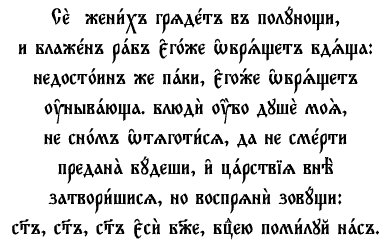
Church Slavonic (Old Bulgarian) notable singing during the first 3 days of the Holy Week sung in the Orthodox Church
Text translates as:
Behold, the Bridegroom comes at midnight,
And blessed is that servant whom He shall find watching,
And again, unworthy is the servant whom He shall find heedless.
Beware, therefore, O my soul, do not be weighed down with sleep,
Lest you be given up to death, and lest you be shut out of the Kingdom.
But rouse yourself crying: Holy, Holy, Holy, art Thou, O our God,
Through the Theotokos have mercy on us.
Troparion of Bridegroom Matins
During the first three days of Holy Week, the Church commemorates the Lord's last stay in Jerusalem. In these days the worship is very intense: there is a Midnight Office (Μεσονύκτικον, Mesonýktikon; Slavonic: Полунощница), The Hours matins, Psalms Book chapters, reading of the Gospel and Liturgy of the Presanctified Gifts. During the "lessons" given by, the four Gospels to the Gospel of John are read. 13, verses 30.
Great and Holy Monday
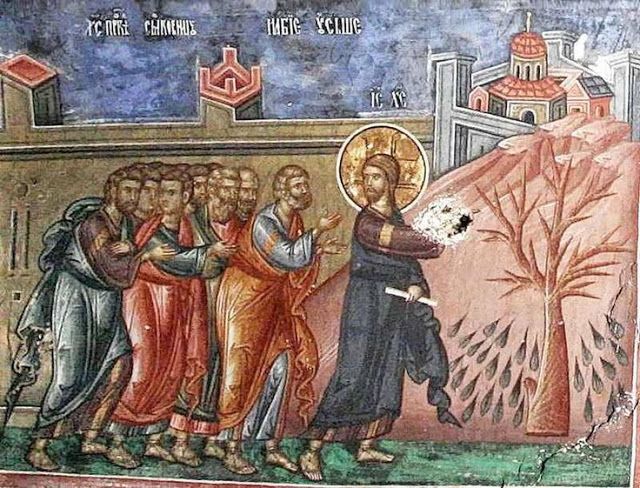
On Holy Monday, the evangelists tell us how the Son of God entered the Jerusalem temple and found it full of merchants. Overwhelmed with holy wrath, He overthrew their tables and drove them out, because the temple is a house of prayer, not a marketplace. (Matt. 21: 12-13, Mark 11: 15-19; Luke 19: 45-46).
On Holy Monday, the Church celebrates St. Patriarch Joseph, the son of St. James the Patriarch and a type of Jesus Christ.
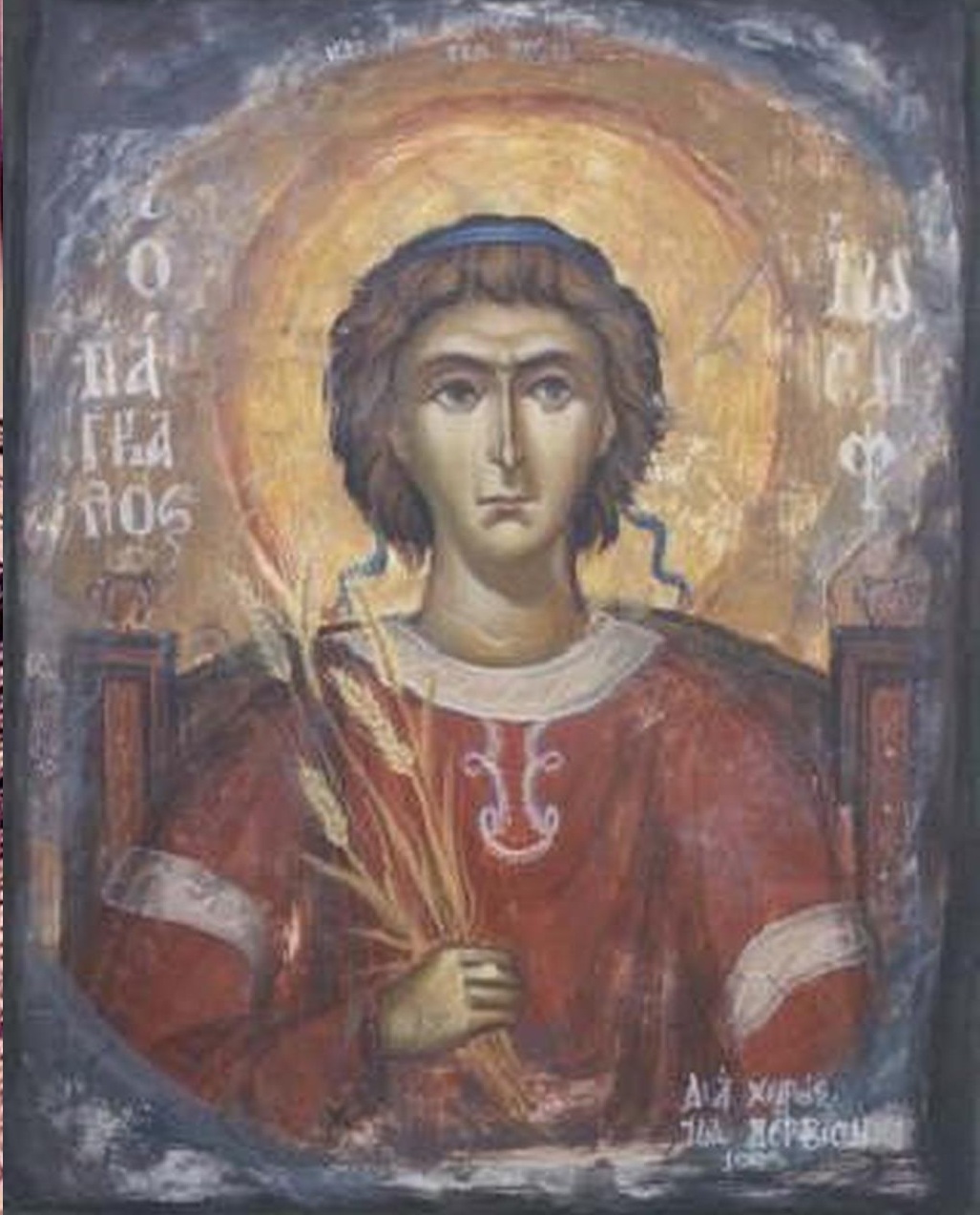
Joseph The Magnificient
Joseph was sold by his brothers to merchants traveling to Egypt.
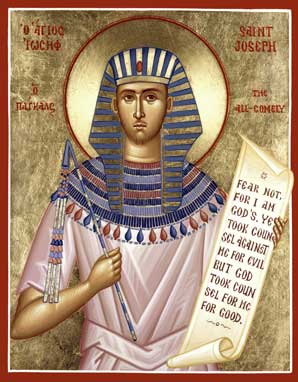
There, in a foreign land, he went through many sufferings, but Pharaoh made him second in power and position in the whole kingdom (Gen. 41: 38-46). Like Joseph, the Lord Jesus Christ was betrayed by the Jews to the Gentiles, tortured, and suffered for human sins.
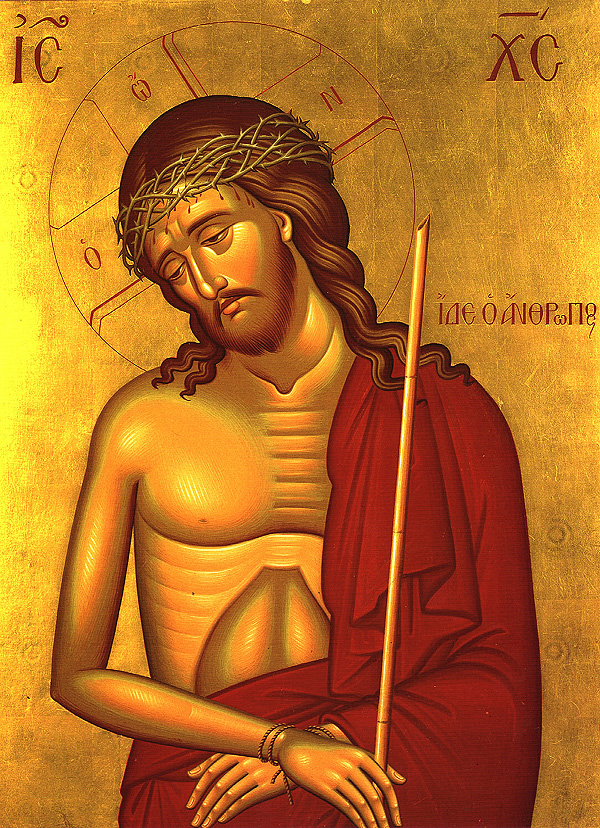
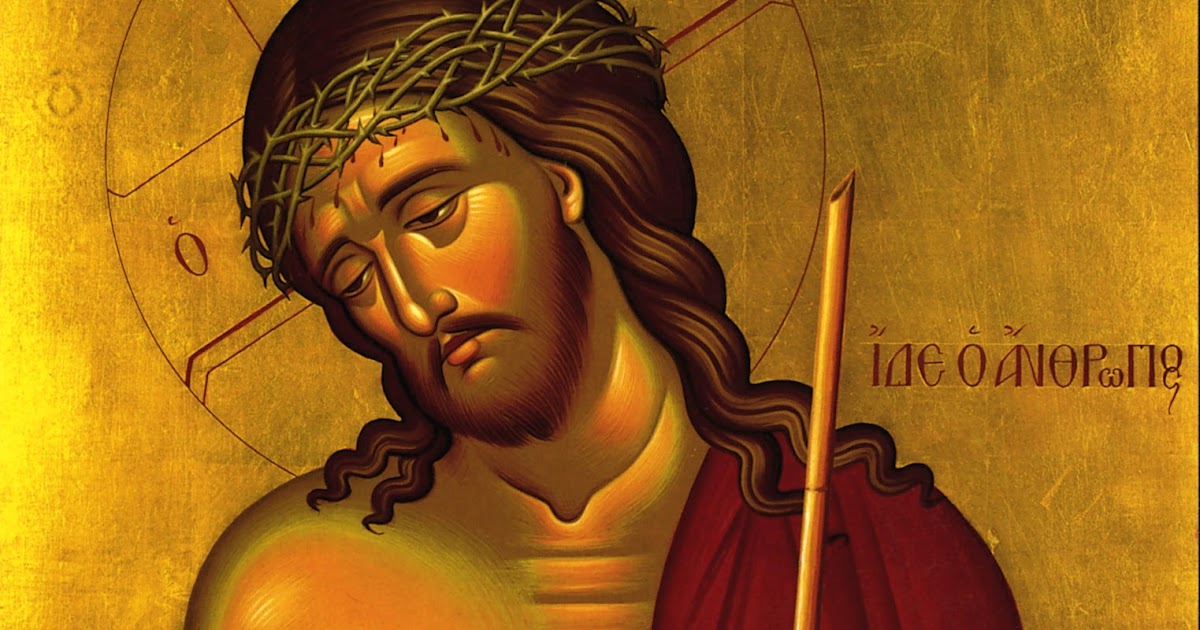
The Icon of Christ the Bridegroom (Ο Νυμφίος)
The Church also invites us to reflect on the image of the barren fig tree, which withered after being cursed by the Lord (Mark 11: 12-14, 20-26, Matt. 21: 18-22). "Every tree that bringeth not forth good fruit is hewn down, and cast into the fire" (Matt. 3:10).
In the same way, we will be condemned if we do not live in prayerful communion with God, do not strive to improve our faith, do not fill ourselves with virtues, and do not bear spiritual fruit.
Great and Holy Tuesday
"Watch therefore: for ye know neither the day nor the hour wherein the Son of man cometh" (Matt. 25:13).
(Gospel reading: Matins 22: 15-23: 39; Liturgy Mat. 24: 36-26: 2).
Holy Tuesday is a day for teachings and final moral instructions:
The Lord Jesus Christ gives us an example of how to do good – not to give from our surplus for this purpose, but as a poor widow to set aside from our last material means.
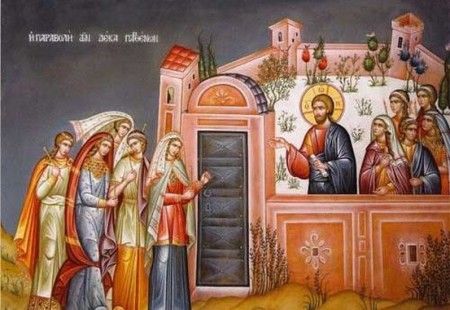
Speaking of the approaching days of struggle and trial, Christ tells of the ten wise virgins who were always ready to meet the Savior (Matt. 25: 1-13). It reminds us that we must "be vigilant and not be discouraged" and keep our lamps lit in anticipation of the Divine Bridegroom.
That is why on Holy Tuesday the Church sings:
Here comes the bridegroom at midnight,
and blessed is that servant whom he hath found awake,
and unworthy is he whom he finds careless.
Therefore beware, my soul, lest you sleep,
to be delivered to death and to remain outside the closed doors of the Kingdom,
but come to your senses and exclaim: Holy, holy, holy, O God,
have mercy on us for the sake of the Mother of God!
"The light of the body is the eye" (Matt. 6:22), says the Lord. the unsullied human heart and soul, and "the oil is alms or all our good deeds" (St. John Chrysostom).
Living virtuously, with the fear of God and trust in the Lord, we will be ready to meet the Savior and enter the marriage hall – the Kingdom of Heaven.
The church also reminds us of the parable of the talents (Matt. 25: 14-30) and invites us to work hard and improve the abilities God has given us.
Then follow prophecies about the fate of the city of Jerusalem for the last days of the Second Coming of the Lord
(Matt. 25: 31-46, Mark 13: 1-31, Luke 21: 5-38).
Great Holy Wednesday
On the day of Holy and Holy Wednesday we remember one of the last events before the Lord's saving sufferings for us: the precious ointment, which in his sincere repentance a sinner woman poured on the Savior's head (Matt. 26: 6-13, Mark 14: 3-9).
She managed to enter the house where Christ was, the woman carrying an alabaster vessel with precious very expensive ointment, she wanted to pay her enormous respects to Him. In a hurry (scared that someone from the people in surrounding Christ might stop here) in order for not to interfere with her good intentions, she broke the vessel that was helding a high amount of oilment, making it easier to spill the ointment on Christ.
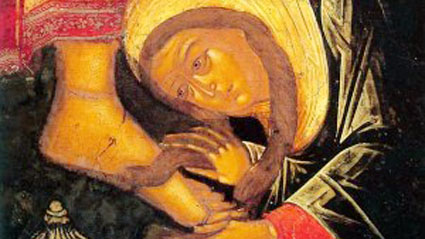
The precious ointment cost three hundred dinars ! (Mark 14: 5), so some being sick of the passion of Judah the Iscariot (The Love for Money the works of the Flesh) resented it: "Why is this waste?", "The ointment could be sold and the money given to the poor."
And Christ answered them, "You always have the poor with you, but you do not always have Me," "she has done a good work for Me [by] deceiving to anoint My body for burial." Her zeal will be heard all over the world.
Like the prodigal son, the sinner realized her sins and "came to her senses."
Let us also come to our senses about our real spiritual condition and repent of our sins, so that with our repentant tears we may "anoint" the Lord like that repentant woman !
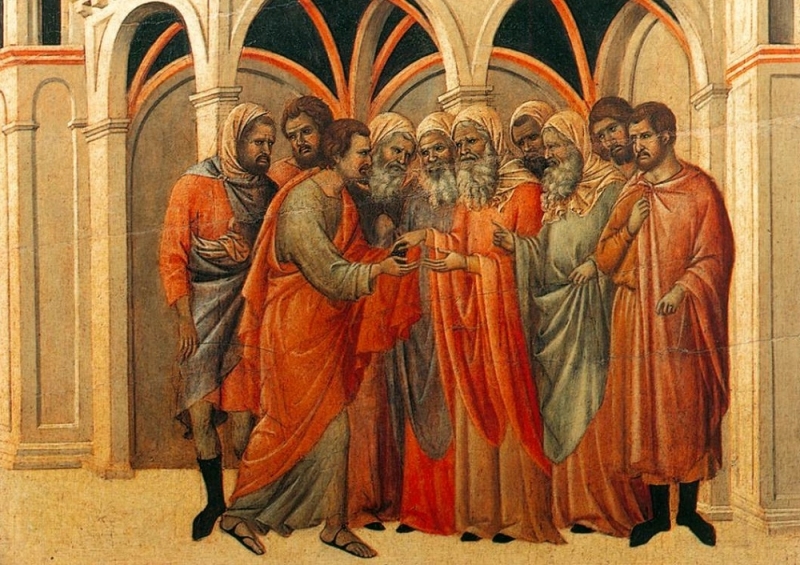
On the same day, we recall the decision of the Sanhedrin to condemn Jesus Christ. Then Judas Iscariot went to the Jewish leaders and agreed to hand him over for thirty pieces of silver (Matt. 26: 14-16, Mark 14: 10-11, Luke 22: 1-6).
We should well think:
Do we, who bear the name of Christ, not betray Christ through our ungodly deeds?
From that day on, the kneeling prayers do not cease, as one should understand we have done plenty of badness and has inflicted additional pains to Christ, who suffered for all great sins on the Cross.
Great Wednesday
Great and Holy Thursday – Remembrance of the Last Supper
On that day, the Lord Jesus Christ celebrated the Passover in the home of a resident of Jerusalem
(Matt. 26: 17-35, Mark 14: 12-31, Luke 22: 7-38, John 13: 1-17, 26).
Before supper He washed the feet of the apostles and said, "I did not come to serve, but to serve."
The Savior then instituted the sacrament of the Eucharist (Communion) by Himself partaking of the holy apostles.
By His great mercy, the Lord also gives us the opportunity to receive His true body and blood during the Holy Liturgy, so that by accepting Christ within us, we may strive to keep Him through the purity of our hearts.
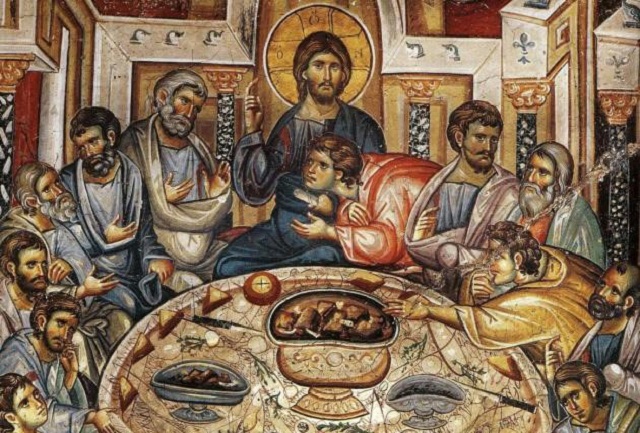
After bequeathing the new commandment to love all, Christ revealed to His disciples that He would be betrayed.
Bewildered, the students asked who would do this.
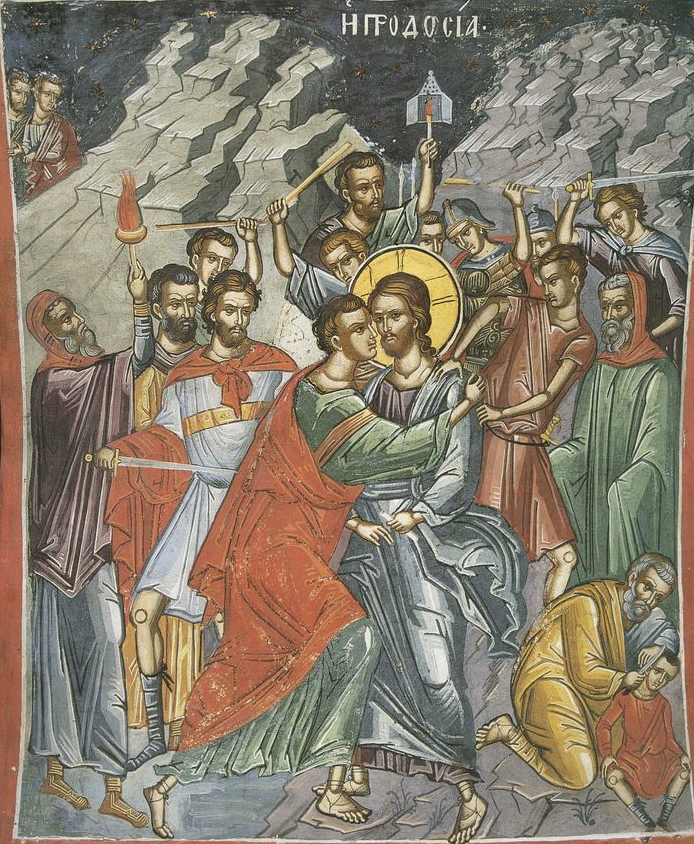
Judas asked is it him that will betray ?
Christ answered him so meekly that the others did not understand.
Judas got up, went out leaving the holy eucharistic supper.
And pupils, thought he was going shopping for required goods for the brothers because he was a treasurer (an accent how we should keep a good mind and try to think well about others all the time).
Next great accent is Lord's Prayer.
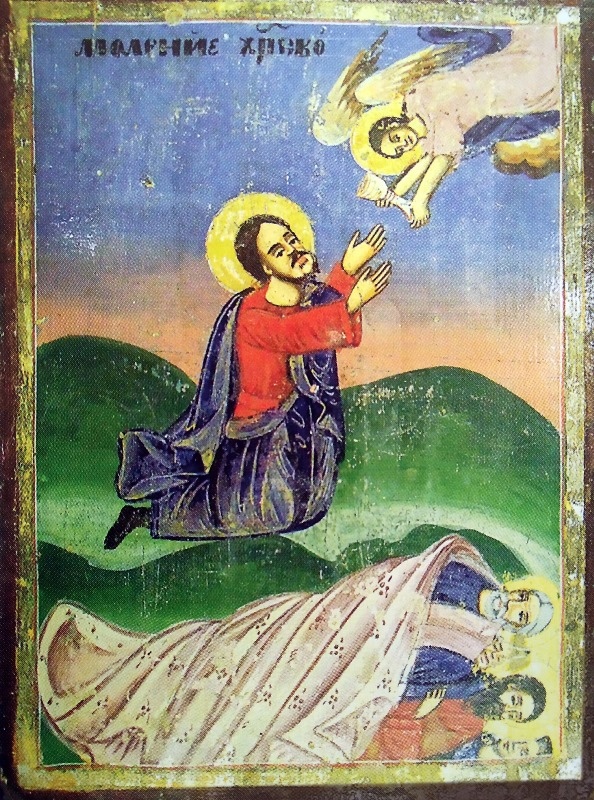
Christ Prayer in Gethsemane Garden – Bulgarian Icon museum Great Tarnovo
In the Garden of Gethsemane After supper Christ and the apostles went to the Garden of Gethsemane (Matt. 26: 36-46, Luke 22: 39-46, John 18: 1), where he prayed until the coming of the traitor.
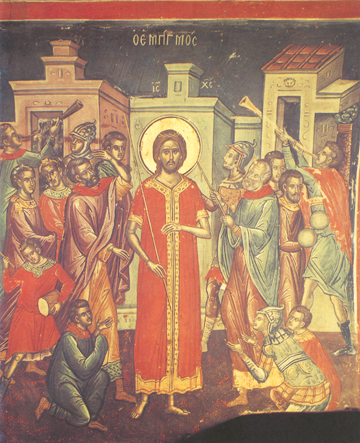
Usually on Thursday evening the morning of Good Friday service is served, when the so-called Twelve Gospels are read, ie. the twelve passages of the Gospel that tell of Christ's sufferings.
Through them we witness the mockery, suffering, and crucifixion of Christ, through which He redeemed us.
"Here is the Lamb of God who took away our sins."
And again we wonder if we do not crucify Christ through our passions and sins.
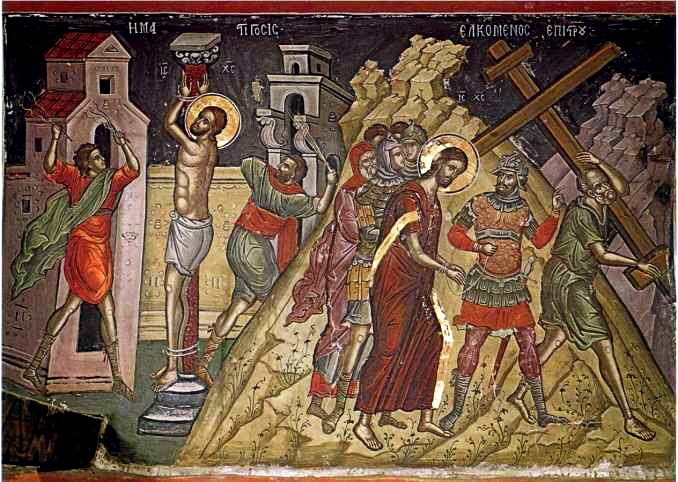
Jesus in Golgotha – Theophanes the Cretan
On this day, the priests take the Cross out of the altar, which symbolizes its carrying from Christ to Golgotha.
The Great annointing of the sick service is served so called "Велик Маслосвет" – during whose many prayers to saints healers are red to intercede for us following by 7 Act of Apostle readings and 7 Gospel Chapter Readings, wherever possible in large Cathedral Churches, this is served by 7 priests every willing layman is anointed with oil 7 times after reading each of the 7 Gospels for restorating of Health of the sick as well as a special blessing in the manner of the ancient Church tradition.
Great and Holy Friday
The Way of the Cross and Golgotha We remember the great sufferings of Jesus Christ, who freely agreed to be judged, flogged, spat upon, beaten with slaps, and shown before the people in a purple robe, with a cross in his hand and a crown of thorns on his head.
Armed with a heavy cross from Pilate's praetorium (judgement place), Christ was led to Golgotha on the crucifixion.
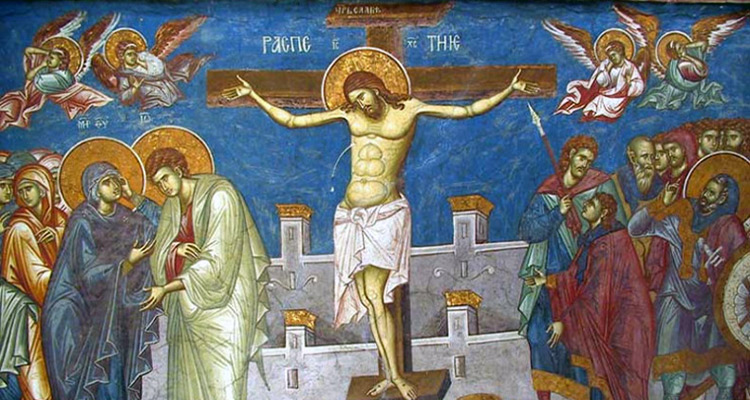
Crucified between two robbers for desecration in terrible natural disturbances – an earthquake and an eclipse of the sun, he died, accepted death to save all mankind from death.
On this day, every Christian should follow complete fasting (eat nothing and drink nothing) and pray and sorrow deeply for the Lord.
According to church rules, even the sick should only eat bread (at best a very dry one) and drink a little bit of water. Joys of any kind of type should be abstained and all passions avoived and one should ask God for mercy for himself, his family and ask is merceful to everyone.
Great and Holy Saturday
The burial of Christ the Savior and His descent into hell are commemorated.
He died on the cross, blood and water flowed from His pierced ribs.
Joseph of Arimathea and Nicodemus, asking Pilate for permission, removed Him from the cross, anointed Him with perfume, wrapped Him in a new shroud, and laid Him in a new tomb carved into a rock in the Garden of Gethsemane.
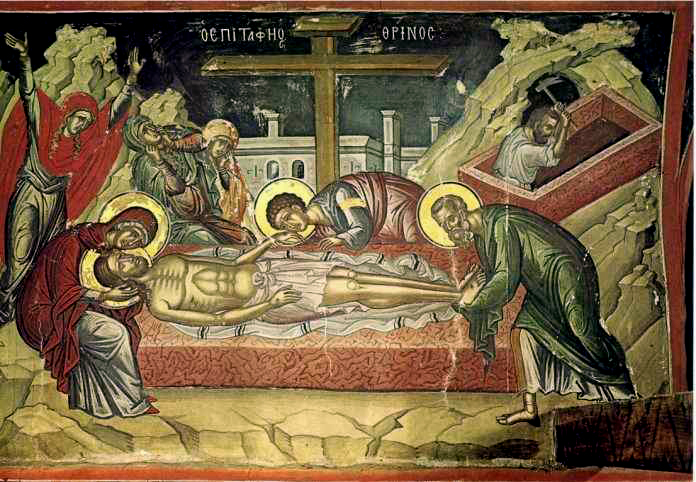
Epitaphios (Lamentation of Christ) from Stavronikita monastery, Mount Athos – Theophanes the Cretan
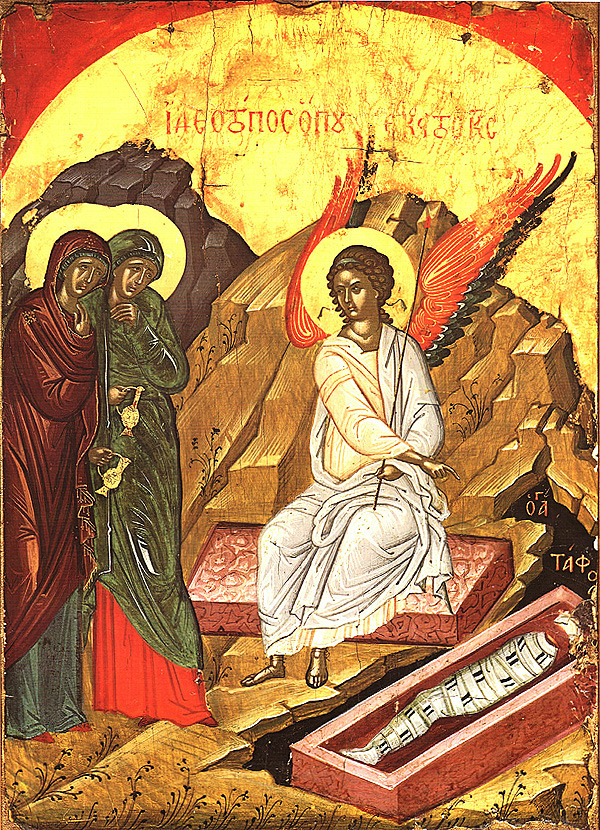
Myrrh-bearing women were present at His burial in the tomb, among whom, in tears with her grief-stricken heart, was His Mother the Holy Mother of God.
The church sings regarding this great events:
"In the grave with his body and in hell with his soul as God,
in heaven with the thief and on the throne with the Father and the Spirit You were, Christ,
Who fills everything. "
The Jews sealed the tomb and set up a guard.
Great secret! "Let the human creature silence !" – sings the Church instead of the Cherubim song on Holy Saturday.
The lord of life is in the grave, but he will soon be famous for the miracle of the resurrection.
On the Saturday morning after the liturgy, in some places it is customary for the priest to give flowers to the faithful as an expression of joyful anticipation of the Resurrection.
Holy Week in the statutes of the ancient churches
Initially, Easter was preceded by a two-three-day fast, which took place one week – the so-called.
Passion Week, or the Week of Christ's Suffering.
Subsequently, the 40-day fast was added to Lent, similar to the forty days during which Christ fasted in the wilderness. It was intended for the "announced", that is, for those who would be baptized on Easter.
For a long time during the practice of mass baptisms of the elderly, the sacrament was performed on Easter, when baptism was especially experienced as a participation in the voluntary death and resurrection of the Lord.
That is why the Easter Liturgy is extremely baptismal in nature.
After the sixth century, the baptism of children began to predominate, so the mass baptism of adults on Easter was gradually abandoned.
It was then that the meaning of Pentecost was changed – from a catechetical period, fasting became a period of repentance for members of the Church.
In the ninth century, Pentecost the word stems from the Greek Πεντηκοστή (Pentēkostē) meaning "fiftieth" was finally united with Holy Week, and so the duration of Lent increased.
The length of Lent varied, depending on how local churches viewed the inclusion of Holy Week at Pentecost and whether they considered Saturdays and Sundays, when canons forbid fasting, to be part of it.
In the Constantinople Statutes (followed by our Bulgarian Orthodox Church), Holy Week is not considered part of Pentecost, and Saturdays and Sundays are included in the Lent period, although they are not Lent days in the full sense of the word.
Thus, according to the Constantinople Statute, The Pentecost Lent had 6 weeks of 7 days, ie 42 days.
If Lazarus Saturday and Palm Sunday are excluded from it, the duration of Lent is exactly 40 days.
According to this statute, Lent begins on Maundy Monday from the first week of Lent and ends on Friday of the sixth week, that is, on the eve of Palm Sunday.
The troparions included in the Triodion (Постен Триод – The Church Service book with sung text used during the Lent, for this day speak of the "fulfillment of the soul-beneficial fortieth Pentecost" and the anticipation of the "holy week of the Passion."
The interpretation of the rule in the Apostolic Decrees (Church rules guidance book text from the end of the IV century) is similar, where it says:
"Perform this fast before Easter, beginning on the second day (that is, Monday) and ending on Friday. After these days, as completing the fasting, begin the holy week of Easter by fasting through it with fear and trembling."
It is no coincidence that the liturgies of Lazarus Sabbath and the Lord's Entrance into Jerusalem have baptismal elements.
According to another tradition, reflected in the 29th canon of the Sixth Ecumenical Council (681) – that is the year of Creation of Today's country of Bulgaria (which is the only country in Europe that did not change his name as of year 681), Holy Week was part of Pentecost, where it is called "the last week of Pentecost".
This other practice is preserved by the ancient churches, which separated from Orthodoxy after the Fourth Ecumenical Council in Chalcedon (451) – The Armenian, Coptic, Syriac Orthodox Church of Antioch, Ethiopian Church of Toledo, (perhaps the Jacobite Syrian Church) etc.
Even though this historic tradition was well preserved in those Churches and many of their church order or customs such as veneration for the icons, holy relics, the problem with them preventing them to be in ull communion with Eastern Orthodox Church stems in their rejection to accept the V-th XI-th and XII Ecumenical Ecumenical Councils and their perseverance on monophysitism (literally translated as, one nature – a teaching that says Christ has only one Nature and one Will a Godly, they say they do not reject that Christ was also real man in flesh but they consider the Godly nature of Christ has consumed the manly, which makes up their wrong understanding that Christ on the Cross did not fully suffer with his manly nature, but both God and man has suffered on the Cross – a doctrine which according to the Church councils is a pure hearesy, we can also conclude by the one nature of Christ that the so called today Oriental Orthodox Churches teach, that Christ on the Cross did not bear all the sins of the world as a man but he received all the sins and turmoils and evils as God.
In contrast in Eastern Orthodox Churches we do consider the truth that Christ has two Natures manly and Godly as well as Two Wills.
Some of the upmentioned ancient Oriental Orthodox Churches keep up to the heresy of monothelitism and that is why they're not communion with us the Eastern Orthodox.
The two wills in Orthodoxy is known under the term dyothelitism or dythelitism (stems from Greek δυοθελητισμός "doctrine of two wills") is a particular Christological doctrine that teaches the existence of two wills (divine and human) in the person of Jesus Christ.
Specifically, dyothelitism correlates the distinctiveness of two wills with the existence of two specific natures (divine and human) in the person of Jesus Christ (dyophysitism).
The Catechism of the One Holy Orthodox Church is stated: "Similarly, at the Sixth ecumenical council, Constantinople III in 681, the Church confessed that Christ possesses two wills and two natural operations, divine and human. They are not opposed to each other, but co-operate in such a way that the Word made flesh willed humanly in obedience to his Father all that he had decided divinely with the Father and the Holy Spirit for our salvation. Christ's human will 'does not resist or oppose but rather submits to his divine and almighty will.'"
This position is in opposition to the Monothelitism position in the Christological debates. The debate concerning the Monothelite churches and the Catholic Church came to a conclusion at the Third Council of Constantinople in 681. The Council declared that in line with the declarations of the Council of Chalcedon in 451, which declared two natures in the one person of Jesus Christ, there are equally two "wills" or "modes of operation" in the one person of Jesus Christ as well.
Dyothelitism was championed by Maximus the Confessor against monothelitism, the doctrine of one will.
According to their tradition, Saturdays and Sundays as "non-fasting days" are not included in the calculation of Pentecost, so these churches fast 8 weeks for 5 days, ie 40, but fasting for pre-Chalcedonians begins one week earlier (when we have The week where orthodox stop eating Milk and Diary – Сиропустна Неделя (Milk-quit Sunday).
According to some liturgists, the appearance of the preparatory "Milk-quit" week before the beginning of Lent is the result of the desire to combine the two traditions in the Church.
Important clarification to make here is we have different view from upmention Ancient considered schismatic Churches. Cause these ones only accept Church father decision in ecumenical councils until the 4th and cause they reject authencity of the IV th, XI th and XII th ecumenical councils and consider Christ has only one nature a Godly one, they don't reject the existence of Human nature completely, however they stand for that Godly nature of Christ completely succumbs the human one and therefore it turns out Christ suffered on the Cross only as God (that Eastern Orthodox Churches consider as heresy).
Our believe of the Eastern Orthodox Church Jesus Christ has two natures and two wills a Manly and Godly and his desire to humilate the Will of the Father and the Holy Spiritut to fulfill the salvational plan was voluntery.
The Roman Catholic Church since ancient times, has included Holy Week of Pentecost. However, through several councils, she lifted the ban on fasting on the Sabbath (64 Apostolic Rule). Unfortunately fasting today in Western Roman Catholic Churches is trongly reduced and all in all officially the layman in that Church has to fast about 4 days in the whole year, where in practice most people usually fast only one day on the Good Friday.
This practice is sharply condemned in the 55th canon of the Sixth Ecumenical Council. That is why the Roman Catholic Church calculates Lent as follows: 6 weeks of 6 days of fasting makes 36 days. To them are added 4.
Therefore for Catholics, the Great Lent begins on Wednesday, the so-called. Clean Wednesday (which according to Church tradition is the day on which Judah decided to betray Christ promising the Sanhedrin to sell them Christ for 30 silver coins … )
What is the reason for Holy Week Fasting
In our Eastern Orthodox Church on Holy and Great Friday, is a very holy and sad day – considered the saddest day in the year, because we sorrow for the great unrighhtousness done to King and The master of Light and Universe and Son of God Christ, being betrayed, joked and beaten in a substitute for us (as we in reality deserve this disgraceful faith for our multitude of transgressions).
Therefore the Goal of following the whole 7 days of Passion week in a Steady fasting is to cleanse up the soul and body, increase our talents (the virtues), prepare to receive Christ in His Glorious Resurrection in our Souls through the Mystery of the Mysterious – the Holy Communion and most importantly win over our sinful passion's rooted in hatred,lust, gluttony, greed, sloth, wrath, envy, pride and all evil and most importantly commune with God with constant prayer and spiritual labors.
The constant prayer is attained in church laymans differently by reading of morning, evening private rules, canons, attendance of the many, many morning and evening services.
What is unique is the church services are constructed in a way that the morning services are served in the evenings where possible after Sunrise about 19:00 o'clock, and evening services are
served in the mornings together with the Hours and on Fridays united with a Liturgy of the Presanctified gifts.
In monasteries especially in Holy Mount Athos and some of the more ascetic ones, the frequent custom is often to use with a blessing of their elder the constant repetition in one self of the so called "Jesus Prayer";
Lord Jesus Christ have mercy on me the sinner! Lord Jesus Christ have mercy on me the sinner! Lord Jesus Christ have mercy on me the sinner!
The weapons of the spiritual war used are abstinence of food or at least reducing the food intake and more importantly, reduce the passions. The most important fasting of course is the spiritual.
But for the spiritual advancement a good leverage shown by the Holy Fathers is the Fleshly fasting given to be followed during this week.
Fasting according to church canons for this week, includes only eating if heath allows it of raw foods, vegetables and fruits, bread and plant foods without oil, the local custom not mandatory tradition in the Bulgarian Orthodox Church is to also not eat fat containing nuts, throughout the week with exceptions on Great Thursday the day of The Last Support, where oil is allowed because of the Greatness of the Feast.
The fast during Holy Week is especially strict – "without wine and oil", ie dry foods, as only on Holy Thursday, after Holy Communion, believers used for the spiritual holiday "oil", ie vegetable oil.
Holy Sabbath was treated with special care, as it was the only Sabbath that the canons decreed as a fast day.
Fasting on Holy Saturday lasts until midnight, until the Lord's Day, when the Lord's Resurrection is announced.
The Apostolic Decrees stipulate: "The Sabbath lasts until the roosters sing, the fast ends with the coming of the first day after the Sabbath, which is the Resurrection."