Posts Tagged ‘patriarch’

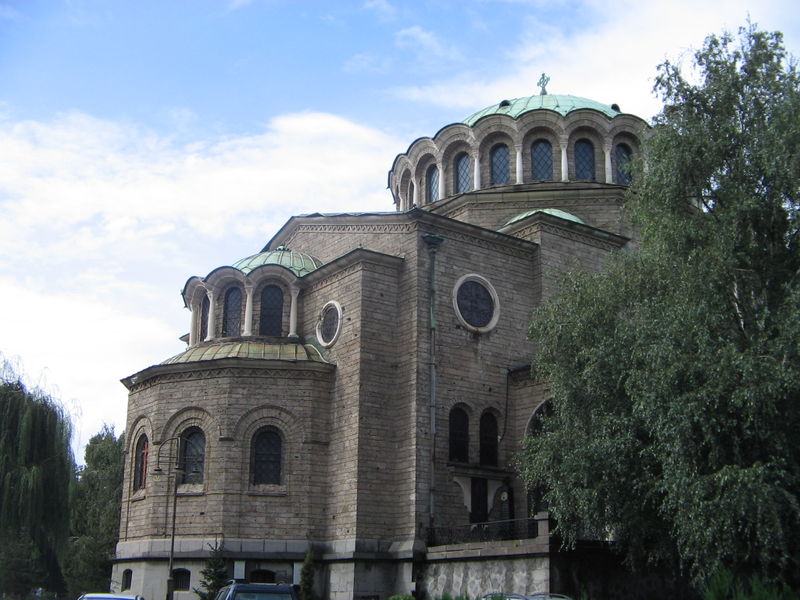
Pilgrimage to the Holy Relics incorruptable body of Saint King Stephan Militun in Cathedral St. Nedelia Sofia, Bulgaria

Friday, January 25th, 2013

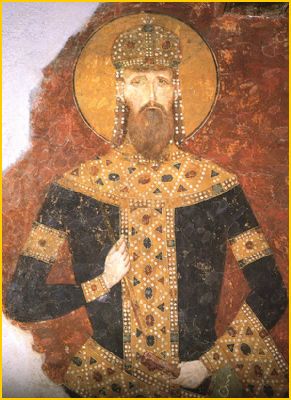
Saint Stephan Milutin II Holy King of Serbian with Inoccuptable Body testimony for Truthfulness of Holy Christian faith


As I've landed in Sofia and I'm staying few days in a friend thus I had the opportunity to take a quick look over one of the oldest cities in Europa. Sofia is known under the ancient name Sredets and is dates back to times before Christ. Yesterday I had a walk near NDK (Национален Дроврец на Културата – National Palace of Culture), nearby I saw a little Church which looks orthodox. I dropped by to pray and light up a candle as I usually do when I see an Orthodox Church building I was not in before. In front of Church I saw a priest which looked pretty much like Orthodox, Church interior looked strange as it contained a mosaic of Christ's face which seemed a bit like Catholic. I spoke a little with the priest asking him if he is priest or monk (in orthodox Church we have priest – who marry and monks who didn't). He said he is a Bishop which puzzled me since it is not very common a Bishop to smoke cigarette in front of a tiny Church building …. Later I understood he is from the so called Schismatic Synod – the so called Alternative Synod which claimed our last Church patriarch Patriarch Maxim is not choosen canonically because he was choosen in communist times) ….. I deeply regretted I had the misfortune to enter a schismatic – heretic Church and quickened to leave. Just on the street from NDK Enormous Building which is one of the most well known places in Sofia center.
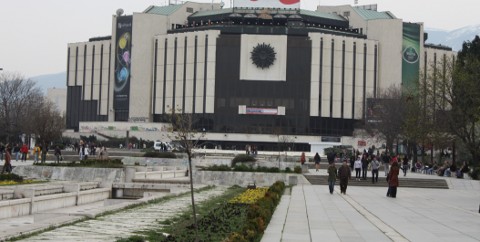
NDK Sofia Bulgaria center one of most notable buildings

I saw in the end of the street a huge Orthdox Cathedral and though it is the biggest Orthodox Cathedral in the balkans – st. Alexander Nevski.
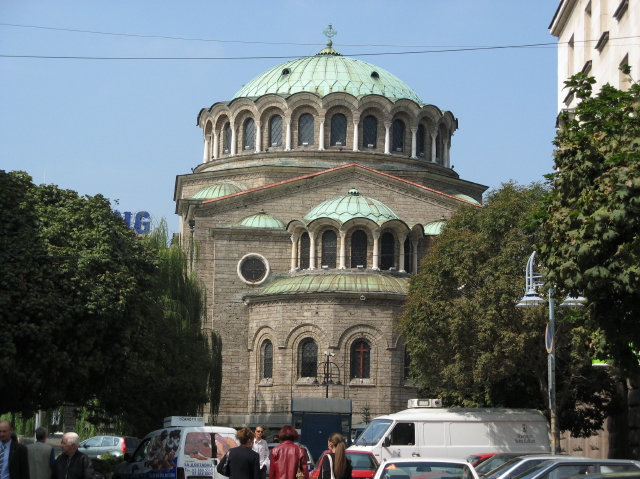
Sofia Orthodox Cathedral Church building where saint King Milutin incorruptable body is kept

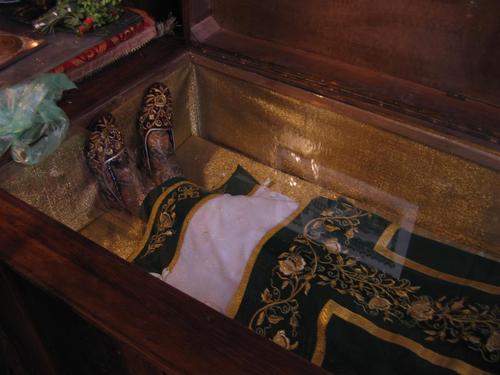
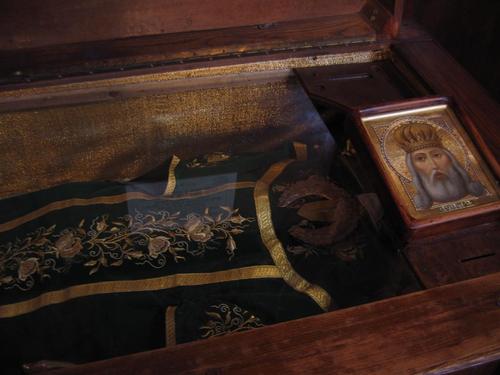
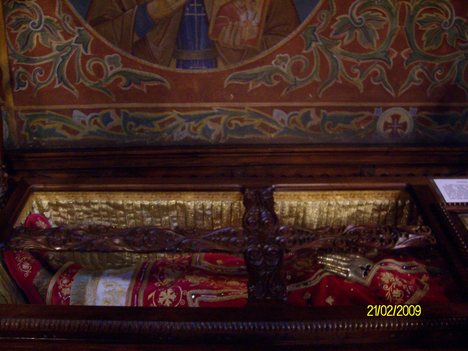
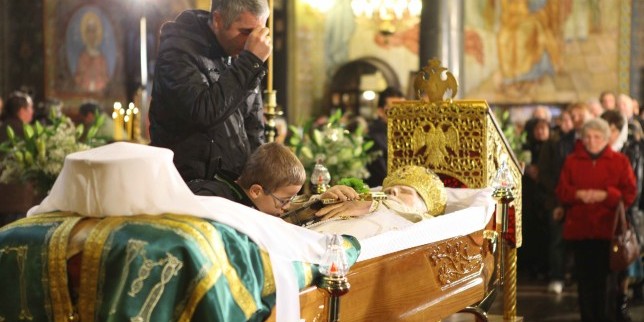
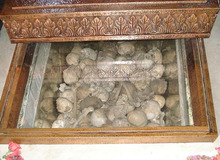
Now it is good time to write about great God's providence. I very much wanted to venerate st. King Milutin for some time, since the moment I heard his holy relics are kept in my homeland capital Sofia. In Nijmegen where I was going to church in the Serbian Church, I had the opportunity to venerate a little particle of st. Stephen Milutin's holy relics and actually it is from where I heard from a first time for this saint. Many saints in our holy Orthodox church has incorruptable bodies like st. Stephen Milutin but so far I never had the opportunity to see such a great unexplainable by science miracle, where a saints body is preserved incorruptable for 9 centuries!!!! St. Uroš II (Stephan) Milutin Nemanjić who was a ruler of Serbia and one of the biggest contributors and donators of Serbian Church ruled over Serbia for 45 years, over this 45 years he donated a multitude of villages, money provisions, gold and all goods to serbian Church. He had promised to God to build so many churches as his years of rulership will be he stand up to his promise and build 45 Churches over his 45 years of rulership. He was well known for dressing in beggar cloak and going out of his castle to be among poor people and often bring them food, clothes and money. In his rulership his greatest stronghold and hope was the Holy Orthodox Church. st. King Stephan Milutin made a lot of donations for Monastiers including the building of newer and more beautiful Church building and a protection tower in Serbian Monastery in Holy Mount Athos Hilendar. St. Stephan is born in y. 1253 and passed away to Christ in October 29, 1321. Here is a picture someone has taken of st. Stephan Milutin Holy incorruptable body.
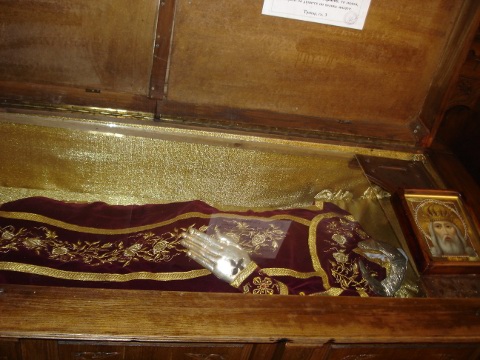
saint King Milutin holy incorruptable body relics saint Nedelia Sofia Cathedral

 More complete living of st. Stephan Milutin can be read on Orthodox Wiki here.

The size of St. Nedelya Cathedral is impressive, the whole church is full of beautiful icons. It is keeping also a miracle making icon of the Holy Theotokos Virgin Mary – the well known – Joy of all sorrowful. If you happen to drop by the temple you can find it on the left of the entrance / exit door of the Church. The Holy iconostasis of the Church is all in Gold, the dome of the Church contains most beautiful images of Christ surrounded by Angels the fresco seems quite ancient though I'm not sure from which year it dates back. In the right of the Church entrance door is found the grave of exarch Stephan – the head of the Bulgarian Orthodox Church after the liberation of Bulgaria from Ottoman Turkish 500 years long slavery.
The Church is a functional and Holy Liturgy is served every day also an evening service is done everyday. St. Nedelya Cathedral original building dates back from the ancient 10-th century and is connected to a times, where Slavonic translations of the Holy Bible was still young. Going out of St. Nedelya Church just few meters away is located another Christian Church in glory of St. Petka of the Balkans (The Bulgarian). There was times where holy relics of Saint Petka Bylgarska, holy relics resided in that catacomb ancient Christian church. In st. Petka Church there is a small book where one can write all the miracles that happened of people who prayed for prayed to Christ for their various needs, physical healing etc. Also something that strike me in this little Church was the odor in the air which is typical to smell from holy relics of saints. Just 20 meters away from saint Petka's Ancient Church is located another more ancient Church from the 4th CENTURY in veneration of Saint Martyr George the Glorybringer!
The Rotunda st. George is something must see for anyone that never was in Sofia before and I thank God for being able to pilgrimage on such an early Christian church.
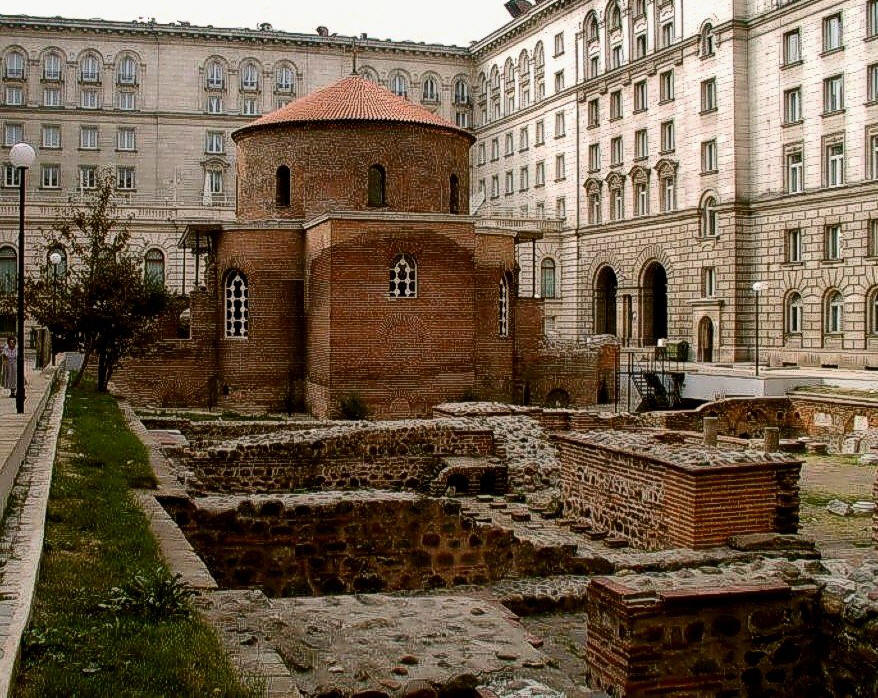
Rotunda_of_St_George_4-th-century-Sofia-city-center-Bulgaria

The story line of Saint George Church is pretty long and the visitor can read it. In short as I read the Church has three layers of icon paintings from 3 different periods of the Church use, the most ancient found one dates back from the 6th century.
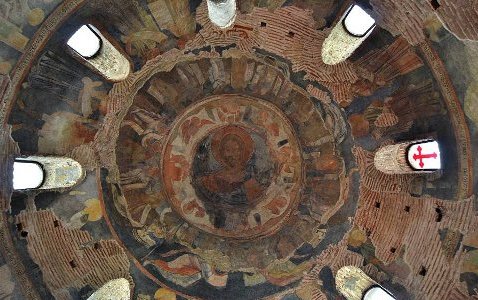
dome Rotonda Sveti Georgi 4th century Sofia,Bulgaria  city center (Sredets)

The Church was used mainly for baptismals in a long time of its existence. Today there is a Holy Liturgy and evening prayer service daily and Church is fully functional and conducting its original purpose of bringing people to Christ.
Share this on

Christ is Risen! Truly He is Risen! Happy Easter! / The Miracle of the Holy Fire in Jerusalem

Sunday, April 24th, 2011

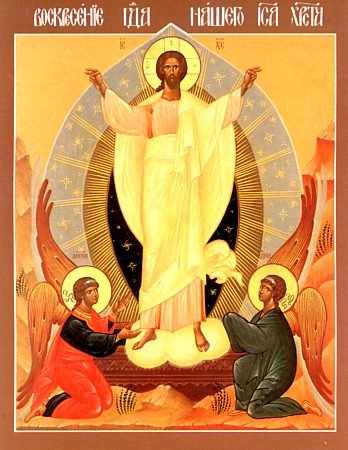
Christ is Risen Icon

“Christ is risen from the dead,
trampling down death by death,
and on those in the tombs bestowing
life!”

Happy Easter to all my beloved readers. In relation to the Greatest feast of all times I wish to all my readers a lot of good health, a lot of success in all good, and a lot of love. Rejoice for the Lord and Saviour of mankind has been risen!

In Jerusalem the Holy Fire has descended from Heaven. For all Unorthodox Christians, it’s important to note that the Holy Fire is the miracle confirming that the Christian Orthodox faith is the true ancient Christian faith in fulness!

Each year the Holy Fire descends from heaven and lights up the candle of the Patriarch of the Jerusalem Church. This only happens on the Orthodox Easter! This is without question a great miracle and a very graceful act by which God shows us he has not left us behind.

Here is a video you can watch, where you can see the miracle happening as well as a discussion, is really the miracle real:

Miracle of the Holy Fire in the Holy Sepulchre (Jesus’s Tomb) in Jerusalem – Easter 2011

Holy Light (Holy Fire) in Jerusalem: Proofs & Testimonies

During the three days in which, we the Christians celebrate the glorious Resurrection of our Lord and Saviour. It’s accepted that the ordinary “Hi” or “Hello” greeting we use daily, is ex-changed for “Christ is Risen!” :)

The word “Easter” used for the Resurrection 3 day feasts is also interesting as it comes from “Eastern” – (e.g. Eastern Orthodox Church) :)

Share this on

Bulgarian Orthodox Church canonized the Orthodox Christian Martyrs of Batak and Novo Selo as saints in a Church feast Holy Liturgy

Sunday, April 3rd, 2011

Today the 3rd of April in the Patrierchal Cathedral Saint Alexander Nevski in Sofia, the Bulgarian Church has officially canonized the martyrs from Batak and Novo Selo.

The Holy Liturgy in Saint Alexander Nevski that’s been held in the st. Alexander Nevski (Largest Cathedral Church in Bulgaria) has been led by the his All Holiness the Patriarch of Bulgaria Maxim.

The holy liturgy canonization has been also transmitted live in the Bulgarian National Television.
The canonization itself took place right in the end of the Holy Liturgy.
Where the bulgarian leading clergy (bishops, metropolitans archimandrites, the Patriarch himself) has officially announced the decision of The Bulgarian Church Holy Synod to Canonize the Martyrs, who had endured martyrship for Christ in Batak and Novo Selo villages during the April’s Bulgarian liberation revolt in May 1876.

The martyrdom and the all the surrounding events that occured has also been widely known in the Bulgarian history under the name The Batak’s Slaughtering / (Batashko Klane as we call it in Bulgarian)

The mini liberation revolt has been extinguished by Ahmed Aga Barutanliqta in the brutal blood-bath according to different historical estimations the murders done by The Turkish mayor Ahmed Aga had been in the range of in between 1750 and 5000 people most of which were an innocent peasants who had voluntary agreed to left behind all their weapons and surrender to the Turkish bashi-bozluk.

Most of the martyrdom of the newly canonized martyrs has happened in the Church “Holy Sunday”

Therein in this Church the terrible blood bath occured. The about 200 peasent, martyrs had stood in the Church for a three days, the turkish has digged small holes in the Church walls and shooted through them to kill them, a fire and gas has been used to kill as many as possible, many of the killed martyrs has been little children with their mothers.
The Turkish soldiers (beasts) couldn’t enter the Church because the Church was so filled with layman that the people were pressing the Church doors.

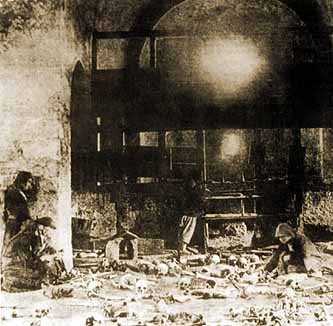
Holy Sunday Batak a while after the brutal blood bath in the Church
The peasent martyrs had no water in the Church, so they used the float light (icon-lamps) as a drinking liquid and blood of their dead brothers and sisters as a water substitute. The Bashi-bozouk Ahmed Aga ordered that beehives are let in the Church to sting the Martyrs as well as burning straw soaked with gas was throw in stifle the poor peasents.

On the third day all that left alive, went out of the Church, when they found out they’re doomed if they stay in.

All the Batak peasents that rejected to accept the Islam have been beheaded, this are the same saints which has publicly been announced by God’s providence to be venerated as a Church martyr saints Many of the young bulgarian mothers and girls, who have left the Church had been brutally raped and then slaughtered for their faith in Christ.

The Batak blood bath and martyrdom has been so severe and shocking that it horrifyed all Western Europe, Russia and America.

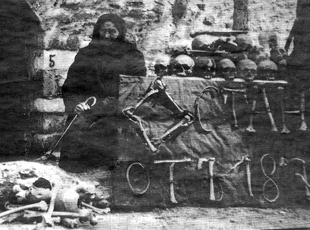
Here is another picture taken in Batak after the brutal butcheries, it depicts the widow wife of the initiator of the revolutionary rebellion
, stading near a writting in cyrilic made of bones reading Remains of 1876 .
Batak Remains of 1876 written with bones of killed peasents

A while after the Martyrdom of the saints in Batak, the turkish army tried to withold the information about the brutal killings, which were absolutely inacceptable for the 19th century.

They tried to burn the Stone Church where they did their bestiality but without any success by God’s providence, next the turkish bashi-bozluks tried to hide about the butchery by burying many of the dead bodies and re-painted the Church laws, however as a miracle of God very soon the martyrs blood which sprinked up the Church laws has appeared on the laws.
A Pilgrim of the newly canonized martyrs could see still the blood of the martyrs preserved there on the Church laws and see the big numbers of relics of the slaughtered martyrs.

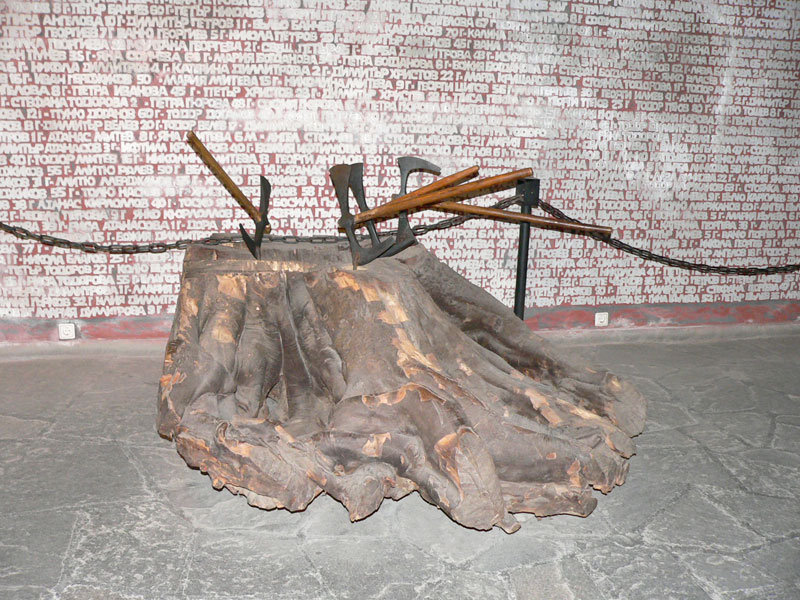
Here is the stub used to behead the Batak’s martyrs which is now kept in the Bulgarian National Museum:

Beatiality of Batak the stub of martyr beheadment

The other martyrs which were canonized on the great feast for our Bulgarian Church were brutally killed 8 nuns in a Novo Selo’s nunnery, they endured martyrdom again in 1876, the Novo Selo (a nearby village).

The newly canonized saints is the last canonization that occured in the Bulgarian Orthodox Church since the canonization in the distant year 1964 when the Church decided to canonize (venerate as a saint) saint Sofronii Vrachanski (st. Sophronius from Vratsa)


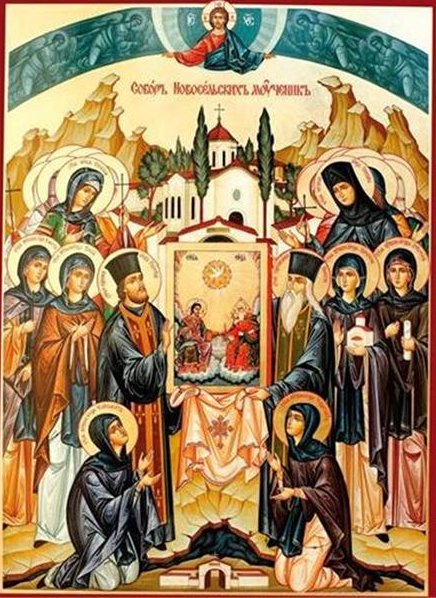
During the Holy Liturgy, an icons presenting the Batak martyrs and the Novo Selo martyrs had been consecrated by his all Holiness Maxim Patriach and head of the Bulgarian Orthodox Church.

The Batak and Novo Selo saints day feast in the Bulgarian Orthodox Church will be celebrated each year on the same day as they endured martyrdom 3rd of April.
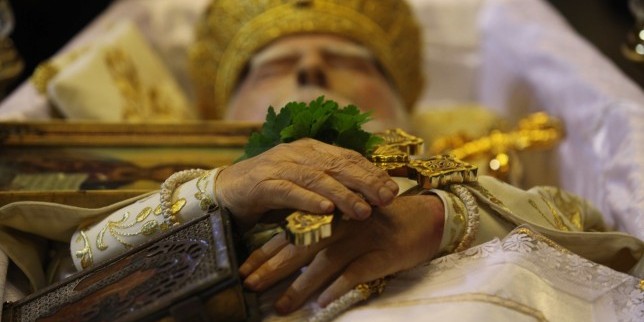
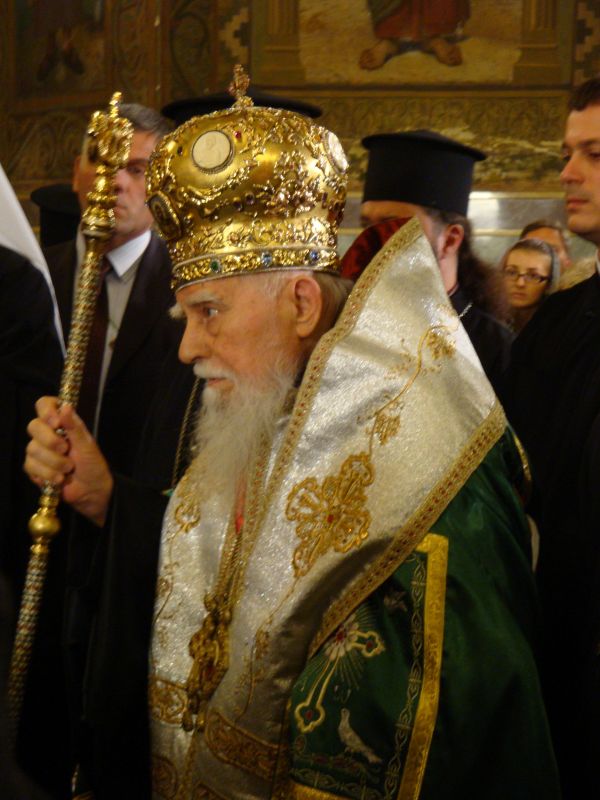
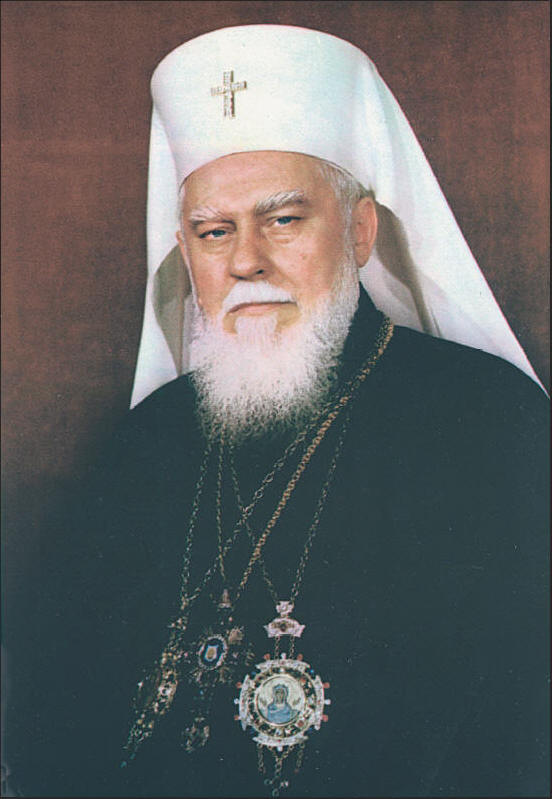
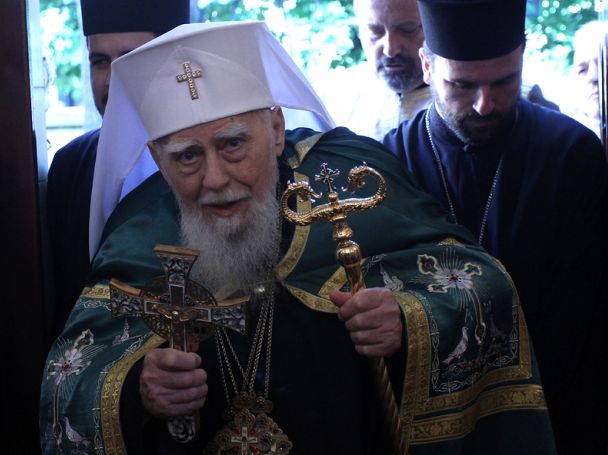
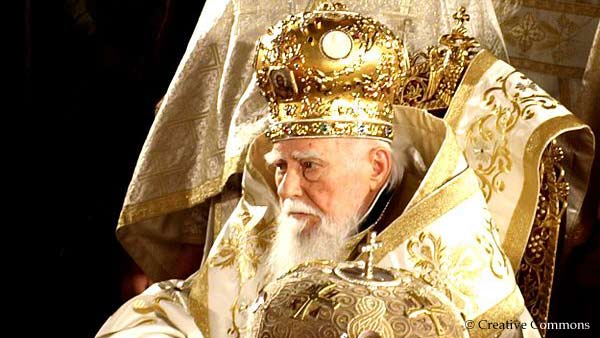
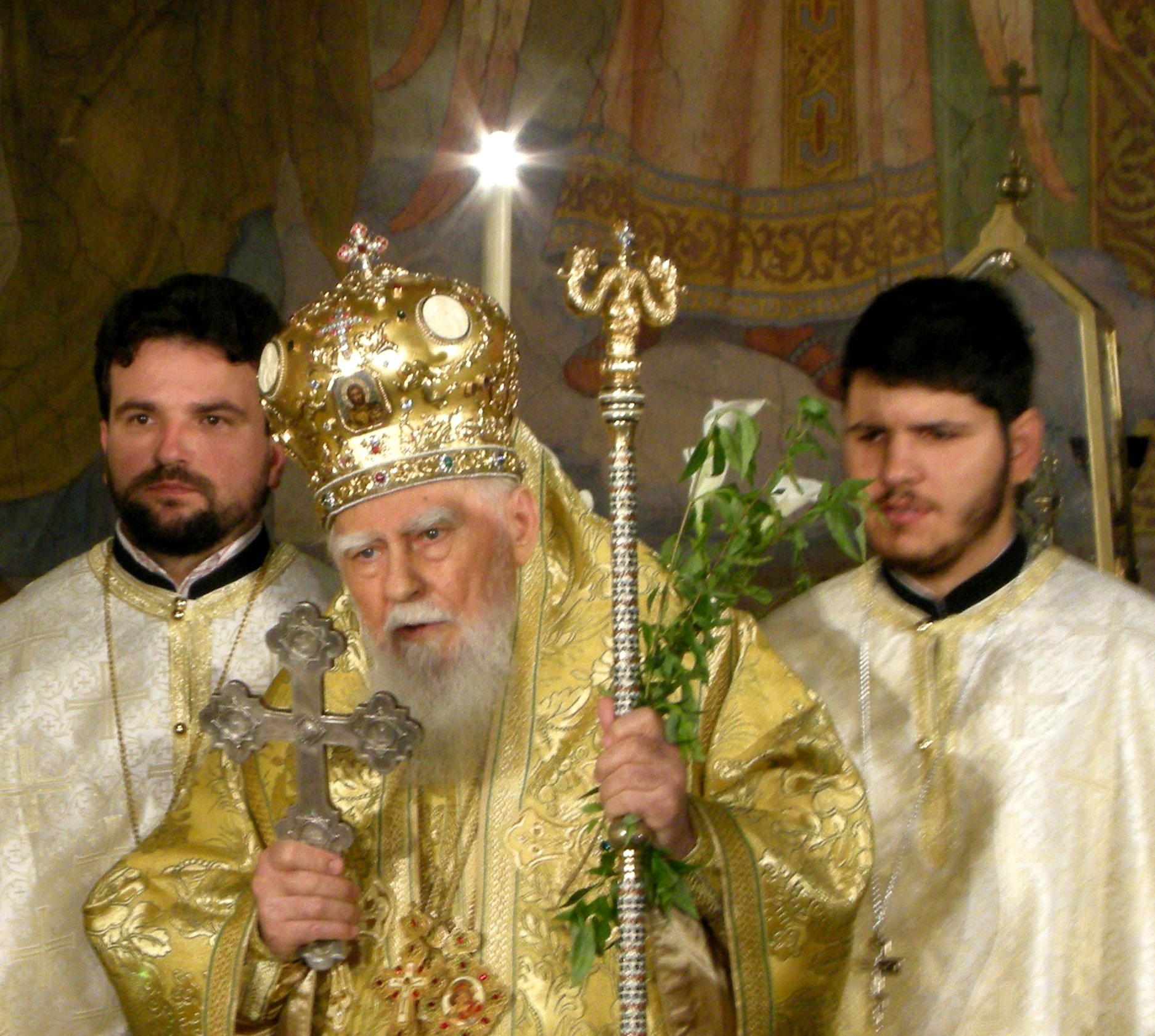
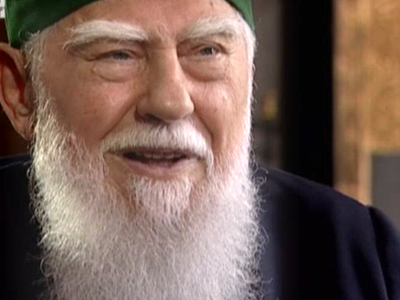
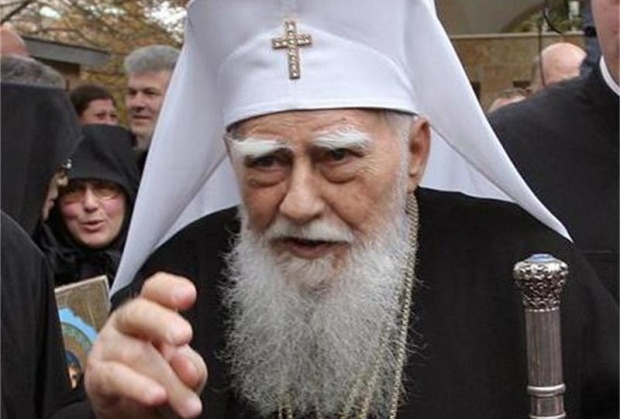
His Holiness Patriach Maxim is currently aged 96 and is one of the oldest if not the oldest Orthodox Christian patriarch in the worl today!

A Small chunk of the Batak and Novo Selo’s saints Canonization is available for watching on the address http://www.vbox7.com/play:004f8828

The complete number of canonized saints as martyrs in the Bulgarian Orthodox Church is about 700.

On the canonization festive holy liturgy there were Orthodox Christian representatives of the Romanian and the Russian Orthodox Church.
Icon of the newly canonized saints of Batak Bulgaria
Batak saint Martyrs Icon

I pray that the merciful God (The Holy Trinity), be merciful to all us the Bulgarian Orthodox Christians and all the Orthodox Christians around the world and grant us forgiveness of our sins and our Lord Christ grant us be with him and the Father and The Holy Spirit in paradise, Now and Forever and Ever! Amen

Share this on