Posts Tagged ‘Cathedral’

My First hitch-hiking experience – travel notes on a hitch hiker trip from Dobrich to Pomorie Monastery

Monday, July 2nd, 2012

My first hitch hiking experience travel notes of a hitch hiker Dobrich Varna Pomorie Monastery

I've been 28 years old and for good or bad never travelled hitch hiking. Today however with a friend of mine Kimba thx God I lived to experience what it is like to stay on the road "begging" people to take you on their way to somewhere.

I always wanted to hitch-hike as a youngster but my restrictive controlling parents was too vigilant not to let me have my personal freedom and try hitch hiking. Now as I've grown "old" I have the freedom to do it and I'm glad I could. For sure it is better to do something you always wanted later than never :)

We took the "STOP" from a place few meters away from the "scratching sign" indicating the end of Dobrich city area – located about 4 / 5 km from Dobrich center. To come to the well known hitch-hiker's place (which my friend Kimba) knew pretty well since he travelled probably more than 20 times hitch-hiking.

To reach the hitch-hiker place we walked about 1 hour which in the early morning (07:50 to 09:00) came to be quite refreshing.
About 09:00 we started doing the well know hitch hiker gesture to beg traveller to take us :)

It felt quite unconfortable and a bit like begging to be on the road waiting for somebody to pick you up on the other hand it felt very challenging as it seemed to be a good "exercice" to raise up self-confidence. We were lucky and we didn't met any drivers to mock us with gestures or car beep. Besides that we only had to wait less than 20 minutes (probably 18 mins) until a car stop and ask her for our direction.
The driver seemed had to travel close to Aksakovo (a small village like town 1 km far from beginning of Varna and just few km away from the city center).

He pick us up and as we go he happened to be a familiar person which I've seen many times in the (International College Albena) where I previously studied.
The guy happened to be a merried for the librarian of the college. We had a nice chat in his car about Bulgaria before in communism and now and who is doing what (which I guess is quite normal) for hitch-hikers. As he drived a very funny scene appeared as we saw a donkey leading a cart full of wood running on the road. Now you might wonder what would be funny of a rural donkey with a cart full of wood, well the cart didn't have any person leading it. It seemed the donkey run away scared by a truck or a noise so the person leading the cart either fall somewhere on the road or the donkey had untight itself and took the direction to its home place :)

… Our hitch-hiking plan was to travel from Dobrich to Varna (if possible or the closest village or suburb), then we aimed to take a bus from Varna or somewhere nearby to the city center and from the city center to Travel to the so called (Asparuh's bridge / (Asparuhovia Most) – which is a common hitch-hike waiting and pick-up destination).

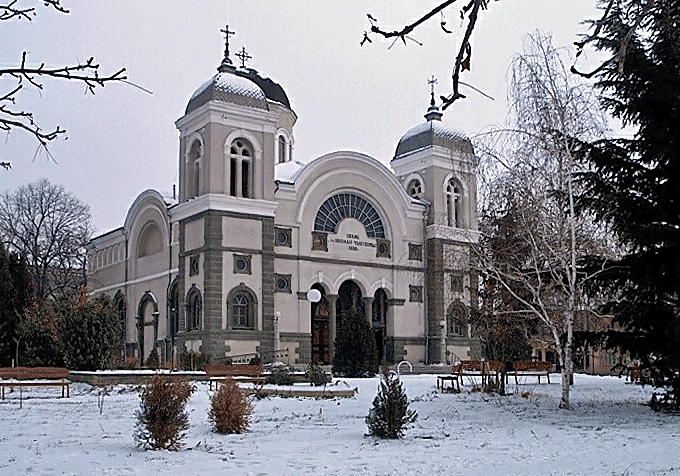
As we were left in Aksakovo by the driver, we were lucky to have a close bus stop near us. We went to the bus stop and we only had to wait about 8 minutes until the next bus driving to Varna city center arrived. We pick up a bus number 207 and travelled 'safely' to the city center (on the price of 1 lv per ticket). So our overall travelling for both of us instead of 10 lv (5 lv per person bus tick) costed only 2 lv :) Along with the low price for travelling the hitch-hiking was also very healthy as we had a long walk to the place to depart from and after that had a small walk to pick up the bus to Varna. We made a mistake to not go out of the 207 bus near Varna city center Cathedral but two stops earlier, so we also had a small 15 minutes walking to the Cathedral. As we were not sure which bus we need to take to go to Asparuhov's bridge, we asked few people on the city center. We were told we need to pick bus number 2 or 17 (IIRC).

Eventually as we're waiting near the bus station where the bus-es leading to Asparuhovo stopped, we came to meet a taxi driver driving people to Asparuhovo on the price of a bus ticket (1 lv). In 5 minutes time, again obviously by God's might intervention the driver was able to collect 2 more people so he offered that we all immediately travel. The taxi-st left us on a place a bit after Asparuhovo's bridge which was the common place for hitch-hikers. We had to climb a little hill like place and walk a bit on the highway on (the car damage and wreck area). Very near us was a police car waiting to catch violators of speed limits. I didn't know about this very moment that Hitch-Hiking in Bulgaria is considered illegal!, happily I found this sad fact not by the police man but from Kliment (Kimba). The policeman did not stop us as we found a way to walk through a place which is bit far from them. Kimba choose a place and we started doing the hitch-hiker "PLEASE STOP AND TAKE US" gesture once again (actually the as Kimba was a professional in hitch-hiking he was mostly doing the hitch-hike sign.

There we had to wait about 40 minutes or so until, a good man with a small bus carrying some paper palettes stop and took us.
Thanks God he had to travel to Jambol to deliver the palettes so his travel route passed by near Bourgas (and respectively Pomorie). We had a an intimaditing chat with the person by which I found out he seem to be having many money issues and a lot of debts (just like many of the people in BG nowdays). Unfortunately he shared that just like a lot of us the common people in Bulgaria he is underpaid and often even though he works extra in Saturdays and Sundays it is almost impossible for him to pay his rent, food and family expenss …..

As the conversation progressed, he asked us where are we going if we're going to find a work and I told him we're going to be guests and pilgrims to Pomorie Monastery and in the mean time help the monks if there is work to be done….

It was a pleasure for me to meet such an honest bulgarian middle aged man, which also was good enough to pick us up. The time passed quite quickly as we shared some of common living joys and griefs. The bus quickly approached pomorie so we left us and we split. As I was thankful to the guy and felt pity for his bad life misfortunes and I wished in my mind that God bless, help him and return him for the good deed he done to pick us up.

We were now only 2 km from Pomorie entrance so to the monastery we had to walk only about 4 or 5 more kilometers. On the gas (oil) station, where we were left a fun story happaned as the computers counting the gasoline stopped working. People who filled the car tanks with Gasoline had to wait until someone comes and fixes the computer, neither nobody can purchase anything from the station (a snacks, a coffee, even a bottle of water) was impossible to buy. We stayed on this little station (Petrol) located just 2 km from Pomorie for 20 or 25 minutes and in this time this people who couldn't pay for the gasoline had to just hang up there loosing their time waiting for someone to fix the BUGGED PC ,,,

This scene has once again confirmed my theory that computerization is not always necessery a good think and the over-computerization of everything as the trend is nowdays could create a lot of time lags in many places and often create a great havoc if systems somehow reject working as planned ….

Anyways to be sure which way to walk to Pomorie Monastery we had to consult few local people. Nicely the road leading to Pomoriiski Manastir was easy we just had to walk straight and then turn right. Actually the monastery bell tower is visible on the way so it is not likely that anyone walking straight will not notice the tower which is taller than other one or two stage housed highed buildings.

We came to the monastery and by Gods grace as we asked previously the abbot for a blessing to come to the monastery, they were expecting us.
Immediately one of the persons serving in the monastery gave us a room. I asked for the abbot and we found him in his Abbot place and gave us a blessing. That's the over of my first and hopefully not last great hitch-hiking adventere. The moral from my trip is:
 

To sum it up, if you never tried stopping on a highway give it a try! :)

  • hitch-hiking is a great must experience in a life-time thing;
  • Obviously we were lucky and it is always a great think to travel with an Abbot blessing
  • Hitch-hiking in Bulgaria is illegal, so there is thrill in doing it :)
  • hitch-hiking could be a very healthy initiative
  • Hitch-hiking is a great raise up and experience new random people self-confidence exercise :)

Share this on

How to convert Postscript files to PDF on Debian GNU / Linux with ps2pdf

Saturday, December 3rd, 2011

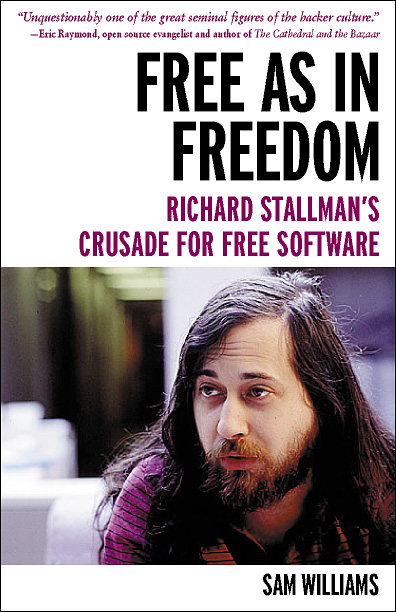
convert ps to pdf linux,Free as in Freedom book cover - Richard Stallman GNU and Free Software Father

I'm currently reading Free as in Freedom (2.0) R. Stallman and the Free Software Revolution
The book includes a reference to Eric S. Raymond 's famous The Cathedral and the Bazaar which does makes a point about the important of Open Source . I've read the The Cathedral and the Bazaar paper some very long time ago (in my young days so to say) and hence I couldn't resemble much of the document so I jumped in after the footnote in the FAIF book and decided to take a quick look on The Cathedral and the Bazaar once again to bring up some memories. I was stunned to find the paper is available in many formats but officially not included in PDF . Since i'm a GNU / Linux user I've never managed to get into the habit to read postscript documents which from modern day stand point are also already a bit of obsolete and therefore I found it as a wise idea to convert and mirror the POSTSCRIPT (PS) version of the document to PDF on pc-freak.net

Happily the ps2pdf command to convert the ps to pdf on my debian gnu / linux is really easy:

ps2pdf cathedral-and-the-bazaar-Eric_Raymond.ps Cathedral-and-the-bazaar-Eric_Raymond.pdf

ps2pdf is part of the ghostscript deb package, so if you can't find the program you will need to have it installed with apt-get first.

By the way the Postscript file is easily readable using my default gnome PDF reader evince , but anyways I converted and mirrored the paper for all those windows users who might like to take a look at the document in PDF.
I've also made a mirror of the original Cathedral and the Bazaaar postscript document here , for all those who want to check out The PDF version of the Cathedral and the Bazaaar is for download here

Even though the "open source" movement is an interesting idea and it had some major impact on the development of some free software the idiology of open source which was very much influenced by this document is very weak compared to the philosophy Richard Stallman indcuded as of the great need of the software to be free.

To be honest looking back in time for a long time being a Linux user I did not make any distinguishment between "Free Software" concept and "Open Source", even worser I considered to evangelize on Open Source not realizing that initially what attracted me to free software was the idiology of open source and not the real values on which ground free software is built.
This kind of miss understanding between perception of "open source" and "free software" I got and spread for years now I fully realize and I seem like when I red back then The Cathedral and the Bazaar document I didn't looked any critical at the document but it had a major, I would say "bad" impact on my idiology on software for a long time. So for all those who had not checked it it's worthy checking but only in case if one fully understands Richard Stallman's concept of Free Software, without this understanding one can easily slip into the wrong believe (just like me back in thme) that open source is the same as free software. Even though open source can be free software it is not presumably that an open source is free software and that it guarantees that the published source will be free. But I'll stop now as I slept away from my goal of the article to just log here how a convertion of postscript to pdf on gnu / linux is done.
Just to close up this article I warmly recommend on all people interested into hacking and the history of Free operating systems and Free software as FreeBSD and GNU / Linux the Free as in Freedom (2.0) book ! Its truly a remarkable and great inspirational reading for all people like me involved into free software realm of ICT.

Share this on

St. Maximus The Confessor Holy Relics (incorruptable right hand) is for veneration in Varna

Friday, July 1st, 2011

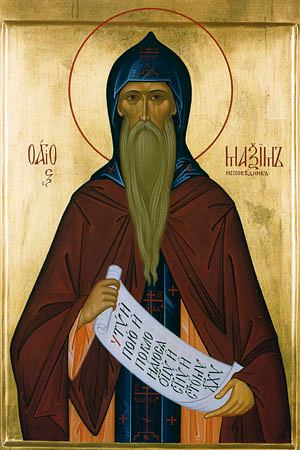
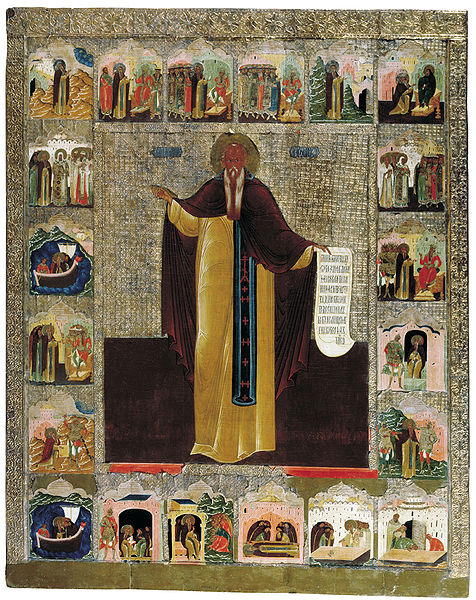
St. Maximus the Confessor Orthodox Christian icon

Today by God’s gracy I was blessed to go to Varna’s Cathedral Church (“Dorminion of the Theotokos”) on a small pilgrimage trip to venerate the Holy Relics of Saint Maximus the Confessor.

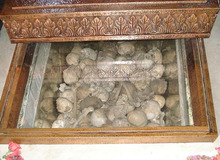
The saint relics which are there for veneration today 30/Jun and 01 of July are the saint’s right hand which was slaughtered in the 7th century. Today 14 centuries later, the saint right hand holy relic is still intact (the skin of the hand is dried but it’s intact!).
This is a great miracle of God who does clearly show the truthfulness of Orthodox Christian faith. The saint’s holy relics are temporary moved from Holy Mount Athos monastery St. Apostol Paul, where kept.
As one can read in saint Maximus biography, st. Maximus is one of the biggest Orthodox Christian martyr from the time before the great Church Schizm.

St. Maximus the Confessor was a Christian monk and a great Church scholar. He became a monk choosing willingly to abandon his great richness and political life because of Christ.

The Saint’s title The Confessor is given because of his great suffering for Christian faith.

Sv. Maxim Izpovednik many miracles icon

Because of the saint’s firm staying in faith during an icon fighting heresy emperor Hiraclious (Iraklii) slandered the saint and he was send to a trial where he was immediately vilified as a state traitor.
A severe beating was ordered to be done on the saint and the whole ground was sprinkled with his blood, the saint’s torturers also cut his tongue and his right hand was chopped off.
The heretical torturers were ordered to slay down his right hand and his tongue in order to prevent the saint to confess/preach and write down about the Orthodox Christian faith.

The descpile of the saint Anasthasius has also faced the same faith. After the butchery the two saints were walked around the city streets to mock them publicly behind the shocked crowds eyes.

Even though the sadistic torments by God’s providence saint Maximus the Confessor did not died immediately but was sent to exile in today’s Dobrudja (Dobrich) region in Bulgaria.

Saint Maximus has died in his old age, aged 82 in August 680 A.D. Even though being a disabled because of the martyrdom, during his exile the saint was able to write a lot of treatise books against heresies and especially against Monotheistic Christian heresy, and a lot of other writting concerning the proper spiritual christian life. The saint’s major works are titled, Ambigua An exploration of difficult passages in the work of Pseudo-Dionysius and Gregory of Nazianzus, focusing on Christological issues and Mystagogy – A commentary and reasoning on the Eucharistic liturgy.

According to Church tradition after the saint’s tongue was cut in order to prevent him to preach the Christian faith correctly, God did a miracle where even without a tongue he preached the Gospel to the masses and he heretical emperor who ordered his suffering and the saint tormentors were publicly disgraced.

Saint Maximus the Confessor is considered a saint also in the Roman Catholic Church.

The saint was canonized officially about 22 years after his death on the oecumenical Church saints assembly in year 682.
After Saint Maximus’s death on his tomb many healing miracles occured.
On the place where he was buried three bright lights looking like candlesticks could be seen burning (a clear miracle atteting of the Holy Trinity) as the thrurthful one God.
God’s great omen on his tomb is also a clear sign that Maximus the Confessor has been accepted in the eternal paradise with God with all the rightous.

Let God always strenthen us and help us, to all us who does venerate the saint. Let God by his Holy prayers deliver us from all heresies and grant us grace to stay firm in the true Orthodox Christian faith now and forever.
Amen!

Share this on

Bulgarian Orthodox Church canonized the Orthodox Christian Martyrs of Batak and Novo Selo as saints in a Church feast Holy Liturgy

Sunday, April 3rd, 2011

Today the 3rd of April in the Patrierchal Cathedral Saint Alexander Nevski in Sofia, the Bulgarian Church has officially canonized the martyrs from Batak and Novo Selo.

The Holy Liturgy in Saint Alexander Nevski that’s been held in the st. Alexander Nevski (Largest Cathedral Church in Bulgaria) has been led by the his All Holiness the Patriarch of Bulgaria Maxim.

The holy liturgy canonization has been also transmitted live in the Bulgarian National Television.
The canonization itself took place right in the end of the Holy Liturgy.
Where the bulgarian leading clergy (bishops, metropolitans archimandrites, the Patriarch himself) has officially announced the decision of The Bulgarian Church Holy Synod to Canonize the Martyrs, who had endured martyrship for Christ in Batak and Novo Selo villages during the April’s Bulgarian liberation revolt in May 1876.

The martyrdom and the all the surrounding events that occured has also been widely known in the Bulgarian history under the name The Batak’s Slaughtering / (Batashko Klane as we call it in Bulgarian)

The mini liberation revolt has been extinguished by Ahmed Aga Barutanliqta in the brutal blood-bath according to different historical estimations the murders done by The Turkish mayor Ahmed Aga had been in the range of in between 1750 and 5000 people most of which were an innocent peasants who had voluntary agreed to left behind all their weapons and surrender to the Turkish bashi-bozluk.

Most of the martyrdom of the newly canonized martyrs has happened in the Church “Holy Sunday”

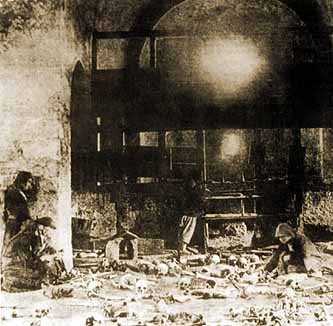
Therein in this Church the terrible blood bath occured. The about 200 peasent, martyrs had stood in the Church for a three days, the turkish has digged small holes in the Church walls and shooted through them to kill them, a fire and gas has been used to kill as many as possible, many of the killed martyrs has been little children with their mothers.
The Turkish soldiers (beasts) couldn’t enter the Church because the Church was so filled with layman that the people were pressing the Church doors.

Holy Sunday Batak a while after the brutal blood bath in the Church
The peasent martyrs had no water in the Church, so they used the float light (icon-lamps) as a drinking liquid and blood of their dead brothers and sisters as a water substitute. The Bashi-bozouk Ahmed Aga ordered that beehives are let in the Church to sting the Martyrs as well as burning straw soaked with gas was throw in stifle the poor peasents.

On the third day all that left alive, went out of the Church, when they found out they’re doomed if they stay in.

All the Batak peasents that rejected to accept the Islam have been beheaded, this are the same saints which has publicly been announced by God’s providence to be venerated as a Church martyr saints Many of the young bulgarian mothers and girls, who have left the Church had been brutally raped and then slaughtered for their faith in Christ.

The Batak blood bath and martyrdom has been so severe and shocking that it horrifyed all Western Europe, Russia and America.

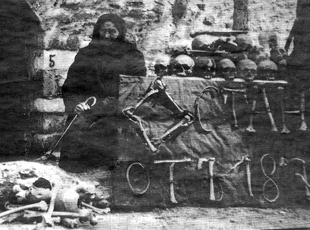
Here is another picture taken in Batak after the brutal butcheries, it depicts the widow wife of the initiator of the revolutionary rebellion
, stading near a writting in cyrilic made of bones reading Remains of 1876 .
Batak Remains of 1876 written with bones of killed peasents

A while after the Martyrdom of the saints in Batak, the turkish army tried to withold the information about the brutal killings, which were absolutely inacceptable for the 19th century.

They tried to burn the Stone Church where they did their bestiality but without any success by God’s providence, next the turkish bashi-bozluks tried to hide about the butchery by burying many of the dead bodies and re-painted the Church laws, however as a miracle of God very soon the martyrs blood which sprinked up the Church laws has appeared on the laws.
A Pilgrim of the newly canonized martyrs could see still the blood of the martyrs preserved there on the Church laws and see the big numbers of relics of the slaughtered martyrs.

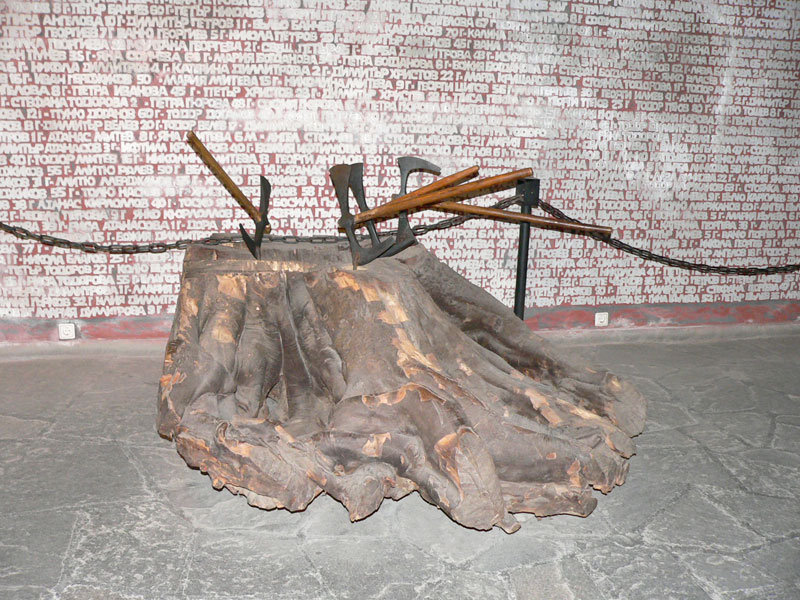
Here is the stub used to behead the Batak’s martyrs which is now kept in the Bulgarian National Museum:

Beatiality of Batak the stub of martyr beheadment

The other martyrs which were canonized on the great feast for our Bulgarian Church were brutally killed 8 nuns in a Novo Selo’s nunnery, they endured martyrdom again in 1876, the Novo Selo (a nearby village).

The newly canonized saints is the last canonization that occured in the Bulgarian Orthodox Church since the canonization in the distant year 1964 when the Church decided to canonize (venerate as a saint) saint Sofronii Vrachanski (st. Sophronius from Vratsa)


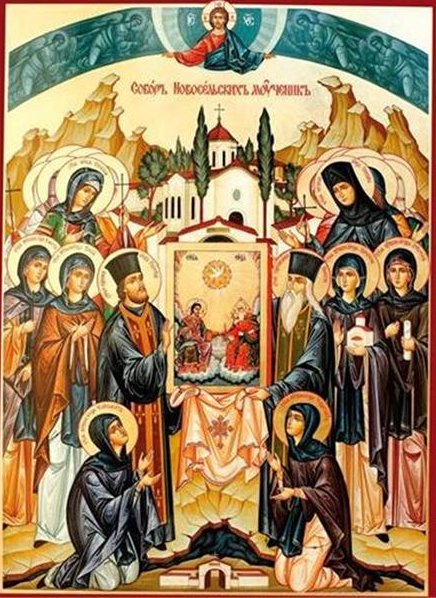
During the Holy Liturgy, an icons presenting the Batak martyrs and the Novo Selo martyrs had been consecrated by his all Holiness Maxim Patriach and head of the Bulgarian Orthodox Church.

The Batak and Novo Selo saints day feast in the Bulgarian Orthodox Church will be celebrated each year on the same day as they endured martyrdom 3rd of April.
His Holiness Patriach Maxim is currently aged 96 and is one of the oldest if not the oldest Orthodox Christian patriarch in the worl today!

A Small chunk of the Batak and Novo Selo’s saints Canonization is available for watching on the address http://www.vbox7.com/play:004f8828

The complete number of canonized saints as martyrs in the Bulgarian Orthodox Church is about 700.

On the canonization festive holy liturgy there were Orthodox Christian representatives of the Romanian and the Russian Orthodox Church.
Icon of the newly canonized saints of Batak Bulgaria
Batak saint Martyrs Icon

I pray that the merciful God (The Holy Trinity), be merciful to all us the Bulgarian Orthodox Christians and all the Orthodox Christians around the world and grant us forgiveness of our sins and our Lord Christ grant us be with him and the Father and The Holy Spirit in paradise, Now and Forever and Ever! Amen

Share this on

Dqdo (Elder) Dobri of Baylovo (Bulgaria) – a living saint, the examples we the Christians should follow

Saturday, April 2nd, 2011

tians should followIn this dark days of humanity, we can rarely find persons who live in a holy way like the saints from the Holy Bible or the Books of the Living of the Saints

Saintship has been slowly disappearing from earth just like it’s prophecised by Christ our Saviour and the Holy Apostles and in later times by many monks, Church hierarchs, patriarchs and hermits.

In Bulgaria as in most parts of the Orthodox world the Christian faith apostacy is also clearly seen.
We can no longer see saint hermits like our patron saint of Bulgaria Saint John of Rila

Even in this dark days God still shows mercy to us and still present us some of his saints.
The topic of this article as you have already red in the title is Elder Dobri of the Baylovo village

Elder Dobri of Baylova has been a regular person like all of us with a family and children just until 12 years ago.
About 12 years ago the I would call him The Living saint has decided to let all the earthly passions and sorrows for Christ and his eternal salvation.
He despised the earthly goodness and become a beggar, all the collected money he got were distributed among other poor people or donated to Churches and monasteries belonging to the Bulgarian Orthodox Church.

Day by day and a coin by coin, he has collected thousands of levs (the bulgaria national currency).
The gathered money were given to support the live of monasteries and Churches, by this very date. This old man is the greatest donator for the Cathedral Church St. Alexsander Nevski (situated at the heart of Bulgaria’s capital Sofia)

His words spoken just like the saints are full of grace and goodness. One of his famous sayings are:

Man has Always two wills in himself in every moment of his life, the will to do good and the will to do evil

As all the truths his sayings are simple but represent the ultimate truth which was also said in many other forms in The Holy Bible Gospels and God’s law.

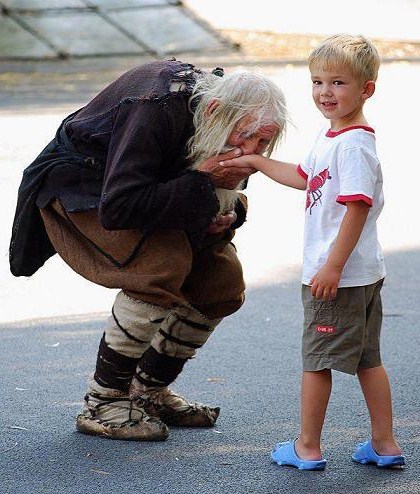
The external outlook of Dqdo Dobri is also saintly, he has long beard a shining eyes and a national folklore dress.
He looks like he has been out of some old Bulgarian tale.

It’s very striking fact that he that this old man is the biggest donator for our Cathedral Temple, we have many millionaires and businessman in Bulgaria but nobody has decided to donate to our Church such a high sum of money.

Elder Dobri’s donation for the St. Alexander Nevski’s Church is in value 35700 levs (around 19000 euros).
Dqdo Dobri is a beggar for Christ, this is one of the major types of saintship we read about in the living of the saints.
All the collected money from people are given for God’s Glory. It’s amazing heroism and an example, all we the Christians should follow to fulfill Christ’s law of love and inherit the internal salvation.
A friend of mine who has the blessing to see Elder Dobri with her own eyes and have a small talk with him, has shared with me that even though he wears an old ragged clothes, his clothes and body emit a roses like odor!

As the fame about the same has grown these days, the Bulgarian National television has prepared a small video about the saint. I believe the video as a true blessing for us the Christians and will encourage us to persist in the good deads.
Here I present you the videos you can see the living saint, I hope by his holy prayers God will show mercy to all us who watch his graceful words:


The Living Christian Saint from Baylovo Village – Bulgaria


Elder Dobri from Baylovo – Bulgaria

Inteview with Elder Dobri in his house in Baylovo (the interview is in Bulgarian)

Share this on