Archive for the ‘Everyday Life’ Category

24 of May National feast of Bulgarian Education Enlightenment and Culture

Friday, May 24th, 2013

saint Cyril and Methodius holding Cyrillic Glagolic manuscript 24th of May most light Bulgarian national feast

24-th of May is one of well known newest and most bright Bulgarian national feasts. 24th of May is officially one of the most light Bulgarian feasts and there is virtually no Bulgarian who doesn't connect this feast with Celebrations related to Bulgarian Cyrillic Alphabet and the Holy brothers st., st. CYRIL and METHODIUS as well as their 5 pupils , CLEMENT, NAHUM, GORAZD, ANGELARIUS, SAVVA – known here in Bulgaria as the 7-th Holy enlighteners of the Bulgarian lands. The alphabet invented by the 2 holy brothers was with the goal of translating the Holy Scriptures in understandable language to Slavonic tribes inhabiting (Great Moravia and Panonia) big part of Bulgarian lands as well as many other regions of Eastern Europe. Today the 2 holy brothers are righteously called "Apostles of the Slavs". The two brothers devised the most ancient form of a Cyrillic language (Glagolitic Alphabet / Glagolitsa –  glagoliti means "to speak"), whose modified version the Cyrillic used to this very day in Slavonic part of Orthodox Eastern Church, which in practice nowadays makes up near half of the Eastern Orthodox Church Christian people (about 200 000 000 members) – from Bulgaria, Russia, Belarus, Serbia,  Ukraine, Croatia, Poland, Kazakhstan, Czech, Slovakia, Slovenia

Codex Zographensis Bulgarian Christian Orthodox Zographus Monastery Holy mount Athos

Page of Codex Zographensis nowadays kept in Bulgarian Zograf Monastery St. gt. martyr George

Glagolic alphabet consisted of 41 letters. Many of the letters were devised based on Greek, where others were created based on Latin, Arabic / Coptic, Hebrew  and some other not still determined languages of the time.

According to some modern research 5 pupils of st. Cyril and Methodius – st. Clement,Nahum, Gorazd, Savva and Angelarius re-formed Glagolitsa and create Cyrillic alphabet used to these days among about 450 000 000 ppl around the world. Because Cyrillic was easier for writting with time last Glagolitic manuscripts started to disappear around the middle age XV-th century. 

Asemanievo Gospel from the end of X-th XI century Glagolic and cyrillic letters

St. King Boris – The Baptizer of Bulgarian lands accepted st. Cyril and Methodius pupils and created 2 early Spiritual / Enlightenment Schools in Preslav and Ohrid. In this two spiritual centers many Church books were copied / transcribed. Many of the translations of Holy Scriptures and Living of the saints made in Preslav and Ohrid are nowadays influenced Church life in Russia, Serbia and Romania. Some of the original manuscripts produced in there are nowadays kept mainly in Russia and Serbia.

Celebrating of 24-th of May as a national and Church feast of Bulgarian Enlightenment and Bulgarian Culture started as such  in the pre-liberation from Ottoman Turkish slavery period around y. 1852. According to some historical documents the feast was first celebrated on 22 of May in still "unliberated" Bulgarian Church (which at that time belongs to Greek Patriarchy). Initially the feast was celebrated on 11th of May as one feast both celebrated in Church and nation. Later after secularization period since 1969, two feasts developed one Church official in 11-th of May and one nationwide in 24-th of May. The feast 24-th of May is celebrated on this date since 1969. Today though Bulgarian Orthodox Church marks the remembrance of holy brothers st. Cyril and Methodius on 11-th of May. Every 24-th of May there is a Holy Liturgy served asking God to bless Bulgarian nation and grant us good nation health and success in all good knowledge. In relation to Bulgarian Liberation period, there was need for writing a secular Hymn for the feast. In City of Ruse in y. 1892 Stoyan Mihailovski then a teacher in High School writes a hymn which is well known and sign even by this day by Bulgarians – the infamous "Върви народе възродени" / "Walk straight, oh renewed nation".

ХОР "БОДРА СМЯНА" – ВЪРВИ, НАРОДЕ ВЪЗРОДЕНИ!

Share this on

Merging pictures on Linux command shell with ImageMagick merge

Friday, May 17th, 2013

combining-multiple-jpg-png-pictures-imagemagick-magician-logo

It is generally useful to combine multiple pictures into single one. A example case, where merging pictures on Linux is necessary is if you previously used ImageMagick's convert command line tool to convert PDF file (pages) to JPEG / PNG pictures. Unfortunately convertion with convert(as far as I know is only capable of generating multiple picture files instead of one single one), thus you further need montage to merge pages in separate photos to one. In my case I had my Curriculum Vitae in PDF and I needed to have same PDF in single photo for my applications for online Job Employment Belarusian portal site rabota.tut.by.

montage is one of numerous ImageMagick package script (plugins).
On all major Linux distributions (Debian / Ubuntu, Fedora, CentOS, RHEL, SuSE) montage comes installed together with imagemagick deb / rpm package.

Whether you don't have montage on Debian / Ubuntu and deb derivatives install it via:

linux:~# apt-get install --yes imagemagick
....

On CentOS, Fedora, RHEL, SuSE to install montage:

[root@centos ~]# yum -y install imagemagick
....

To merge two JPEG Photos into single PNG format picture:
linux:~$ montage -geometry +2+2 Picture-1.jpeg Merged-picture.png

Combining more photos, lets say my 8 Pages photos output from previous PDF convert to pictures is done with:

linux:~$ montage -geometry +8+8 CV_Georgi_Georgiev_bg-0.png \ CV_Georgi_Georgiev_bg-1.png \ CV_Georgi_Georgiev_bg-2.png \ CV_Georgi_Georgiev_bg-3.png \ CV_Georgi_Georgiev_bg-4.png \ CV_Georgi_Georgiev_bg-5.png \ CV_Georgi_Georgiev_bg-6.png \ CV_Georgi_Georgiev_bg-7.png \ CV_Georgi_Georgiev_bg.png
montage has plenty of useful other options, to do various photo montages from command line. Other way to merge photos with montage is by using:

linux:~$ montage -mode concatenate -tile 1x input-pic*.jpg out.jpg

Merging photos is also possible by using directly convert.

Combining multiple photos into single JPEG or PNG with Imagick convert is done with:

linux:~$ convert -append input-pic-*.jpg combined-picture.jpg

Other example use of montage is located on ImageMagick's montage's script site here


Share this on

Trip to Geographical Center of Europe Polotsk Belarus

Tuesday, May 7th, 2013

I spend 3 days from last week with my beloved girlfriend Svetlana in Polotsk Belarus. Since I'm here in Belarus for only 21 days, I'm trying to see as much as possible from what is remarkable from this beautiful green country. Polotsk is famous with;
 

  • Polotsk (Полоцк) is old Orthodox Christian Spiritual center and oldest city of Belarus (founded y. 862)
     
  • It is famous for being home city of Saint Efrosinia Polotskaya
     
  •  Polotsk  is Geographical Center of Europe
     
  • Saint Ephrosinia Church (12th century) – where Cross of st. Efrosinia is kept
     
  • Museum of Book-printing – one of the best in Europe
     
  • "The Stone of Boris" – monument of old Slavonic culture

    stone of Boris monument Polatsk Belarus
     

  • Spaso Efrosinievsky Nuns Monastery (Convent) – (established y. 1582) – monastery islocated 15 minutes from Central Train Station

It is interesting that probably the greatest Belarusian enlightener enlightener Frantsysk Skorina was born in Polatsk, Skorina is among most important people of Belarus of all time. It was in Polotsk also when first Belarusian "printer" was used.

I went to Polotsk with absoultely no idea what to expect. To reach there we travelled on a Belarusian train in a sleeping coupe. Mentioning train I should say train station in Minsk is very well organized and looks very European, the only inconvenient thing from other Western countries trains is you have to call Train Station and reserve ticket in advance. If you don't do so there is a high risk there are no free tickets.

Вокзал Vokzal Central Train Station Minsk Belarus

Central Railway Station Minsk, Belarus

Minsk Central Train Station Vokzal Minsk / Вокзал Минск

Minsk inside Central Train station (Copyright Wikipedia)

The train we were in was old probably 25 or 30 years old, but inside all was clean and well maintained, the train windows had curtains and in between coupe corridors there was even carpet. The train toilet seemed a bit ancient and was a bit dirty, but I guess this is normal as even in developed countries like Holland train toilets are bit dirty. Smoking inside the train just like in Bulgaria nowadays was prohibited. Overall train travel was from 11:53 to 08:20 The train is quite slow if compared to Western European but, was confortable and most importantly warm. Going down from train in Polotsk, I noticed even though the train station was little it was generally well organized. We left our laggage in a Luggage Keeping Room (very cheap for 1 day it costs about 1 euro or less!).

Polotsk is a famous tourist destinations for people from Russia and Ukraine, so finding and booking a Hotel in advance was a bit of a struggle. Thanksfully Svetlana managed to book in advance a Hotel Parus. Hotel cost was cheap too about 12 EURO per night for person. Parus hotel was destinated quite good, with rooms having a sightview to Dvina River
After leaving our luggage in Train Station, we went for an eat and find out prices in cafeterias are very low too. We eat quickly in tiny cafeteria - Mini Cafe and for Coffee Tea and a small snacks we pay only about 1.5 euro!
As Polotsk is small with inhabitants of only 80 000 ppl and is a famous spiritual center for centuries – the city "feels" very calm and relaxed. It is very easy to orientate too, the central part of the city is located in less than 10 minutes walk from Central Train Station. Next to train station is the Central Bus Station. The central part has few old monuments and just 3 minutes after crossing the central part (on the right)you reach the part with 3 of city landmarks;

- Historical Museum of Book Printing
- Saint Sophia Cathedral
- Bogoyavlensky sybor (Epiphany Cathedral Church)

saint Sophia Cathedral Polatsk Belarus

Saint Sophia Cathedral Polatsk

Polock River Dvina view

River view to Saint Sophia Cathedral Polatsk

polotsk-bogoyavlenski-sobor-Epiphany-cathedral-Polotsk

Cathedral of Epiphany Polotsk, Belarus

Svetlana planned, we stay 1 day in Polotsk and then travel to one of the other old cities of Belarus Grodno and then to Vitebsk, however we were so tired and Polotsk was so beautiful that we decided stay in Polotsk for one more day. On first day in Polotsk near the hotel there was a small Inn (Damyan) offering menu with traditional Belarusian kitchen food. We ate two nights there and in general  the prices there were normal for a tourist city – a dinner for 2 costs 15 / 20 euro. The inn decoration was with traditional tools and objects used in old times Belarusian living style. Unsurprisingly many of the tools were very similar to ones in Bulgaria so I felt pretty much like in our traditional  Bulgarian taverns ( Mehana ).

On Second day we catch bus number 4 (IRC) to reach to Spaso Efrosinievsky Monastery – named so in honor of st. Efrosinia of Polotsk. It is my first I visit Belarusian / (Russian) Monastery and honestly I was amazed how well all in monastery is organized.

Spaso Efrosinievski manastir Polotsk Belarus main Church building

Starting from Buildings Church buildings and even Nuns and Priests I met I can say Belarusian Spiritual Life is on supreme level. The Monastery had 3 Church buildings, where on the picture you see two of the Church buildings. The architecture of main Church was very much in Byzantine Eastern Style and the Church architecture differs from the usual Russian styled Churches, I've seen in Minsk and Polotsk. The Church architecture very much reminded me of our homeland Churches in Bulgaria.
The main Church building keeps thousand of Christian saints and st. Martyrs Holy Relics. Just to name a few – relics of St. martyr Georgi, st. Seraphim Sarovski, st. Longin (the keeper of the Lord's tomb), st. mrtr Panteleimon, st Nicolas, st Spiridon …
On the left near the alter walls are kept the Holy incorruptable body of saint Efrosinia Polatskaya, The holy incorruptible body of the saint is 10 centuries old!

saint Efrosinia Polatskaya Orthodox Christian icon

In Church photography was prohibited so unfortunately I couldn't take picture of st. Efrosinia's Holy Body. On the left and right corner of the Church near the outer doors there are a number of saints Holy relics to venerate. On the right near the Church Alter, there was a shrine containing a holy relics piece of approximately 100 of the greatest Christian saints!!!
The blessing one gets by visiting the monastery is great, being in the Church and near the Holy relics makes one feel the Pure Joy of Grace of the Holy Spirit flowing.
I and Svetlana stay for half of the evening service and then took to our hotel in Polotsk receiving the blessing of multtude of saints. On the next day, took our baggage and on our way to Train Station, we saw an old house used currently as Kids Museum. I've been in a kids museum already and I know though it is made for Children the joy to be there is not different even for adults as in each of us lives a kid. Below are few pictures from the Kids Museum :)

Kids-Museum-Polotsk-Belarusian-architect-Church-in-building

Inside Kids museum (Church inside building :) )

old-Belarusian-things-traditional-Belarusian-instrument

Old Belarusian Musical Instrument (top in Yellow)

kids-museum-Polotsk-Georgi-and-Svetlana

Weighting tools Kids museum (Me and Svetlana)

On 3rd day of our stay in Polotsk, we catch a bus back to Minsk. The bus was a small mini-bus very similar to ones we have in Bulgaria. Just like with almost everything in Belarus it was necessary to reserve and buy our bus tickets in advance (on previous day).
In General we had great time in Polotsk. It is cheap there are things to see and it is small and everything is nearby you. If you happen be in Belarus visit Polotsk for a day or 2 its worthy.

Share this on

Running multiple skype accounts in parallel on Windows XP and 7 / Run Skype client twice or more on Windows

Saturday, May 4th, 2013

Whether you tried running simultaneously more than 1 Skype clients by clicking twice on Skype Desktop icon or invoking Skype via Windows Start menu; You already have figured out that Skype on Windows is set-up by defaykt to only support one logged in Skype user.
In case you wonder why on earth someone might need to run in parallel few Skype accounts on one Windows PC, possible scenario is;;;

You work for a company and just for clarity you have to communicate with clients from one skype name and with another skype name to communicate to company management. 

In Linux in Skype version this is not so and thus for people like me who come from Linux it is rather uneasy to not be able to login in second Skype instance, whether you go to a friend who already keeps logged in with his Skype user …

Thus this triggered me to research a bit if simulatenous user login is possible?
Yes it is possible and very easy, to do so the user has to run manually Skype from command line like so:

On 32bit PC hardware with 32 bit of Microsoft Windows issue in win cmd.exe (command prompt) from:

START -> RUN -> cmd.exe

cd C:\Program Files\Skype\Phone\

C:\Program Files\Skype\Skype /secondary

or to directly paste in command prompt:

“C:\Program Files\Skype\Phone\Skype.exe” /secondary

If you are on a 64bit machine run in cmd prompt:

“C:\Program Files (x86)\Skype\Phone\Skype.exe” /secondary

To easily run few instances of Skype in parallel, you can make shortcuts on Desktop. pointing to any of both above commands.

That's all now you can login as many skype users as you like on 1 Win PC. All parallel logged in users can receive and write messages. However you should bear in mind that situation with answering Skype calls is a bit complicated as you cannot speak in parallel through different logged in skype users. Anyhow whether you have to react on Skype voice / video calls incoming in similar or same time from 2 skype accounts, you can use – Set Skype Call on Hold functionality and hence keep voice video in parallel with different skype accounts.

Share this on

Fixing common WordPress empty page error

Thursday, May 2nd, 2013

A very common error for  wordpress based blog / site  whenever you modified
something inside pluginsis to receive empty page screen on user visit.

This error often is because of any installed WordPress caching plugins like
WP SUPER CACHE

or

W3 TOTAL CACHE.

One way to solve it is to delete from wp-config/plugins/ Folder whatever plugin is
causing the troubles.

If this doesn't fix the error and you need to Debug what is causing the odd
Empty pages.
Open wp-config.php and somewhere near beginning of file include:
 

error_reporting(E_ALL); ini_set('display_errors', 1);
define( 'WP_DEBUG', true);

After saving wp-config.php and refreshing WP size in Browser
(after cleaning browser cache)

if you get an error like:

Fatal error: Allowed memory size of 8388608 bytes exhausted
(tried to allocate 252212 bytes) in
/var/www/blog/wp-includes/cache.php on line 4


This is due to set maximum System Wide memory Limit of PHP Scripts to 8MB.
To solve that raise the PHP Limit to lets say 64M from wp-config.php by adding
in it line:

define('WP_MEMORY_LIMIT', '64M');

That's all WordPress should be working normal again.

Enjoy :)

Share this on

Install latest WINE – Win Emulator unstable version on Debian stable Linux

Saturday, April 27th, 2013

wine emulator logo install wine on Debian GNU / Linux

Installing latest stable version of wine is only possible and safe via deb repository on 32 bit Debian archtecture.

Whether not sure about your Debian architecture run:

linux:~# dpkg --add-architecture i386 To install latest unstable version of wine which though unstable is often much useful to its stable predecessors add wine-unstable repository linux:~# wget -q -O- http://www.tataranovich.com/tataranovich.asc | apt-key add -

Finally install / update (whether installed) with:
 

linux:~# apt-get update
linux:~# apt-get --yes install wine-unstable:i386

Enjoy ! :)

Share this on

Linux Currency convert GUI tool KeuroCalc / Convert world currencies Desktop Linux application, Convert USD to EUR

Thursday, April 25th, 2013

keurocalc Linux convert us dollars to euro and to rest of major world currencies

If you happen to run a small business or you're just an adventurer who use Linux for his notebook Desktop. Sooner or later you will end up needing Linux software to convert between world currencies. Some might argue that such a software is obsolete since already there are the Google Currency Converter and plenty of other (online) web currency converter sites. However for people like to use desktop applications like me it is much better to use a separate desktop tool which do currency convertion. If this is the case with and you happen to use Debian GNU / Linux, Ubuntu Fedora or any other main stream Linux distribution on your Linux powered Laptop or Tablet you will be surely happy to know about KEuroCalc – Universal Currency Converter. As all "K"-named starting Linux apps unfortunately keurocalc is using QT KDE graphic library and thus whenever used on GNOME it starts a bunch of KDE services (kedinit,klauncher, kded), however the load of this few on any modern notebook or PC is neglectably low so for most users the only disadvantage of kerocalc might be interface is looking a bit different compared to rest of Gnome GTK+ programs.

To install keurocalc on deb based Linuces e.g. – Debian / Ubuntu, ArchLinux ..:

noah:~# apt-cache show keurocalc|grep -i description -A 3

Description: universal currency converter and calculator – binary package
 KEurocalc is a universal currency converter and calculator.
 It downloads latest exchange rates directly from the
 European Central Bank and the Federal Reserve Bank of New York.
 

noah:~# apt-get install --yes keurocalc

Reading package lists… Done
Building dependency tree      
Reading state information… Done
The following NEW packages will be installed:
  keurocalc
0 upgraded, 1 newly installed, 0 to remove and 23 not upgraded.
Need to get 0 B/87.8 kB of archives.
After this operation, 319 kB of additional disk space will be used.
Selecting previously deselected package keurocalc.
(Reading database … 393466 files and directories currently installed.)
Unpacking keurocalc (from …/keurocalc_1.0.3-2_amd64.deb) …
Processing triggers for hicolor-icon-theme …
Processing triggers for man-db …
Processing triggers for menu …
Processing triggers for gnome-menus …
Processing triggers for desktop-file-utils …
Setting up keurocalc (1.0.3-2) …
Processing triggers for menu …

On Fedora, CentOS and rest of RPM based Linux distros keurocalc is installable too out of default package repositories:

[root@fedora ~]# yum -y -q install keurocalc
....


Here is a snapshot of keurocalc GUI interface;

Linux Universal Currency Converter Keurocalc

Keurocalc Linux universal currency converter settings screenshot

As you see from settings screenshot, information about rates can be obtained from 2 sources; – European Central Bank and New York Federal Reserve Bank. I give a try also to Euro, no network access (fixed rates only) method but unfortunately by choosing it you can only convert between Fixed Currencies (currencies which are already not in use – in EU member states who dropped their local currencies in favor of EURO).

I've tested the program and it works good, the disadvantage is convertion between some of the World currencies of countries with non-transparent planned (Soviet like) economies for example Belarus is not among app list of convertable currencies.

Share this on

Trip from Sofia Bulgaria to Minsk Belarus through Warsaw and how to issue VISA for Belarus

Wednesday, April 24th, 2013


I had to travel from Sofia to Minsk to be a guest to my beloved girlfriend Svetlana, thus I needed as cheap ticket as possible to reach there. Sofia Minsk is not very common destination especially in Winter, Spring and Summer, because Summer Tourist season is not still opened. I checked for all possibilities to reach the capital of Belarus. Since Bulgaria is in European Union and Belarus is in alliance with Russia and Ukraine. Bulgarian and rest of EU citizens need to issue VISA for Belarus, just like Belarusian citizens needs to have VISA for their summer holidays in Bulgaria.

In order to reach Belarus, I first needed Приглашение / Priglashenie (Invitation) from Belarusian citizen. My beloved girlfriend Svetlana issued one for me and sent it via Belarusian Post Services. In order for VISA to come over post it took about 12 working days. Once I had the Invitation in my hands I had to go to Belarusian Embassy, bring invitation, fill up some documents and pay VISA taxes which as of time of writing this post costs 60 EUR for issuing one person private VISA.

Application of Priglashenie I received over post looks like in picture below:

To have the VISA issued I had to bring my "Red" International (Foreign) Passport to Belarusian Embassy together with Recent Photos of mine. In Russian Embassy in Bulgaria photo is made and paid directly in Embassy with Belarusian Embassy this is not so, so I had to manually take new photo and bring those photo to embassy, I learned that first time I was in Embassy.

Photos had to be in special format (size) a bit different from the standard for accepted for most International VISA photos – at least this is what I was told in Studio where I went to make Photos. A note to make here is Belarus has only one embassy in Bulgaria located in Sofia and as far as I researched though Russia and Belarus are in union it is not possible to issue Belarusian VISA in Russian Embassy in city of Varna or Plovdiv.

Once photos were ready I bring them together with my Passport and had to leave them in Embassy. My visa was issued to be maximum of 90 days but unfortunately I could make it only for 45 days, because my International Passport is expiring in August and there is a rule that you cannot have the VISA issued for date longer than 3 months until Foreign Passport Expires. You can find website of Belarusian Embassy in Bulgaria here. Application form to print and fill in and hand in Belarusian Embassy for request of VISA is here.

Contact information of Belarusian Embassy in Bulgaria is:


Postal Address of the Embassy:

1505, Sofia, area «Reduta», «Nikola Karadjov» str. Building 3

Phone: (+359 2) 971 95 28, 971 71 31

Phone/Fax: (+359 2) 973 31 00

e-mail: bulgaria@mfa.gov.by

To issue me VISA I had to leave my Foreign Passport in Embassy and took it back after about 1 week and half (10 days or so). Issued VISA is not on a separate Application like VISAs for Dubai for Example but is directly sticked inside Passport;

Issued Belarusian Visa for Bulgarian citizen specimen I had my VISA issued for 45 days starting from 1 of April (as filled in app. form), ending in 15 of May.

Once having the VISA, the next question come what will be best way to travel from Bulgaria to Belarus. I did quite a research on this topic until decide with what to travel. There are 3 variants (bus, train or airplane). Distance between Belarus capital Minsk and my hometown Dobrich is only 1508 KM. Sofia is a bit far so distance Between two capitals is 1870 KM.
I call to check for bus price as I saw on the Internet some offers to travel with bus and though it seemed to be most cheap about 250 euro (two way ticket) after calling the agency contact found on the net, they told me this bus line is closed (probably working only in Summer because of the bigger number of Belarusian tourists travelling to BG). Option with train was also impossible for the reason Train line
Black Sea Coast -> Minsk operates only in Summer for months . (June – August).
Hence the only way to ravel left was by plain. I checked on Plain tickets and some recommendations on cheap ways to travel to from European Union to Belarus.
My first idea was to fly from Sofia to Lithuania Capital Vilnius and from there to take bus to Minsk as bus goes to Minsk for 3 hours or so. I checked low cost flights from Wizzair as I always try to fly with them for their cheap prices but unfortunately they don't have destination Sofia -> Vilnius. I checked other companies for same destination and found only tickets from LuftHansa, the ticket however was too expensive and I had to change two airplanes something I very much wanted to avoid, cause I hate so much the airport Laggage checks / Scanning moment. Two way ticket to Vilnius costed about 400 EUR with taxes and included a flight trhrough Vienna airport or through Germany and included few hours waiting on airports which doesn't sound well at all. I checked then the variant to fly to Kiev but again it was very expensive plus Ukraine is not in EU and thus I didn't wanted to risk. Though officially as I've red Bulgarians are permitted to travel and stay in Ukraine without VISA for 90 days period I didn't wanted to try my luck. Other option was to fly from Sofia to Minsk using 1 airplane change in Vienna or Moscow. I contacted airport in Moscow to ask whether I can fly Sofia -> Moscow -> Minsk with my Belarusian Visa but unfortunately to fly through Moscow Scheremetyevo I need a transit VISA which costs some money and moreover Scheremetyevo is enormous airport and I guessed it will be hard for me to orientate there and will bring me too much stress. Third variant which I liked best was to Fly from Sofia -> Warsaw and from there travel by bus to Bus Station Dworec Zahodnyi (West Warsaw Bus Station) and travel with Bus international line Warsaw -> Minsk. I decided to stop on this option and reserved fly ticket Sofia -> Warsaw. Flight date was 20th of Apr 14:40, ticket reserved with Polish Airlines (LOT).

Departure was from Sofia Terminal 2 – in Sofia we have two terminals (The Old one Terminal 1 and new one Terminal 2). All times I flight so far from Sofia airport was from Terminal 1 so this time it was my first time from the bigger and much newer and modern Terminal 2.

Sofia International airport Bulgaria newer Terminal2

My dear friend Mitko (Nomen), leave me by his car to airport and then I checked-in.

Sofia airport SA logo and building Terminal 2

I could bring up to 20 KG with me, ticket costed 326 EUR because I reserved it a bit late (8 days before flight), moreover Sofia -> Warsaw is not very common flight destination from Bulgaria, as not much of Bulgarian citizens live in Poland.

Sofia airport courtesy Terminal 1

The ticket included also a meal and cold-drinks so this also added a bit to high ticket price. Flight was on a very little airplane and though scheduled for 14:40, flight was late and we were in plain about 14:50 and airplane take off around 15:00. By the way the airplane was the smallest one I ever traveled with so far with, very very small one. I think the pilot  was quite professional or the reason was the small plane size but anyways the landing was amazingly smooth. In Warsaw the airport is maybe a bit bigger than Terminal 2 but in general it was easy to orientate take luggage and go out very quickly. The luggage come quite quickly I had to wait for it only few minutes. Then I went directly to bus station and rided on BUS number 175 (there is second possibility to take bus 188) both go to Dworec Centralni Avtogara (Central Bus Station). According to prior instructions I red on the internet it was said to go to bus station Pomnik Lotnika. I tried with this but unfortunately the information to go down on Pomnik Lotnika and took bus 523 is obsolete now. And in order to reach Dw. Zahodny you need to go directly to Dw. Centralni with bus nr. 188 or 175 and then go through a subway on left side and wait on bus station for bus nr. 123 or 125 (not sure the exact nr.). Then Dw. Zahodnyi is only 6 / 7 stops away, I asked some people in English and thanksfully some Polish speak English or at least I can partially understand what they say because their language is close to Russian and Bulgarian. BTW it is very interesting for me as I can understand plenty of what is written on small shops in bus etc. On Dworec Zahodniy Avtogara stop after going down from bus I had to take left direction and in 2 minutes walk it is the West bus Station. There I asked on information if they can give me information whether there is bus Warsaw -> Minsk. The man in kiosk was not speaking English but fortunately he speaks Russian, so I was able to understand I should go out of bus station and stay on the left Pilon waiting for Bus Warsaw -> Minsk. Bus came in 18:30 just like written on the Internet the Bus company was called "ВизитТурс / VisitTurs". I had 1 hr and half to wait for it cause was little earlier on Bus Station. The Platform Nr. Bus stopped is Platform 10.
Just for info for otheres who like to catch such bus on the Internet I read there are bus-es traveling to Minsk  every Wednesday, Friday, Saturday and Sunday in times varying from 18:30 / 19:00 / and 21:00. While waiting for the bus I meet two ppl from Kazakhstan waiting for another bus for Vilnius and had a good chat with them about situation in Kazakhstan  and Bulgaria. I took also a quick meal – from bus station on price even cheaper than Bulgaria (about 2.5 leva – 1.25 euro). In bus all was fine, they took my luggage I placed myself and waited to issue me ticket. I didn't have Zloty (The Polish currency) in me and only euro and at first the bus driver was not happy with that but then he agreed I pay in euro so all went fine. The bus had 2 or 3 quick 15 minutes Rests. Overall travel with Bus from Warsaw Minsk took about 10 hrs, because of some delay and while checking documents on Belarusian Border. As it is normal with crossing Borders by Bus they checked our documents twice once on Polish Border and then on Belarusian one. After crossing Belarusian Border, right after entering the Border Control Police man give me a tiny application form to fill in with information about my stay in Belarus. As well as I had to go to one small kiosk to create Insurance for me (Insurance for month costs 12 EURO). Making the policy took only few minutes, then we had to go down from Bus with our laggage and we waited on a queue with rest of Belarusians to check our documents. This took about 40-50 minutes. Thanksfully all went normal we were back in bus around 3:00 and arrived in Minsk about 07:00. I didn't have Belarusian Rubles (RBL) so I had to change to take a taxi. I asked one person with my bad Belarusian, where from there is a Change Bureau and on my way to it met another Belarusian who was calling for people looking for transportation to some street in Minsk. I spoke a bit with me and offered to change my EURO, changed me 20 euro for 200 000 B. RBL. He was kind enough to call for me a Taxi. He said I should wait for his friend who will bring me to the address I was looking for. I went to a car which was not officially a taxi but just a guy who will bring me to the destionation. In 25 minutes time was to address ul. Kalinovskogo, Dom (block) 93, apr. 43. Here in Belarus all was new for me. My first impressions were Traffic Lights which were unusually thin if compared to ones we have in Bulgaria and rest of EU.

Minsk unusually thin Traffic Lights picture / Unique Traffic Lights

On my way to address I was impressed by a big magnificient Orthodox Church in construction.

orthodox church All saints cHRISTIAN church in construction Minsk Belarus and wooden orthodox church

I was also striked that everywhere all advertisements and everything was in cyrillic. Some in Russian and some in Belarusian Language. Something noticable was also the street was very clean, the construction of most of Buildings were in style of communist countries with (Panel Blocks) just like it used to be in BG when we had communism.

Minsk Panelnij dom panel block Minsk - typical construction for Minsk remains from Communism

Тhough newer constructions looked very modern and very much imitated constructions from Western Europe.

Minsk ZamyK Trade Center Korona one of most modern Minsk Buildings

Something else noticable is here they continued building using (Block Panels) many buildings as I can see some buildings still in construction. It was clear that the city has good infrastructure (transportation system), much better than one I expected as well the country has a functional economy. Bus-es seem like very much a copy of Bus-es in Holland, actually a lot of the things I saw in Minsk seem like copying Holland and Germany.

Minsk transportation by Bus Maz bus

On my way I saw plenty of University buildings, clear sign that education in Belarus meaning education here is on good high level. The most impressing building I saw so far is the building of Minsk National Library.

New National library awesome building Belarus Minsk

Unquestionably this is amazing construction, I had the opportunity on my first day when in Belarus go there and see the old books stored. Amazingly there are books ancient books starting from 10th century onwards. Most of the books were Church books, Ancient Gospels, Faith Codexes plenty of artifacts. There were of coursesome books remains from communism. Something noticable in Minsk is the amount of policy probably in number of times more than in countries in European Union. Since I'm few days already in Belarus I had the chance to see Minsk's Metro which is probably one of city's attractions. In general the Metro was quite cool, there are plenty of communist slogans and statues remains but it looks normal and almost modern.
The feeling in Metro Station is very industrial, as even from going inside the Metro Subway there is a thin smell of machine oil :)

Minsk Belarus Metro transportation Uruch

The metro is accessed by using electronic access card similar to old bank (tape cards). Using Metro and bus inside Minsk is very easy. The city is a strange combination of modern culture with communist spirit remains. Though the city is enormous (2 000 000 million population), all seems very relaxed compared to Bulgaria for instance. As far as I interacted with people, I can say people are kind and helpful and very hospitable. A lot of people in Minsk as far as I can see are religious and civilized. Though I've heard people talk about information eclipse in Belarus, I've seen plenty of people who dress very modern like in western countries. I've seen plenty using E-books, Pads and various tech gadgets so it seems technological development of Belarus is on a normal European level. In general what I see here seems much better than what I expected priorly. There is plenty of more things to write which I will probably do in coming days. So far I hope this little article will help someone who needs basic information on traveling from Sofia to Minsk.

It is curious that Bulgarian and Belarusian people have common root as Pre-historic Bulgarians used to be one nation with Pre-Historic Belarusian. Similarity is visible even to now as there are plenty of common words matching or very similar between Bulgarian and Belarusian. More over later from 9th to 12th century Bulgariaused to be Empire and spread near to territory of Belarus. Similarity between Bulgarians and Belarusians is also visible even in country flag colors and country names Bul-garia (ar) / Bel-arus (ar). Even on a country flag level we share the same colors (white / green / red) in different order.

bulgaria national flag similar to Belarusian (white, green, red)

Bulgaria National Flag

Bulgarian national flag similar to Belarusian (red, green, whtie)

Belarus National flag

As a conclusion I should say Belarus and Minsk looks like a lovely normal modern country no matter the bad rumors we hear on the news that they're communist or ruled by a (Dictator) President Lukashenko. Oh one last thing, if you're in Belarus try to avoid to speak bad things or jokes for Lukashenko. As far as I heard there is plenty of tab devices virtually everywhere. Speaking against Lukashenko or the government might lead you to problems with Militia (Police) or even send you in Jail :)
 

Share this on

Apr 23 Saint George’s day in England – St. George Patron Saint of England

Tuesday, April 23rd, 2013

Earlier when I wrote an article about celebration of St. George's day in Bulgaria and took the time to read a bit more in Wikipedia about which country venerate st. George's day who by the way is one of the most honored Orthodox Saints, I curiously found United  Kingdom to be among one of the countries keeping saint's memory. Today while opening Google.co.uk for a search Google's usual picture logo had instead below nice looking fairytale medieval picture;

United KIngdom patron saint George Google logo medieval picture

The picture made my childish nature be curious and I clicked on it just to find few articles about Saint George's day in England which happens to be celebrated today in 23 of April. As I myself bear name after saint George it means it is now my nameday in England :) Though saint George is England patron saint because English people are not so religious as earlier, the feast is not considered as Official Public Feast. In Bulgaria we celebrate st. George's day in 6th of may and it is non-working public holiday for all country as well as it is Official Feast of Bulgarian Army.
I like comparing things so It was quite curious for me to see how Saint George is depicted in England and Western Europe countries and compare to our Orthodox icon saint tradition;

saint George orthodox icon from Novgorod 15th century icon

St. George Orthodox icon from Novgorod 15-th centuryicon

saint George orthodox icon

St. George Roman Warrior before his Martyrdom – Orthodox Icon

England South Darley St George depiction on church window

Saint England depicted on Anglican Church Window

saint George and the Dragon Raphael painter painting year 1506

Saint George and the Dragon by Master Raphael – circa 1506

saint George and the Dragon master Raphael painting 2

Master Raphael – Saint George killing the Dragon (beast)

Saint Martyr George from Lydda Palestine Carlo Crivelli - Italian Master 14th century

Saint Martyr George from Lydda Palestine Carlo Crivelli – Italian Master 14th century

Curious fact related to Saint George's veneration is that the center cross on England's flag is actually saint George's cross of victory – A reference for saint's victory over evil with faith in Christ.
 

Saint George Cross on England's national flag

In England it is typical flags with the image of St George's cross are flown on some buildings, especially pubs, and a few people wear a red rose on their lapel.
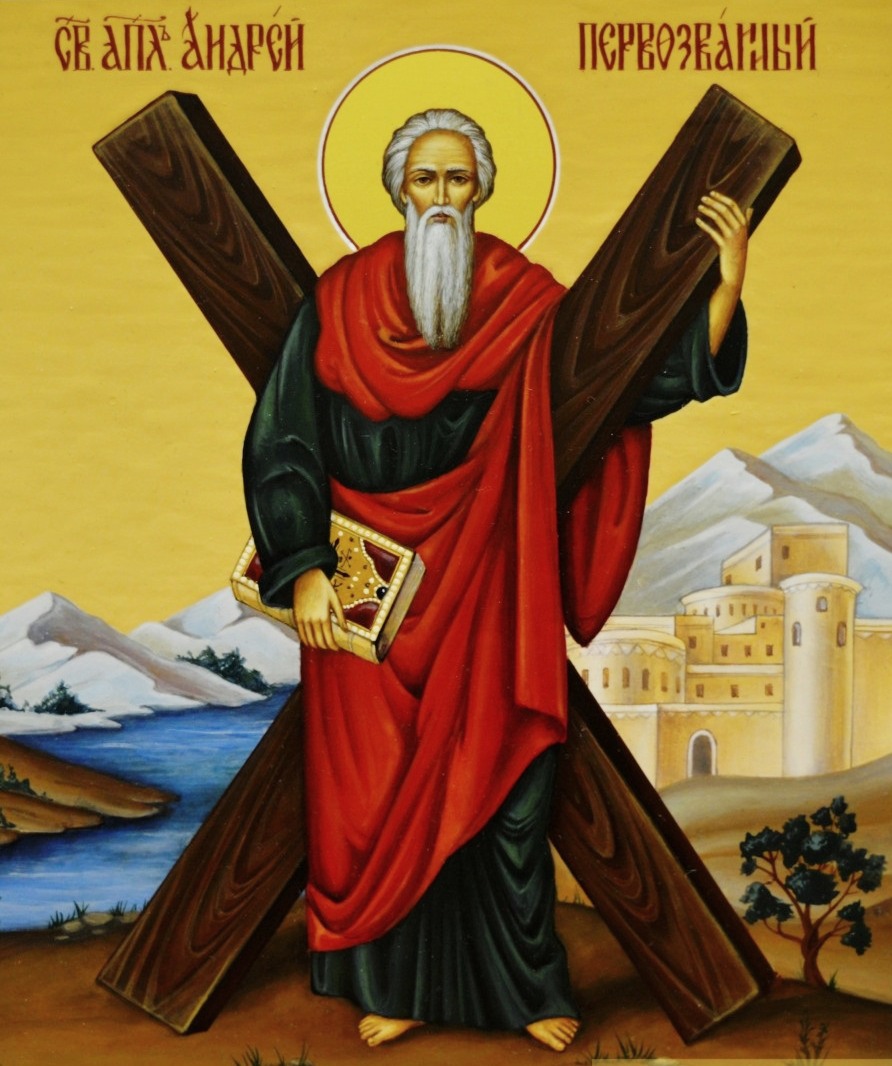
Saint's day is most venerated in Salisbury, where there’s an annual St George’s Day pageant, which probably dates back to the 13th century. During the crusades in the 1100s and 1200s, English knights used St George's cross as part of their uniform. St. George's cross keeps in England official flag for centuries. Nowadays the flag of England – the so called Union Flag is a combination of St George's cross, St. Andrew's ( X shaped crsoss ) and St. Patrick's cross. Even to this day English football fans paint variation of cross on their face most of which do it without realizing  the deep roots of the ancient Great Britain symbol.

Share this on

Read Holy Bible on Linux with KDE GUI environment

Friday, April 5th, 2013

Whether you're Christian and you're into the habit to read daily a Chapter from Holy Bible and you use Linux with KDE environment on your Desktop, you definitely have to check BibleTime. BibleTime is one of Crosswire Sword Projects. The aim of project is to bring Holy Scriptures to people who spend long time in front of PC. Though Xiphos Bible reading app does the same Xiphos is build on top of GTK2 and targets GNOME users thus, if you're a KDE user and you prefer to use applications build on top of KDE's QT library it is preferable to use BibleTime.

Below is description of Debian package;

debian:~# apt-cache show bibletime|grep -i description -A 5

Description: A bible study tool for Qt
 BibleTime is a free and easy to use bible study tool.
 It uses the Qt and SWORD software libraries.
 BibleTime provides easy handling of digitized texts (Bibles, commentaries
 and lexicons) and powerful features to work with these texts (search in
 texts, write own notes, save, print etc.) in the SWORD module format.
 

debian:~# apt-get install bibletime
Reading package lists... Done
Building dependency tree      
Reading state information... Done
The following extra packages will be installed:
  bibletime-data
The following NEW packages will be installed:
  bibletime bibletime-data
0 upgraded, 2 newly installed, 0 to remove and 77 not upgraded.
Need to get 4,812 kB of archives.
After this operation, 16.1 MB of additional disk space will be used.
Do you want to continue [Y/n]? Y
....

Once installed to launch it invoke bibletime cmd:

debian:~$ bibletime

Libletime Holy Bible read in KDE Linux  reading tool launch screen

Just like with Xiphos, BibleTime KDE app supports installing extra Holy Bible texts in your mother language. To install additional Bible translations from:

Settings -> BookShelf Manager -> Languages

BibleTime read holy bible on Linux BookShelf Manager adding Holy Bible in additional languages

Then to choose default language in which default Holy Bible translation will appear use menus:

BibleTime Holy Bible Linux KDE reading program adding Holy Scripture additional language translations


One major disadvantage in BibleTime whether compared with Xiphos is it doesn't support Tabs. So there is no way to read in Parallel two different language translation of Holy Bible. Thus those wanting to stick to compare different versions of Holy Bible translations Install Xiphos

Share this on