Archive for the ‘Christianity’ Category

Trip to Geographical Center of Europe Polotsk Belarus

Tuesday, May 7th, 2013

I spend 3 days from last week with my beloved girlfriend Svetlana in Polotsk Belarus. Since I'm here in Belarus for only 21 days, I'm trying to see as much as possible from what is remarkable from this beautiful green country. Polotsk is famous with;
 

  • Polotsk (Полоцк) is old Orthodox Christian Spiritual center and oldest city of Belarus (founded y. 862)
     
  • It is famous for being home city of Saint Efrosinia Polotskaya
     
  •  Polotsk  is Geographical Center of Europe
     
  • Saint Ephrosinia Church (12th century) – where Cross of st. Efrosinia is kept
     
  • Museum of Book-printing – one of the best in Europe
     
  • "The Stone of Boris" – monument of old Slavonic culture

    stone of Boris monument Polatsk Belarus
     

  • Spaso Efrosinievsky Nuns Monastery (Convent) – (established y. 1582) – monastery islocated 15 minutes from Central Train Station

It is interesting that probably the greatest Belarusian enlightener enlightener Frantsysk Skorina was born in Polatsk, Skorina is among most important people of Belarus of all time. It was in Polotsk also when first Belarusian "printer" was used.

I went to Polotsk with absoultely no idea what to expect. To reach there we travelled on a Belarusian train in a sleeping coupe. Mentioning train I should say train station in Minsk is very well organized and looks very European, the only inconvenient thing from other Western countries trains is you have to call Train Station and reserve ticket in advance. If you don't do so there is a high risk there are no free tickets.

Вокзал Vokzal Central Train Station Minsk Belarus

Central Railway Station Minsk, Belarus

Minsk Central Train Station Vokzal Minsk / Вокзал Минск

Minsk inside Central Train station (Copyright Wikipedia)

The train we were in was old probably 25 or 30 years old, but inside all was clean and well maintained, the train windows had curtains and in between coupe corridors there was even carpet. The train toilet seemed a bit ancient and was a bit dirty, but I guess this is normal as even in developed countries like Holland train toilets are bit dirty. Smoking inside the train just like in Bulgaria nowadays was prohibited. Overall train travel was from 11:53 to 08:20 The train is quite slow if compared to Western European but, was confortable and most importantly warm. Going down from train in Polotsk, I noticed even though the train station was little it was generally well organized. We left our laggage in a Luggage Keeping Room (very cheap for 1 day it costs about 1 euro or less!).

Polotsk is a famous tourist destinations for people from Russia and Ukraine, so finding and booking a Hotel in advance was a bit of a struggle. Thanksfully Svetlana managed to book in advance a Hotel Parus. Hotel cost was cheap too about 12 EURO per night for person. Parus hotel was destinated quite good, with rooms having a sightview to Dvina River
After leaving our luggage in Train Station, we went for an eat and find out prices in cafeterias are very low too. We eat quickly in tiny cafeteria - Mini Cafe and for Coffee Tea and a small snacks we pay only about 1.5 euro!
As Polotsk is small with inhabitants of only 80 000 ppl and is a famous spiritual center for centuries – the city "feels" very calm and relaxed. It is very easy to orientate too, the central part of the city is located in less than 10 minutes walk from Central Train Station. Next to train station is the Central Bus Station. The central part has few old monuments and just 3 minutes after crossing the central part (on the right)you reach the part with 3 of city landmarks;
- Historical Museum of Book Printing
- Saint Sophia Cathedral
- Bogoyavlensky sybor (Epiphany Cathedral Church)

saint Sophia Cathedral Polatsk Belarus

Saint Sophia Cathedral Polatsk

Polock River Dvina view

River view to Saint Sophia Cathedral Polatsk

polotsk-bogoyavlenski-sobor-Epiphany-cathedral-Polotsk

Cathedral of Epiphany Polotsk, Belarus

Svetlana planned, we stay 1 day in Polotsk and then travel to one of the other old cities of Belarus Grodno and then to Vitebsk, however we were so tired and Polotsk was so beautiful that we decided stay in Polotsk for one more day. On first day in Polotsk near the hotel there was a small Inn (Damyan) offering menu with traditional Belarusian kitchen food. We ate two nights there and in general  the prices there were normal for a tourist city – a dinner for 2 costs 15 / 20 euro. The inn decoration was with traditional tools and objects used in old times Belarusian living style. Unsurprisingly many of the tools were very similar to ones in Bulgaria so I felt pretty much like in our traditional  Bulgarian taverns ( Mehana ).

On Second day we catch bus number 4 (IRC) to reach to Spaso Efrosinievsky Monastery – named so in honor of st. Efrosinia of Polotsk. It is my first I visit Belarusian / (Russian) Monastery and honestly I was amazed how well all in monastery is organized.

Spaso Efrosinievski manastir Polotsk Belarus main Church building

Starting from Buildings Church buildings and even Nuns and Priests I met I can say Belarusian Spiritual Life is on supreme level. The Monastery had 3 Church buildings, where on the picture you see two of the Church buildings. The architecture of main Church was very much in Byzantine Eastern Style and the Church architecture differs from the usual Russian styled Churches, I've seen in Minsk and Polotsk. The Church architecture very much reminded me of our homeland Churches in Bulgaria.
The main Church building keeps thousand of Christian saints and st. Martyrs Holy Relics. Just to name a few – relics of St. martyr Georgi, st. Seraphim Sarovski, st. Longin (the keeper of the Lord's tomb), st. mrtr Panteleimon, st Nicolas, st Spiridon …
On the left near the alter walls are kept the Holy incorruptable body of saint Efrosinia Polatskaya, The holy incorruptible body of the saint is 10 centuries old!

saint Efrosinia Polatskaya Orthodox Christian icon

In Church photography was prohibited so unfortunately I couldn't take picture of st. Efrosinia's Holy Body. On the left and right corner of the Church near the outer doors there are a number of saints Holy relics to venerate. On the right near the Church Alter, there was a shrine containing a holy relics piece of approximately 100 of the greatest Christian saints!!!
The blessing one gets by visiting the monastery is great, being in the Church and near the Holy relics makes one feel the Pure Joy of Grace of the Holy Spirit flowing.
I and Svetlana stay for half of the evening service and then took to our hotel in Polotsk receiving the blessing of multtude of saints. On the next day, took our baggage and on our way to Train Station, we saw an old house used currently as Kids Museum. I've been in a kids museum already and I know though it is made for Children the joy to be there is not different even for adults as in each of us lives a kid. Below are few pictures from the Kids Museum :)

Kids-Museum-Polotsk-Belarusian-architect-Church-in-building

Inside Kids museum (Church inside building :) )

old-Belarusian-things-traditional-Belarusian-instrument

Old Belarusian Musical Instrument (top in Yellow)

kids-museum-Polotsk-Georgi-and-Svetlana

Weighting tools Kids museum (Me and Svetlana)

On 3rd day of our stay in Polotsk, we catch a bus back to Minsk. The bus was a small mini-bus very similar to ones we have in Bulgaria. Just like with almost everything in Belarus it was necessary to reserve and buy our bus tickets in advance (on previous day).
In General we had great time in Polotsk. It is cheap there are things to see and it is small and everything is nearby you. If you happen be in Belarus visit Polotsk for a day or 2 its worthy.

Share this on

Apr 23 Saint George’s day in England – St. George Patron Saint of England

Tuesday, April 23rd, 2013

Earlier when I wrote an article about celebration of St. George's day in Bulgaria and took the time to read a bit more in Wikipedia about which country venerate st. George's day who by the way is one of the most honored Orthodox Saints, I curiously found United  Kingdom to be among one of the countries keeping saint's memory. Today while opening Google.co.uk for a search Google's usual picture logo had instead below nice looking fairytale medieval picture;

United KIngdom patron saint George Google logo medieval picture

The picture made my childish nature be curious and I clicked on it just to find few articles about Saint George's day in England which happens to be celebrated today in 23 of April. As I myself bear name after saint George it means it is now my nameday in England :) Though saint George is England patron saint because English people are not so religious as earlier, the feast is not considered as Official Public Feast. In Bulgaria we celebrate st. George's day in 6th of may and it is non-working public holiday for all country as well as it is Official Feast of Bulgarian Army.
I like comparing things so It was quite curious for me to see how Saint George is depicted in England and Western Europe countries and compare to our Orthodox icon saint tradition;

saint George orthodox icon from Novgorod 15th century icon

St. George Orthodox icon from Novgorod 15-th centuryicon

saint George orthodox icon

St. George Roman Warrior before his Martyrdom – Orthodox Icon

England South Darley St George depiction on church window

Saint England depicted on Anglican Church Window

saint George and the Dragon Raphael painter painting year 1506

Saint George and the Dragon by Master Raphael – circa 1506

saint George and the Dragon master Raphael painting 2

Master Raphael – Saint George killing the Dragon (beast)

Saint Martyr George from Lydda Palestine Carlo Crivelli - Italian Master 14th century

Saint Martyr George from Lydda Palestine Carlo Crivelli – Italian Master 14th century

Curious fact related to Saint George's veneration is that the center cross on England's flag is actually saint George's cross of victory – A reference for saint's victory over evil with faith in Christ.
 

Saint George Cross on England's national flag

In England it is typical flags with the image of St George's cross are flown on some buildings, especially pubs, and a few people wear a red rose on their lapel.
Saint's day is most venerated in Salisbury, where there’s an annual St George’s Day pageant, which probably dates back to the 13th century. During the crusades in the 1100s and 1200s, English knights used St George's cross as part of their uniform. St. George's cross keeps in England official flag for centuries. Nowadays the flag of England – the so called Union Flag is a combination of St George's cross, St. Andrew's ( X shaped crsoss ) and St. Patrick's cross. Even to this day English football fans paint variation of cross on their face most of which do it without realizing  the deep roots of the ancient Great Britain symbol.

Share this on

Read Holy Bible on Linux with KDE GUI environment

Friday, April 5th, 2013

Whether you're Christian and you're into the habit to read daily a Chapter from Holy Bible and you use Linux with KDE environment on your Desktop, you definitely have to check BibleTime. BibleTime is one of Crosswire Sword Projects. The aim of project is to bring Holy Scriptures to people who spend long time in front of PC. Though Xiphos Bible reading app does the same Xiphos is build on top of GTK2 and targets GNOME users thus, if you're a KDE user and you prefer to use applications build on top of KDE's QT library it is preferable to use BibleTime.

Below is description of Debian package;

debian:~# apt-cache show bibletime|grep -i description -A 5

Description: A bible study tool for Qt
 BibleTime is a free and easy to use bible study tool.
 It uses the Qt and SWORD software libraries.
 BibleTime provides easy handling of digitized texts (Bibles, commentaries
 and lexicons) and powerful features to work with these texts (search in
 texts, write own notes, save, print etc.) in the SWORD module format.
 

debian:~# apt-get install bibletime
Reading package lists... Done
Building dependency tree      
Reading state information... Done
The following extra packages will be installed:
  bibletime-data
The following NEW packages will be installed:
  bibletime bibletime-data
0 upgraded, 2 newly installed, 0 to remove and 77 not upgraded.
Need to get 4,812 kB of archives.
After this operation, 16.1 MB of additional disk space will be used.
Do you want to continue [Y/n]? Y
....

Once installed to launch it invoke bibletime cmd:

debian:~$ bibletime

Libletime Holy Bible read in KDE Linux  reading tool launch screen

Just like with Xiphos, BibleTime KDE app supports installing extra Holy Bible texts in your mother language. To install additional Bible translations from:

Settings -> BookShelf Manager -> Languages

BibleTime read holy bible on Linux BookShelf Manager adding Holy Bible in additional languages

Then to choose default language in which default Holy Bible translation will appear use menus:

BibleTime Holy Bible Linux KDE reading program adding Holy Scripture additional language translations


One major disadvantage in BibleTime whether compared with Xiphos is it doesn't support Tabs. So there is no way to read in Parallel two different language translation of Holy Bible. Thus those wanting to stick to compare different versions of Holy Bible translations Install Xiphos

Share this on

How to Read Holy Bible on GNU / Linux with Xiphos

Thursday, April 4th, 2013

If you're a Christian and you need application to read the Holy Scriptures in Linux. You definitely have to take a look at Xiphos Open Source Bible Study tool.

Here is Xiphos deb package desciprtion;

linux:~# apt-cache show xiphos|grep -i description -A 4


Description: environment for Bible reading, study, and research
 Xiphos is a Bible study program for the GNOME desktop environment, based on The
 SWORD Project by the CrossWire Bible Society, a framework for developing Bible
 study tools and of associated texts such as commentaries and dictionaries.

 .

To install Xiphos on Debian, Ubuntu and other Deb derivatives run in terminal:

linux:~# apt-get --yes install xiphos
....

To run it further type in terminal:

hipo@linux:~$ xiphos

Xiphos American King james Holy_Bible on Debian Ubuntu GNU Linux screenshot

Default Holy Bible provided by Xiphos is American version of King James Holy Bible.

However a Holy Bible translation is available on almost any popular Language on earth and is easily installable via Xiphos Module Manager. Xiphos Module Manager uses text obtained from Crosswire  Bible Society – Sword Project.


Linux Xiphos Holy Bible reading GNOME tool Module Manager screenshot

To install your Homeland language Holy Scriptures translation choose whatever language via menus:

Edit -> Module Manager -> Install/Update -> Biblical Texts

Linux Holy Bible reading tool Xiphos choose bible texts in all country homeland language

For English Speaking people, there are some extra Books, Heretical texts well known in Christiandom as well as Concordance (Interpretation of Holy Bible writtings with some general marks on Bible verses).

Xiphos Linux bible reader program Extra General Books screenshot

Orthodoxy as you see in the screenshot doesn't have unfortunately nothing to do with Orthodox Christianity. Take few minutes and click on each of the books install them and check out what's inside. The books are interesting for anyone like me who holds deep interest in Christianity. Something else worthy to check out from Module Manager is Commentaries on Holy Bible unfortunately available only in German, English, Dutch and Finnish.

Xiphos module manager Linux commentaries

The Sword Project has  also few interesting sub-projects, worthy to check out whether you use Linux with KDE or for those who want read Holy Bible on Mac OS and IPhone.

BibleTime – A Free and Easy to Use Bible Reading Tool intended for Linux KDE environment users.

PocketSword – An Iphone Bible Study Open Source App

MacSword – is a free & open-source application for research and study of God and His Word. It is developed specifically for Macintosh computers running Mac OS X.

Alkitab Bible Study – An open source and free desktop Bible study software. It supports parallel view, commentaries, dictionaries, lexicons, daily devotions, with powerful search capability.

Xiphos Parallel View funtionality and Tabs are very handy as they offer the user a very easy way to open a number of Bible Translations in various languages and make comparison between different Holy Bible translations.
Reading in Parallel the Holy BIble in two or more different languages is a great way to learn quickly a new language. On below screenshot you see opened, American King James Holy Bible in Tab 1 and Bulgarian Language (the well known Tsarigrad Edition) in Tab 2

Linux Xiphos Bulgarian with two tabs American King James Translation and New Testament from 1914 known as Tsarigrad Edition

Well that's all, Happy Blessed Bible reading on your Linux Desktop :)

Share this on

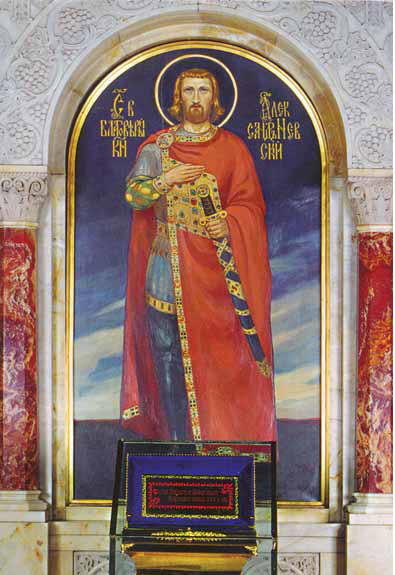
Pilgrimage to Holy Relics of saint Alexander Nevsky in St. Alexander Nevski Cathedral, Sofia Bulgaria

Saturday, January 26th, 2013

st Alexander Nevsky Cathedral Sofia Bulgaria

It is my third day, I'm staying in Sofia and I'm trying to use the time as efficient as possible. I had a dinner with my school years friend and my current employee Anton in a small restaurant near Hotel Pliska called King's breakfast. I wanted to save some money so use Sofia's public transport to reach to hotel Pliska from a train stop near the so called "Winter Palace". The bus I traveled with was crowded, I was not sure of which bus-stop I had to go down of the bus so tried to ask the bus driver. Interestingly he seemed puzzle that I asked him and being lazy to explai me or not being sure of the number of bus stops I had to count until I reach to Pliska Hotel, he suggested to ask someone in th ebus. Thanksfully there were some people helpful and thanks God the young student Lady which sit near me, had to go down on the same bus stop as me and was kind and helpful.
I should stop for a second and mention few words on the bus hygiene, I've not been in Bulgaria over the last 5 months and I didn't travelled in Sofia bus for maybe at least 2 or 3 years – the hygiene was worse than critical it looked unhygienic there were some weird stickers which was supposed to instruct the reader something but they were so intuitive, that I hardly doubt anyone fully understands, some of the visual instructions seemed also ridiculous …. The bus I traveled with was probably at least 20 or 25 years old, and it seemed the last time it was clean by someone was maybe a few months before, of course the weather was rainy and this is one of the reason of the dirt, but even besides that it was obvious noone puts even a cent for hygiene and the bus aesthetic appearance. Well so far so good. What I liked of the bus is the ticketing system which was very old fashioned, you buy a ticket which costs the low fee of 1 lv (0.50 cents), you pierce it on a mechanical pierce machine located on few places on left and right and that's all, in some buses a control person comes by and checks if the person has pierced the little piece of paper … Just for comparison in Arnhem, the ticketing system was a bit different whether you desire to buy it from the driver, he give you a ticket and stamps it with a date and hour, then the ticket is valid 1 hour after so you can use it in another bus as well. Also just as a matter of short comparison in Holland, maybe 50% of people or more already use the new contactless OV-Chipkaart which is a standard way to pay for transportation. Happily, such a system is not available in Bulgaria – and hence from purely tracking perspective and freedom prespective and efficiency the symplicity of ticketing system in Bulgaria and the low price rox and IMHO beats up Western one :)

Back to where I was after using Bus number 280, I reached and having the dinner with my dear friend, I had a walk of about 30 minutes from Hotel Pliska (which is one of the most key (and busy) central bus stops in Sofia). The walk was not nice, a multitude of cars, dirty air smog, muddy streats, broken sideways, very little space allowing only one person to walk by …. The infrastructure of this Boulevard was meakly said SHIT and it seems it was not planned at all for people like me who like walking or for bikers.
On the way I've seen a bunch of beautiful architecture buildings and this was all the enjoyment besides the dirt, something that little raised up my very negative opinion of this 30 minutes walk was the sideview of Vitosha mountain (worthy scenery to see).
After 25-30 minutes I reached a Subway of a central busy place, which was leading to city Sofia's State University St. Kliment Ohridski, to the city center where st. Alexander Nevski, the National Assembly and the Bulgarian Patriarchate is located.
I wanted to go and pilgrimate to st. Alexander Nevski's cathedral, since I was there just one or two times and my memories of the Biggest Cathedral Orthodox Church on the balkans was little. St. Alexander Nevski's size and architecture is mostly amazing surely even for non-believers.As a believer I was thankful to God for being able to enter the Church light up a candle and pray, my joy was double cause in the Church I found there wss a miracle making icon of Holy Virgin Mary (probably from Holy Mount Athos), there was acathist (a little prayer service in glorification of the Mother of God asking the Holy Mother of God to pray the Lord Jesus Christ for us. I stayed for the Church service and tried litening to the priest leeading the serive, there was a young deacon helping in the service, which I happened to have met and know in my stay in Pomorie Monastery before 5 months time. After the end of the acathist, all Christians who stayed until the end of prayer service including me went and bowed down to venerated the Holy icon. I take a quick look in st. Alexander Nevski and venerated the rest of icons I see in the Church. I was mostly surprise to find on the left side near the ikonostas a small treasurer holding incorruptable (finger) of the Saint.

Holy Relics of Saint Alexander Nevksi kept in largest bulgarian Orthodox Church in capital city Sofia - venerate holy relics of St. Alexander Nevsky


I venerated and asked st. Alexander Nevski to pray the Lord for me the sinner this completed my short pilgrimage to the Patriarchate Cathedral and biggest Church building in whole Bulgaria. I had desire to venerate also the other neraby ancient Church saint Sofia, but it was already 6:30 and the Church was closed.
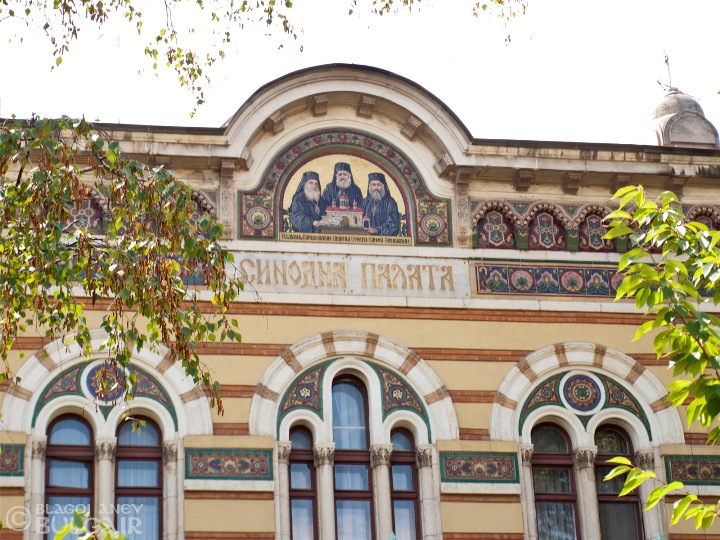
On left side of the exit of st. Alexander Nevsky is located another of the old and important buildigns in Sofia, the holy synod palace (Синодална Палата) – a place where Bulgarian Church hierarchs, gather routinely to discuss and take important decisions concerning our autocephalous Church. This building represents a Roman Catholic Holy See Orthodox Church equivalent and if I'm not mistaken is an official residence of the Patriarch.

Bulgarian orthodox church synodal palace sveti sinod holy see of bg orthodox church
Since I had to go back to my friend's house which is nearby the Winter Palace, I took bus 280 from the bus stop located nearby Sofia State University and went back, engraced and thankful to God for the big blessing to be able to venerate the Holy Relics of one of the greatest Russian Saints st. Alexander Nevski.
 

st Alexander Nevsky orthodox icon

Last year 2012 in st. Alexander Nevski Church, his holiness Patriach Maxim – Patriarch of our Bulgarian Orthodox Church who recently passed away together with all metropolitans and bishops canonized the Holy Martyrs of Batak slaughter. St. Alexander Nevski is a monument also playing singificant importance reminding Bulgaria for back times, when Russians, Ukrainians, Belarusians and Romanians helped us to receive liberation from Turkish 500 years slavery. If you happen to be visiting Bulgaria, somehow I warmly recommend you visit this magnificient Church, even if you're not a strong believer or Catholic, you will certainly appreciate the beautiful wall paintings and megnificient

Share this on

Pilgrimage to the Holy Relics incorruptable body of Saint King Stephan Militun in Cathedral St. Nedelia Sofia, Bulgaria

Friday, January 25th, 2013

Saint Stephan Milutin II Holy King of Serbian with Inoccuptable Body testimony for Truthfulness of Holy Christian faith


As I've landed in Sofia and I'm staying few days in a friend thus I had the opportunity to take a quick look over one of the oldest cities in Europa. Sofia is known under the ancient name Sredets and is dates back to times before Christ. Yesterday I had a walk near NDK (Национален Дроврец на Културата – National Palace of Culture), nearby I saw a little Church which looks orthodox. I dropped by to pray and light up a candle as I usually do when I see an Orthodox Church building I was not in before. In front of Church I saw a priest which looked pretty much like Orthodox, Church interior looked strange as it contained a mosaic of Christ's face which seemed a bit like Catholic. I spoke a little with the priest asking him if he is priest or monk (in orthodox Church we have priest – who marry and monks who didn't). He said he is a Bishop which puzzled me since it is not very common a Bishop to smoke cigarette in front of a tiny Church building …. Later I understood he is from the so called Schismatic Synod – the so called Alternative Synod which claimed our last Church patriarch Patriarch Maxim is not choosen canonically because he was choosen in communist times) ….. I deeply regretted I had the misfortune to enter a schismatic – heretic Church and quickened to leave. Just on the street from NDK Enormous Building which is one of the most well known places in Sofia center.

NDK Sofia Bulgaria center one of most notable buildings

I saw in the end of the street a huge Orthdox Cathedral and though it is the biggest Orthodox Cathedral in the balkans – st. Alexander Nevski.

Sofia Orthodox Cathedral Church building where saint King Milutin incorruptable body is kept

Now it is good time to write about great God's providence. I very much wanted to venerate st. King Milutin for some time, since the moment I heard his holy relics are kept in my homeland capital Sofia. In Nijmegen where I was going to church in the Serbian Church, I had the opportunity to venerate a little particle of st. Stephen Milutin's holy relics and actually it is from where I heard from a first time for this saint. Many saints in our holy Orthodox church has incorruptable bodies like st. Stephen Milutin but so far I never had the opportunity to see such a great unexplainable by science miracle, where a saints body is preserved incorruptable for 9 centuries!!!! St. Uroš II (Stephan) Milutin Nemanjić who was a ruler of Serbia and one of the biggest contributors and donators of Serbian Church ruled over Serbia for 45 years, over this 45 years he donated a multitude of villages, money provisions, gold and all goods to serbian Church. He had promised to God to build so many churches as his years of rulership will be he stand up to his promise and build 45 Churches over his 45 years of rulership. He was well known for dressing in beggar cloak and going out of his castle to be among poor people and often bring them food, clothes and money. In his rulership his greatest stronghold and hope was the Holy Orthodox Church. st. King Stephan Milutin made a lot of donations for Monastiers including the building of newer and more beautiful Church building and a protection tower in Serbian Monastery in Holy Mount Athos Hilendar. St. Stephan is born in y. 1253 and passed away to Christ in October 29, 1321. Here is a picture someone has taken of st. Stephan Milutin Holy incorruptable body.

saint King Milutin holy incorruptable body relics saint Nedelia Sofia Cathedral

 More complete living of st. Stephan Milutin can be read on Orthodox Wiki here.

The size of St. Nedelya Cathedral is impressive, the whole church is full of beautiful icons. It is keeping also a miracle making icon of the Holy Theotokos Virgin Mary – the well known – Joy of all sorrowful. If you happen to drop by the temple you can find it on the left of the entrance / exit door of the Church. The Holy iconostasis of the Church is all in Gold, the dome of the Church contains most beautiful images of Christ surrounded by Angels the fresco seems quite ancient though I'm not sure from which year it dates back. In the right of the Church entrance door is found the grave of exarch Stephan – the head of the Bulgarian Orthodox Church after the liberation of Bulgaria from Ottoman Turkish 500 years long slavery.
The Church is a functional and Holy Liturgy is served every day also an evening service is done everyday. St. Nedelya Cathedral original building dates back from the ancient 10-th century and is connected to a times, where Slavonic translations of the Holy Bible was still young. Going out of St. Nedelya Church just few meters away is located another Christian Church in glory of St. Petka of the Balkans (The Bulgarian). There was times where holy relics of Saint Petka Bylgarska, holy relics resided in that catacomb ancient Christian church. In st. Petka Church there is a small book where one can write all the miracles that happened of people who prayed for prayed to Christ for their various needs, physical healing etc. Also something that strike me in this little Church was the odor in the air which is typical to smell from holy relics of saints. Just 20 meters away from saint Petka's Ancient Church is located another more ancient Church from the 4th CENTURY in veneration of Saint Martyr George the Glorybringer!
The Rotunda st. George is something must see for anyone that never was in Sofia before and I thank God for being able to pilgrimage on such an early Christian church.
Rotunda_of_St_George_4-th-century-Sofia-city-center-Bulgaria

The story line of Saint George Church is pretty long and the visitor can read it. In short as I read the Church has three layers of icon paintings from 3 different periods of the Church use, the most ancient found one dates back from the 6th century.

dome Rotonda Sveti Georgi 4th century Sofia,Bulgaria  city center (Sredets)

The Church was used mainly for baptismals in a long time of its existence. Today there is a Holy Liturgy and evening prayer service daily and Church is fully functional and conducting its original purpose of bringing people to Christ.

Share this on

Crossing the Finger (Crossed Fingers) – A good luck sign with Early Christian origin and deep symbology

Monday, January 21st, 2013

Why we cross  the fingers good luck sign evokes Christ blessing and depicts cross with hand fingers

I had a small Skype chat today with my dear Indian friend of mine Happy. She is now in situation with uncertain outcome, where the Indian government has to approve her mother's application for Visa. As being uncertain she used the classical English saying: "fingers crossed – i cross the fingers". I was curious about the origin of Crossing the Fingers and thought for a second over how Cross-ing the fingers originated and how it visually looks like. It depicts a a X cross shape, also interestingly the X is the first letter of the Greek and Slavonic IC XC depicted on each and every icon of our Savior Jesus Christ. XC – stands for Χριστός (in Greek) and Христос in Slavonic, thus obviously crossing the fingers depicts also first letter of Χριστός - Christ  – Messiah (savior of the World). Having the insight I hurried to explain Happy, why I think people used to be crossing fingers when in situation with uncertain outcome.

Just out of curiosity I searched for Crossed_fingers and found it good explained in Wikipedia. After all, my assumption turned right, crossing the fingers is made not just out of old superstitious as many might thought, It was made on purpose by early times Christians. Crossing the fingers is an external expression of the Internal faith,hope,love and unceasing prayer that early Christians possessed.

Crossing the fingers was very popular in times, when Christians use it as a sign to recognize each other in times of persecution. The reason for crossing the fingers is that it resembles the Sign of the Cross. It is believed even  to this day in the One Holy Apostolic Church the Orthodox Church the sign of the Cross when being made invokes over one the protection and blessing of Christ. Sign of the Cross is being done in prayer in the Church in times of trouble in difficult life time events and when evil is faced. The crossed finger sign was also used as a secret way for Christians to tell each other to assemble for prayer and holy liturgy worship service. There is even symbolism in why people cross fingers with exactly those two fingers with which the gesture is done. In very ancient Church times Christians used to make the sign of the cross over their body using two fingers and not three.


Icon of Saint Paul from Ephesus 4-th century preparing to make the sign of the cross

4th-century icon of St. Paul the Apostle from Ephesus – Wall Painting

The sign of the cross when being depicted on one's body was done with the exact two fingers with which the crossed finger gesture is completed.

crossed fingers sign of the cross resembles the salvation of mankind through the Lord Jesus Christ's crucifix

Today crossing the fingers is a popular "good luck" invocation automatic reaction, most people who do it as not being realized Christian don't know why they do it they just believe it will be a magical mantra like which will give them good outcome of problem or difficult situation. It is little sad that we the modern people who think we know a lot and are smart or educated, didn't know even the basics of what made us the nations we're which in the biggest part was Christian faith kept by our ancestors for centuries.

Share this on

19 January Epiphany – The Baptism of Christ Church hymn in Russian and Serbian Orthodox Church

Sunday, January 20th, 2013

On 19th of January each year, many of the Orthodox Churches who still follow the Old Church Calendar celebrate one of the 12 most important feasts in Church life.

On this date Russian Orthodox Church Serbs, Ukrainians, Molodovan and the Patriarchate of Jerusalem are celebrating.

In  Bulgarian Orthodox Church, Greek and Romanian, Croatia and other Eastern Orthodox who follow new calendar, The Day of Jordan (The day in which Jesus was baptized in Jordan) is celebrated on 6-th of January on the same date when Russian, Serbs, Ukrains and other Orthodox Churches using old calendar celebrate Nativity of Christ.

The feast of Baptism of Christ is one of the most ancient feasts in Church history.
Here is the Church troparion as sung on (Jordanov den – as we say in Bulgaria – St. John's Day).


Epiphany Troparion / Тропарь Крещения (Troparion The Baptism of the Lord Jesus Christ in Russian)


Тропарь Крещения Господня (Troparion Kreshtenie Gospodne as sung in city of Luhovic Russia


Tropar Bogojavljenja – The Lord's Baptism in Serbian Orthodox Church

The Baptism of the Lord Jesus Christ hymn in Arabic

It is interesting fact to know that in Roman Catholic Church and most western countries the feast of Epiphany is known as the feast of Three Magi Kings (The Three Wise man who came to bring expensive gifts to venerate the birth of King of Kings the Lord Jesus Christ). Many of the traditions accepted in Western Countries for Epiphany are very similar to traditions practiced by countries where there is widespread Roman Catholicism influence. I've red about the feast as practiced in various countries in Western Europe and it appears many of the traditions are similar as paradigm to German and Dutch SinterKlaas (Saint Nicolas) feast. It is interesting fact that some of the traditions like the releasing of the Cross in Rivers by the Orthodox Priest and cross take out by the bravest man  in Bulgaria is also practiced in Greece, Serbia, Macedonia, Bosnia and Herzegovina and probably some Orthodox Christian regions of countries belonging to ex-YugoSlavia.

Share this on

Saint Thecla and Saint Isidore of Seville – A Patron Saint of programmers, information freaks and IT nerds

Friday, January 18th, 2013

I learned a very curious fact. We have two Christian saints St. Thekla and St. Isidore of Seville which are protectors of Computing and people involved with computational sciences programming and IT related jobs. 
The two saints both lived before the Great Church Schism thus the saints are celebrated and venerated nowadays in Roman Catholic Church and Eastern Orthodox Churches all around the Christian world.

The Holy living of Saint Thecla – The ProtoMartyr (The first Christian woman martyr)

St Thekla saint protecting all IT people and people who work with computers

The reason why Saint Thecla is considered a protector of all people who heavily work with computers and possibly hackers :) is her name, Tecla means "Key" (a keyboard one) in Spanish.
Besides that everyone knows Keys (Passwords) and codes – a sort of keys as well as keys in programming arrays are widely used in Informatics and are essential part of computer basic Software.

Saint Thecla's living is mostly interesting, below is a short story of her earthly live as recognized in Orthodox Christian tradition;

Saint Thecla is considered a direct pupil of Saint Apostle Paul as she turned to be preacher of Christianity after speaking saint Apostle Paul. She lived in 30 A.D. until 1-st century after Christ. St. Thecla was virgin and decided not to mary even though she had fiancee in moment where she heard the Gospel of Christ.

She was miraculously saved from being burned at a stake by the onset of a storm, and traveled with Paul to Pisiduan Antioch. There a nobleman named Alexander desired Thecla and attempted to take her by force. Thecla fought him off, assaulting him in the process, and was put on trial for assaulting a nobleman. She was sentenced to be eaten by wild beasts (a common punishment for Christians in 1st century). Again saved by a series of miracles when the female beasts protected her against her male aggressors.

She sought out St. Paul and his companions, including St. Barnabas, who were hiding in a cave near the city. She spread the gospel of Christ with them in Antioch, and throughout her life performed many miraculous feats and suffered many tortures to give glory to God. Having retired to a desolate region of Isaurian Seleucia with the blessing of St. Paul, Thekla continued to preach God's word and heal st. Paul's spiritual children.

She lived to venerable old age of 90. Even in this old age envious pagan sorcerors come with the intention to defile the holy virgin. .  A large rock split open when St. Thekla called on Christ the Savior to help her, and the rock covered her, and she offered up her soul to the Lord.

St. Thecla is highly venerated by Nuns an interesting fact is during tonsure of nuns in the Orthodox Church, her prayerful intercession for the tonsured nun is invoked.
 

Saint Thekla  Protomartyr first christian woman martyr and protector of computer related professions and nerds

The Kontaktion and Troparion as sung in the Church on her day feast in Orthodox Church – September 24 is;
 

Hymns Troparion (Tone 4) [2] You were enlightened by the words of Paul, O Bride of God, Thekla, And your faith was confirmed by Peter, O Chosen One of God. You became the first sufferer and martyr among women, By entering into the flames as into a place of gladness. For when you accepted the Cross of Christ, The demonic powers were frightened away. O all-praised One, intercede before Christ God that our souls may be saved. Kontakion (Tone 8) O glorious Thekla, virginity was your splendor, The crown of martyrdom your adornment and the faith you trust! You turned a burning fire into refreshing dew, And with your prayers appeased pagan fury, O First Woman Martyr!

Saint Tecla is very important woman saint, there is a whole monastery dedicated to her – Saint Tecla Monastery in Ma'loula


Saint Isidore of Seville – St Isidore  Archbishop of Seville – An important Christian Saint writer from 6th century

St Isidore of Seville patron saint of System administrators, database programmers and IT experts


St Isidore lived (circa 560-636), he served as Archbishop of Seville. Apart from his great holiness in modern terms, he can be defined as "information freak" and even in modern terms Nerd :) Even in his living he was recognized as miracle worker. St. Seville just like me and most IT people had a hobby of knowing as much as possible, he collected texts and write books on scientific or quasi-scientific facts and theories on subjects from Scripture, Church order, materials, and jurisprudence and medicine to achritecture, agriculture, botany,  food, drink furniture,war, navigation ! etc. etc. :)
His books are among the first attempts to create universal catalog of available information in the World. His writtings are a sort of ancient Wikipedia. Even to this age his books provide us with many information and instruction on Church dogmatics and life as understood from a Christian view.

Saint Isidore's most notable work is Etymologiae – which is among the first encyclopedias worldwide – a huge compilation of 448 chapters in 20 volumes.
Contrary to many critics of Christian faith claiming that the Holy Fathers or the Church teach the earth is square shaped and one can reach the end of the world in St. Isidore's work, it is clearly explained that the earth has a circle like form.
 

Diagrammatic world map 12th century as described by st Isidore of Seville the world is round!!!!

Saint Isidore was contemporary to Saint Maxim the Confessor and one of the last ancient Christian Philopsophers, and last of the Great Western Church Holy fathers
According to some sources, saint Isidore is said to be the most learned man of his age. His works played key role on development of Middle-ages educational life. It is curious fact that in year 2000, the Vatican proclaimed Saint Isidore as patron saint of the Internet.
In Orthodox Church, we're not the authority of the Vatican Pope, so for us Orthodox Saint Isidore is not patron saint of Internet, however his contribution for increase of worldly knowledge as we know it today is un-questinable. His Holy relics are currently held in Roman Catholic Cathedral in Murcia (Spain), so any Orthodox Christian who is in deep involvement IT who travels to their or happen to live their might drop by to venerate the saint.
 

saint Isidore of Seville creator of first Christian and knowledge encyclopedia

St. Isidore's episcopate was during a time of disintegration and transition as the ancient institutions and knowledge of the Roman Empire were disappearing. During these times, he set himself to the task of joining into a homogeneous nation the many peoples who made up the Gothic kingdom. To accomplish this task he used all the resources of religion and education available to him. He presided over the Second Council of Seville in November 619, leading to the setting forth of the nature of Christ in the Acts of the council, as he pushed for the eradication of Arianism.

saint Isidore of Seville Christian enlightener of Spain evident Christian 6th century writer - important Archibishop played key role for unification of the Goths nations

A  list of all his works, most of which are unfortunately present on the Internet only in Latin are:

  • Historia de regibus Gothorum, Vandalorum et Suevorum (a history of the Gothic, Vandal and Suebi kings)
  • Chronica Majora (a universal history)
  • De differentiis verborum, which amounts to brief theological treatise on the doctrine of the Trinity, the nature of Christ, of Paradise, angels, and men.
  • On the Nature of Things (a book of astronomy and natural history dedicated to the Visigothic king Sisebut)
  • Questions on the Old Testament.
  • a mystical treatise on the allegorical meanings of numbers
  • a number of brief letters
  • Sententiae libri tres Codex Sang. 228; 9th century
  • De viris illustribus
  • De ecclesiasticis officiis

Share this on